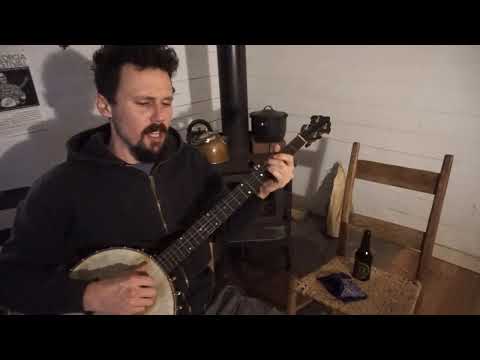
This video features Clifton Hicks playing an open-back banjo in a wooded setting. The performance includes an instrumental introduction showcasing the clawhammer technique, followed by a narrative song about a character named Reuben. The song's lyrics tell a story involving drinking, pawning possessions, a woman's departure, and a train derailment.
This video features Clifton Hicks performing "Been All Around this World" (Big John Henry) on a fretless banjo. The performance is set in a rustic cabin and showcases Hicks' expertise in traditional American folk music, particularly his advanced clawhammer banjo technique and knowledge of Appalachian folk repertoire. The song's narrative touches on themes of labor, hardship, and facing mortality.
This video features Clifton Hicks performing a traditional folk song. The song tells a story about Jay Gould's daughter and mentions specific railroads. The performance showcases a relaxed, traditional musical style with proficient banjo playing.
This video features Clifton Hicks performing a somber rendition of "No More the Moon Shines on Lorena," a traditional folk song. The performance showcases proficient banjo technique, likely clawhammer or fingerstyle, common in Appalachian music. The lyrics narrate a poignant story of love, separation, and loss on a plantation, touching on themes of enslavement and spiritual solace.
This video features a performance of the folk song "Hiram Hubbard" by Clifton Hicks, played on an 1888 Thompson & Odell "The Luscomb" banjo tuned to gDGBD. The song tells the story of Hiram Hubbard's execution, mentioning "the balls passed through his body." The description highlights the song's heritage, tracing its learning path through various folk musicians and archives. It also provides multiple links for supporting the artist's work, including Patreon, Bandcamp, merchandise, and streaming platforms.
This YouTube video features Clifton Hicks playing the song "Pretty Polly" on a 4-string gourd banjo. The description highlights the song's historical origins dating back to the 1760s, with alternative titles like "Gosport Tragedy" and "Cruel Ship's Carpenter." The description also heavily promotes Clifton Hicks' Patreon, Banjo Heritage online course, SubscribeStar, merchandise, and streaming platforms like Bandcamp, Spotify, and iTunes, alongside a PayPal donation link and YouTube channel membership option.
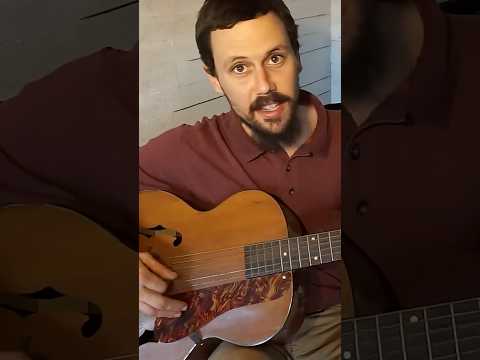
This video features a performance of Woody Guthrie's song "Hard, Ain't it Hard" by Clifton Hicks, played on a 1940s Harmony PATRICIAN archtop guitar. The description provides extensive links for viewers to support the artist through Patreon, SubscribeStar, Bandcamp, Spotify, iTunes, PayPal, and YouTube memberships, as well as information about the Banjo Heritage online course and merchandise.
This video features Clifton Hicks performing "My Old Horse Died," a song with roots in a historical insurance advertisement and folk traditions. The description highlights its connection to Dock Boggs and the popular tune "Chicken Reel." While the title and description are rich in cultural and historical context, they contain no direct references to firearms, ammunition, manufacturers, or related topics. Therefore, the content is entirely non-firearms related.
This video features a performance of the song "You Shall Be Free," originally recorded by Bill and Belle Reed in 1928 and later by notable musicians like Sonny Terry, Woody Guthrie, and Lead Belly. The description highlights resources for learning banjo, including online courses, tablature, and merchandise, linking to various platforms like Patreon, Bandcamp, and Spotify. The focus is on traditional American folk music and the banjo instrument, with associated hashtags indicating genres like bluegrass and Americana.
This video features Clifton Hicks performing the song "I've Been All Around this World" with a focus on the "new railroad" theme, mentioning mud up to the knees and working for a demanding boss named John Henry. The musical accompaniment is provided by an 1888 Thompson & Odell "The Luscomb" banjo tuned to fBbFBbC at 432 Hz. The description also promotes Clifton Hicks' Patreon, an online banjo heritage course, and merchandise.
This YouTube video features Clifton Hicks performing "Prodigal Son," a song learned from a 1960s recording by Dock Boggs. Hicks plays an 1888 Thompson & Odell "The Luscomb" banjo tuned to e♭BEF♯B at 432 Hz. The song is inspired by the biblical parable of the Prodigal Son found in Luke 15:11-32. The description also includes extensive links to the creator's various platforms for tabs, courses, merchandise, music streaming, and donation options.
This YouTube video features a home recording of Kentucky State Rep. William "Banjo Bill" Cornett (1890-1960) performing his version of the song "Morphine Blues." The description provides the transcribed lyrics, which detail a dream about wealth followed by the harsh reality of poverty, and a harrowing experience with morphine that almost led to death. The description also includes variations of the lyrics from other singers and mentions Cornett's hometown of Hindman, Kentucky. It highlights that this particular recording is absent from a published compilation of his "lost recordings."
Gun Laws by State
Read firearms regulations for all 50 states + D.C.
Find Gun Dealers
Search licensed FFL dealers near you.