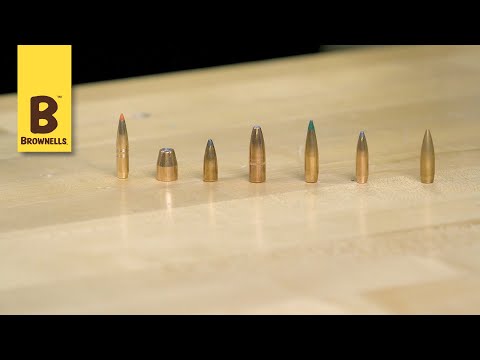
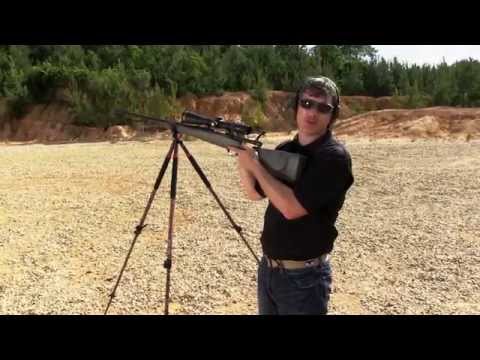
This video from Brownells Gun Techs explains the concept of Ballistic Coefficient (BC), a crucial factor in understanding bullet performance, especially for long-range shooting. Caleb and Steve detail what BC represents – a bullet's ability to overcome drag and wind resistance – and how it's typically expressed as a decimal less than one. They highlight that a higher BC number indicates a more efficient bullet that flies flatter and is less affected by external forces. The explanation includes practical examples, contrasting the BC of a long, narrow target bullet with a short, squat .45 ACP round. The video emphasizes BC's importance for distance shooting while noting it's less critical for close-range engagements, with Caleb offering insights into why a high BC bullet isn't always the optimal choice.
The Nosler AccuBond Long Range bullet features a polymer tip for enhanced ballistic coefficient and a long, sleek boat tail. Internally, it boasts a soft nose for reliable expansion at velocities as low as 1300 ft/s, crucial for long-range performance up to 2000 yards. A tapered jacket, thin at the nose and thicker at the base, ensures the bullet holds together at high impact velocities, while a bonded lead core prevents separation. This design allows for consistent performance at both extreme distances and closer ranges.
Understanding bullet anatomy is crucial for optimizing long-range shooting performance. Key components like the body, boat tail, tip (meplat), and nose (ogive) significantly influence a bullet's aerodynamic efficiency and ballistic coefficient. Relatively minor variations in these shapes can lead to substantial differences in performance at extended distances.
You've reached the end! 3 videos loaded.
Gun Laws by State
Read firearms regulations for all 50 states + D.C.
Find Gun Dealers
Search licensed FFL dealers near you.