This video delves into the historical context and design lineage of the Czechoslovakian VZ-52 pistol and its intended successor, the ZKP 524. Despite its adoption in 1952, the VZ-52 was immediately slated for replacement due to perceived shortcomings. The ZKP 524, a prototype based on the Soviet Tokarev TT-33 (itself derived from the 1911), was developed as a replacement, highlighting the complex firearm development cycles during the Cold War. The expert analysis provides deep insight into the rationale behind these decisions.
This entry details the CZ Vz. 52 pistol's near adoption by Switzerland, as explained by firearms expert Ian McCollum. The Vz. 52 featured a roller-locked, single-action mechanism that appealed to Swiss design sensibilities, but its double-action capability was a point of contention. Ultimately, political shifts in Czechoslovakia following the communist takeover made procurement from the Eastern Bloc unfeasible for Western-aligned Switzerland.
This video discusses Israel's acquisition of its first purpose-assembled sniper rifles, focusing on Kar98K variants used by the Haganah and later the IDF during the 1948 War. These rifles were part of a significant arms purchase from Czechoslovakia, which included surplus German material. The IDF later standardized its small arms to 7.62 NATO in the late 1950s.
This video provides an expert-level review of the Czech ZK 383, a unique firearm blurring the lines between SMG and LMG. The presenter, demonstrating high authority, details its 9mm caliber, adjustable rate of fire (450-700 RPM) via a tungsten weight, quick-change barrel, and 800m adjustable sights. The ZK 383's robust milled construction and features like an integrated bipod highlight its exceptional interwar design and rarity, with specific attention paid to a Venezuelan contract example.
This guide outlines the process of converting a CZ Model 50 pistol to 9x18mm Makarov, as demonstrated in Project PRAK. It details the external restamping of caliber markings and internal barrel modifications. The project involved extensive testing, firing 3500 rounds, but was ultimately discontinued. Expert instruction highlights the gunsmithing involved in this historical Czech experiment.
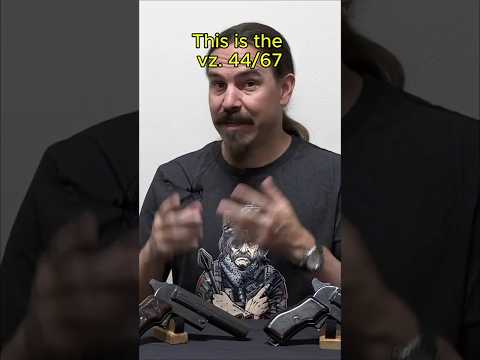
This guide details the operation of the Czechoslovakian vz. 44/67 and vz. 44/81 flare pistols, covering loading and firing procedures. It emphasizes the break-action mechanism, the use of 26.5mm flares, and the importance of safety during operation. The accompanying holster's capacity for both short and long flares is also noted.
This guide details the mechanics of the vz. 61 Skorpion machine pistol, focusing on its closed-bolt, hammer-fired operation and the unique inertial rate reducer located in the grip. Expert Ian McCollum highlights the sophisticated engineering behind this Czechoslovakian firearm.
This guide details the field stripping procedure for the experimental CZ 247 submachine gun, as demonstrated by Ian McCollum on Forgotten Weapons. It covers safe disassembly, inspection of key components like the bolt and mainspring, and reassembly, emphasizing the unique safety mechanism and progressive trigger. The process is suitable for intermediate users familiar with firearm mechanics.
This video provides an in-depth look at the Samopal vz 38, Czechoslovakia's first officially adopted submachine gun. Expert Ian McCollum details its development by František Myška at CZ Strakonice, its unique features like the 96-round Suomi-style drum magazine, and the logistical reasons behind its .380 ACP caliber. The video highlights its intended role in fortifications and explains why full production was halted by the German occupation.
This YouTube video focuses on the Samopal vz. 38, a unique interwar drum-fed submachine gun from Czechoslovakia, chambered in .380 ACP. The content explores this less-common firearm, likely detailing its history, design, and potentially its operational aspects. The video aims to shed light on a 'forgotten weapon' from the pre-World War II era.
This guide details the firing technique for the Pistole vz. 24, as demonstrated by Misha's Guns. It covers safe preparation, loading, and firing procedures, highlighting the pistol's rotating barrel action and slide lock feature. The demonstration emphasizes proper firearm handling and familiarity with historical surplus firearms.
This YouTube video delves into the history and technical aspects of the ZB37, a formidable Czechoslovakian super-heavy machine gun. The content, likely from a 'Forgotten Weapons' perspective, will explore the design, development, and potential use of this significant historical firearm. Expect discussions on its caliber and unique engineering features.
Gun Laws by State
Read firearms regulations for all 50 states + D.C.
Find Gun Dealers
Search licensed FFL dealers near you.