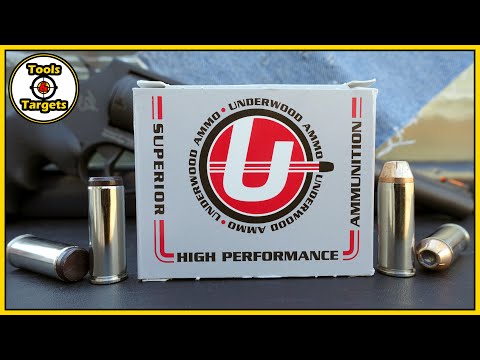
This guide details a comprehensive ballistic gel test procedure for Underwood 9mm +P 115 Grain Sporting JHP ammunition, as demonstrated by an expert instructor. It covers test setup, firearm preparation, velocity and penetration measurements, and projectile analysis, providing critical data for self-defense ammunition evaluation. The expert's methodology ensures reliable and comparable results across different firearm platforms.
This video demonstrates the terminal ballistics of the 12-Gauge Full Metal Kraken Slug from Civilian Tactical. Expertly presented with a focus on safety and data, the test utilizes ballistics gelatin and a water jug to showcase the slug's devastating impact and unique 8-petal expansion pattern. The demonstration highlights the effectiveness of this specialized ammunition for tactical applications.
This video tests Winchester Silvertip ammunition in .32 ACP and .380 ACP calibers using ballistic gel and a chronograph. The .32 ACP round showed no expansion and minimal penetration, while the .380 ACP round exhibited expansion and better performance, though both calibers were noted to be on the weaker side. The instructor emphasizes that shot placement is critical for these smaller calibers, and suggests that for .380 ACP, hard cast FMJ rounds might offer better performance than expanding hollow points.
This video reviews the Corbon Pow'RBall 10mm 135-grain ammunition through ballistic gel testing. The presenter, an experienced firearms instructor, found the ammunition's velocity and terminal performance to be underwhelming for the 10mm caliber, noting limited expansion and significant penetration. While acknowledging it could be effective if placed accurately, he suggests better 10mm options are available.
This video provides a detailed ballistic gel test comparing Federal 158gr Soft Point and CCI Blazer 158gr JHP ammunition fired from a 6-inch Rossi 972 revolver. The test measures velocity, penetration, wound cavity, retained weight, and expansion through both bare gel and four layers of denim, offering insights into the performance differences between the two .357 Magnum loads.
This review tests CCI Blazer JHP .40 S&W ammunition through ballistic gel and chronograph readings. The presenter expresses significant disappointment with the performance, particularly noting low velocities and inconsistent expansion, especially from shorter barrels. The conclusion is that this ammunition is not recommended for self-defense due to its perceived weak loading and unreliable performance.
This video provides a ballistic gel test of Federal Hydra-Shok Deep .32 ACP 68gr JHP ammunition fired from a Cobra pistol. The test evaluates expansion and penetration through bare gel and four layers of denim, offering insights into the ammunition's performance for self-defense applications. The presenter, with apparent expertise in ballistics testing, details the results and compares them to previous tests.
This review tests Remington UMC .380 ACP 88-grain JHP ammunition using ballistic gel and chronographs. The testing reveals disappointing performance, with no significant expansion observed and penetration reaching approximately 20.5 to 20.75 inches across two gel blocks. Velocities were recorded between 929 ft/s from a S&W Bodyguard 2.0 and 1002 ft/s from a S&W EZ, but this did not translate to effective terminal ballistics.
This video details a ballistic gel test comparing 9mm +P+ and .357 SIG 115-grain Underwood self-defense ammunition. The instructor, with apparent expertise in ballistics testing, conducts velocity measurements using a Labradar and analyzes projectile performance in gel blocks behind a clothing barrier. The test reveals significant differences in penetration and expansion, with the .357 SIG demonstrating superior penetration while the 9mm showed impressive expansion but limited depth.
This video presents a ballistic gel test comparing Underwood Ammunition's .45 Colt 250gr XTP and 225gr Hard Cast Wadcutter loads. The test, conducted using a 6.5-inch barrel Judge revolver, revealed significant differences in performance. The XTP experienced tumbling and failed to expand, penetrating 24 inches, while the wadcutter achieved 22 inches of penetration without expansion, demonstrating more consistent forward momentum. The instructor suggests the wadcutter is a more reliable choice for self-defense in this specific scenario due to its predictable performance.
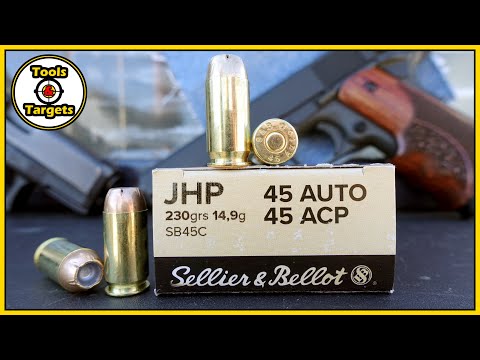
This review tests Sellier & Bellot 230 Grain .45 ACP JHP ammunition in ballistic gel. The test reveals consistently low velocities from both a 3.8-inch barrel Glock 30 Gen 4 and a 5-inch barrel Rock Island 1911, averaging 842 fps and 850 fps respectively. Crucially, the ammunition failed to expand in ballistic gel, resulting in excessive penetration and a 'double fail' performance.
This video provides a detailed ballistic gel test comparing Federal Non-Typical and Power-Shok .308 Winchester 150-grain jacketed soft point ammunition. The presenter, an experienced shooter, demonstrates that both ammunition types perform nearly identically, exhibiting substantial expansion and penetration in ballistic gel. The test includes velocity measurements using a Labradar chronograph and visual analysis of wound channels and recovered projectiles, concluding that both are effective hunting rounds.
Gun Laws by State
Read firearms regulations for all 50 states + D.C.
Find Gun Dealers
Search licensed FFL dealers near you.