This video discusses the Supreme Court's denial of certiorari in Gardner v. Maryland, a case involving concealed carry reciprocity and self-defense. The speaker, William Kirk of Washington Gun Law, expresses frustration with the Court's inaction and highlights the case's potential to challenge state-level restrictions on carrying firearms across state lines. The content emphasizes the perceived erosion of Second Amendment rights and the growing anxiety among gun owners.
This video analyzes Rhode Island's proposed bill H8073, which seeks to remove the grandfather clause from a previous assault weapons ban, making possession of previously legally owned firearms a felony. Speaker Colion Noir argues this demonstrates a pattern of incremental gun control, where initial compromises are later revoked. He highlights a state representative's statement that the ban was a 'partial step' and that the new bill 'finishes what we started,' suggesting the ultimate goal is total disarmament. The analysis also touches on legal arguments regarding 'police power' versus property confiscation under the Fifth Amendment.
Rhode Island's original 2025 assault weapons ban, set to take effect July 1, 2026, prohibited the manufacture, sale, or transfer of certain semi-automatic rifles and shotguns. However, it allowed lawful owners to possess these firearms. A new bill, S2710, introduced in February, seeks to amend the original law by adding 'possession' to the prohibited list, effectively banning possession after the July 1, 2026, deadline. This amendment would require owners to sell affected firearms to federally licensed dealers or out-of-state individuals by the end of 2026.
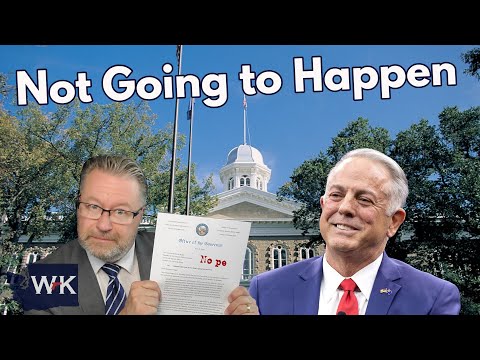
Nevada Governor Joe Lombardo vetoed Assembly Bill 245, which sought to ban the sale of semi-automatic rifles and shotguns to individuals aged 18-20. The governor cited concerns about the bill being overly broad, potentially impacting waterfowl hunting, and its questionable constitutionality based on existing Supreme Court precedent. This action highlights the governor's role in preserving Second Amendment rights against legislative efforts towards civilian disarmament.
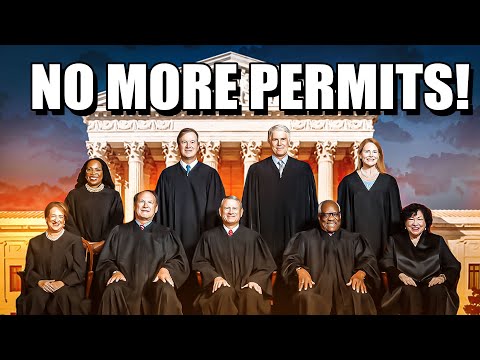
The Supreme Court denied emergency review for a case challenging New York City's rifle and shotgun permit requirements. The Second Circuit subsequently dismissed the case as moot, ruling that the plaintiff had received the requested relief. The plaintiff argues the case is not moot, as the permit renewal is not automatic and the city could revoke it, and that the true relief sought was an injunction against the law itself, not just a permit.
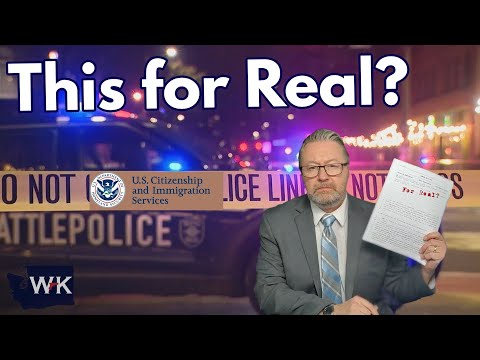
Washington State Senate Bill 5068 proposes allowing non-citizens to become police officers and prosecuting attorneys. While the bill passed the Senate unanimously, significant federal and state firearm laws (RCW 9.41.171 and 18 U.S. Code § 922) prohibit non-citizens on non-immigrant visas or without lawful permanent resident status from possessing firearms, even for duty purposes. Exceptions are extremely limited, primarily for hunting or sporting.
This video analyzes New Mexico's Senate Bill 279, detailing its comprehensive civilian disarmament provisions. It covers proposed bans on assault weapons, high-capacity magazines, rapid-fire devices, and machine guns, alongside the creation of a gun registry. The bill's complex definitions for 'gas operated semi-automatic firearms' and strict possession limitations for grandfathered items are highlighted, drawing parallels to restrictive laws in other states.
Michigan Democrats are pushing Senate Bill 1134, which aims to ban firearms not colored black, brown, dark gray, dark green, silver, steel, or nickel. This bill, if passed, would criminalize the sale, transfer, manufacture, modification, and possession of firearms with 'deceptively colored' finishes like cow print, camo, or neon pink, classifying violations as misdemeanors. The bill includes exceptions for law enforcement and a grandfather clause for existing firearms, but its broad definition of 'covert firearms' and the potential for it to be challenged on constitutional grounds are significant points of discussion.
This episode of Gun For Hire Radio discusses how New Jersey's strict firearm and weapon laws have implications that extend beyond the state's borders. The host highlights specific examples, such as a slingshot being classified as a felony in New Jersey, contrasting it with its legality elsewhere. The discussion emphasizes the need for citizens to actively fight against restrictive legislation, referencing the efforts of the Tennessee Firearms Association.
Cook County's new prosecutor, Eileen O'Neill Burke, has stated her intention to rigorously enforce Illinois's existing gun laws, including assault weapon bans and restrictions on large-capacity magazines, ghost guns, and defaced firearms. This approach signals a potential shift from previous leniency, with a focus on seeking detention for felony offenses involving prohibited firearm accessories or types. The video discusses the implications for lawful gun owners in Illinois, particularly Cook County, and the ongoing legal challenges to these laws.
This video analyzes Washington House Bill 1902, which proposes reinstating a pre-purchasing firearm licensing requirement. The bill also mandates live-fire shooting exercises and specific training certifications. The speaker highlights that similar licensing requirements have recently been ruled unconstitutional in Oregon and Maryland, arguing that HB 1902 attempts to circumvent these rulings by making the license revocable based on broader criminal allegations, potentially impacting the right to possess firearms.
This video discusses the Supreme Court case United States v. Rahimi, which centers on whether individuals subject to domestic violence restraining orders can be constitutionally prohibited from possessing firearms. Constitutional attorney Chuck Michel explains the legal framework established by Bruen, emphasizing the two-step analysis: whether the Second Amendment text covers the conduct and whether historical analogues justify the restriction. The discussion highlights concerns about the government's interpretation of 'dangerousness' and the potential for broad or narrow rulings that could impact future Second Amendment challenges.
Gun Laws by State
Read firearms regulations for all 50 states + D.C.
Find Gun Dealers
Search licensed FFL dealers near you.