This video argues that the US government's regulation of firearm suppressors, stemming from the 1934 National Firearms Act, has led to widespread hearing damage among law-abiding gun owners. It details the history of suppressors as safety devices invented by Hiram Percy Maxim and criticizes the NFA's $200 tax and subsequent regulatory hurdles as a means to limit access rather than collect revenue. While acknowledging the recent elimination of the tax stamp, the video asserts that suppressors remain overly regulated, hindering their accessibility as intended safety equipment.
This video critiques AI-generated content regarding firearms, highlighting inaccuracies in explanations of vertical grips, pistol optics, and short-barreled shotguns. The presenter, with apparent expertise in firearms, corrects the AI's misconceptions about weapon handling, ballistics, and legal regulations. Key takeaways include the reasons for reduced vertical grip use on modern AR platforms due to evolving grip techniques, the actual reasons police departments may not issue red dots, and the physics behind bullet trajectory and shotgun performance.
This guide outlines the straightforward process for acquiring a firearm suppressor in the United States. It details the steps from creating an ATF Eforms account to submitting personal information and fingerprints through a licensed dealer, and finally completing the necessary paperwork upon ATF approval. The video emphasizes the relative ease and speed of the process, with approvals sometimes occurring within hours.
This video from Line 45, hosted by Ted, details how seemingly legal firearms can become illegal in 2026 due to specific configurations, parts, or crossing state lines. It covers National Firearms Act (NFA) violations related to short-barreled rifles (SBRs) and machine guns, the complexities of pistol brace regulations, the legal status of 'ghost guns,' and state-specific restrictions on suppressors and magazine capacity. The core message emphasizes that firearm legality is highly dependent on configuration, intent, and jurisdiction, not just the base firearm.
This Arfcom News episode discusses recent ATF e-forms portal vulnerabilities that led to users being banned for submitting memes in the 'why' field. It also covers the ongoing complexities surrounding pistol brace regulations, noting that while the ATF's classification rule was struck down, their regulatory powers and interpretation of the law remain. The video highlights the importance of understanding the legal landscape and avoiding attempts to exploit system loopholes.
This video demonstrates how to create an Electronic Fingerprint File (EFT) using the NFA Suite app, eliminating the need for physical fingerprint cards or kiosk visits for NFA applications. The app guides users through scanning individual fingerprints and generating a digital file compatible with the ATF's eForms system, simplifying the NFA application process. The presenter highlights this as a 'big brain move' to streamline compliance with outdated NFA regulations.
This guide, presented by The VSO Gun Channel, details the mandatory engraving requirements for firearms manufactured under an NFA Form 1. Expert instruction covers what information must be engraved, acceptable locations, methods like laser or mechanical engraving, and the specific size and depth requirements mandated by the ATF. It emphasizes the importance of legibility and offers creative placement solutions for various firearm types.
This video provides an expert analysis of the Sanchez v. Bonta case, a significant legal challenge to California's ban on firearm suppressors. It details the case's progression through the Ninth Circuit Court of Appeals, discusses the potential implications for suppressor ownership in California and Hawaii, and highlights the impact of legal developments on NFA form submissions. The content emphasizes the importance of legal advocacy in Second Amendment rights.
This guide, based on insights from Hegshot87, covers the essential steps for acquiring and utilizing firearm suppressors. It details the purchase process, including the benefits of Silencer Shop kiosks and legal considerations like individual vs. trust ownership. The guide also addresses technical aspects such as suppressor selection criteria, mounting systems, barrel length impact, ammunition choices, and crucial gas management techniques to mitigate back pressure and 'gas in the face.' Finally, it touches upon interstate transport regulations for NFA items.
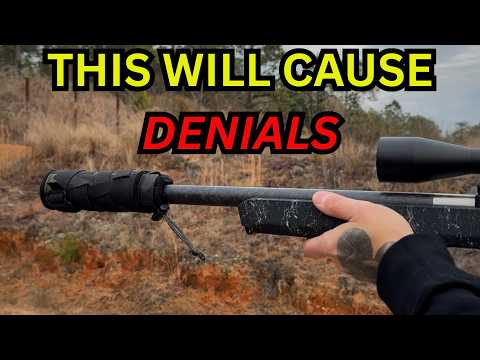
This guide, based on insights from Hegshot87, focuses on navigating the ATF Form 1 application process for making NFA items. It highlights a critical trap regarding the 'reason for making' field, advising applicants to use 'any lawful purpose' to avoid denials and delays. The information is presented with a critical, advocacy-oriented tone, emphasizing the importance of understanding NFA regulations for firearm owners.
This video critically analyzes ATF's reported NFA form processing statistics, suggesting they are inflated for public relations. The speaker, an industry insider with an 07 FFL and SOT, breaks down various NFA forms (1-5) and argues that simpler forms are likely included to misrepresent processing efficiency. He uses mathematical analysis to show the reported numbers exceed the ATF's known capacity.
Gun Laws by State
Read firearms regulations for all 50 states + D.C.
Find Gun Dealers
Search licensed FFL dealers near you.