This video provides a comprehensive historical overview of the AR-15 platform, tracing its development from the AR-10 through various M16 and M4 iterations up to modern military adoption and potential future replacements. It details key design changes, military trials, and the evolution of the platform's role and features. The narrative highlights the contributions of Eugene Stoner and the influence of military requirements on the rifle's design.
Ian McCollum critically analyzes the experimental .30-06 Thompson SMG, deeming it a 'dumpster fire' despite its rarity and high auction price. He contrasts it with more historically significant prototypes like the Persuader and Annihilator I, and discusses earlier .30-06 Thompson experimental rifles. McCollum emphasizes that rarity and uniqueness do not equate to quality or historical importance in firearms development.
The Maroszek rifle, a Polish semi-automatic design from the 1930s, is highlighted for its advanced features and ease of maintenance, which reportedly surpassed contemporary designs. Its development was unfortunately cut short by the German and Soviet invasions of Poland, preventing it from entering widespread service. Despite not being adopted, the Maroszek is considered a well-executed and innovative firearm for its era.
This comprehensive review by Hickok45 provides an expert-level comparison of the Glock 19X and Glock 45. It details their shared features, such as the Glock 17-sized frame and Glock 19-sized slide, and highlights key differences including color, sights, and magazine compatibility issues with certain Gen5 magazines on the 19X. The video also touches upon the 19X's history as a US Military trials submission and showcases practical handling and shooting demonstrations.
This video provides an in-depth discussion and expert analysis of the Daniel Defense DD4X1 rifle, comparing it to competitors like the Knights KS1. The hosts, with significant firearms expertise, delve into technical specifications, release strategies, and market dynamics, offering insights into why certain firearms are chosen for military trials and the challenges of bringing new products to the civilian market.
This entry details the CZ Vz. 52 pistol's near adoption by Switzerland, as explained by firearms expert Ian McCollum. The Vz. 52 featured a roller-locked, single-action mechanism that appealed to Swiss design sensibilities, but its double-action capability was a point of contention. Ultimately, political shifts in Czechoslovakia following the communist takeover made procurement from the Eastern Bloc unfeasible for Western-aligned Switzerland.
This entry details the Maroszek wz.38M, a Polish WW2 battle rifle discussed by Ian McCollum on Forgotten Weapons. It covers the rifle's unique tilting bolt mechanism, fixed magazine, integrated muzzle brake, and safety markings. The expert-level analysis highlights its historical context within Polish military trials.
The US Army rejected the Glock 19X for the XM17 modular handgun trials primarily because it did not meet the 'modular handgun system' requirement. While Glock offered interchangeable slides and grips, it did not present a truly modular system where a single serialized component (like the trigger pack) could be reconfigured into different sizes. The Sig Sauer P320, with its removable trigger pack, fulfilled this requirement, allowing for a single firearm to be adapted to full-size, mid-size, and compact configurations with additional modules, making it more cost-effective for the Army's large procurement needs.
This video provides an expert-level review of the Husqvarna M44 submachine gun, detailing its development for Danish military trials in 1945 as a competitor to the Carl Gustaf M45. The analysis covers its unique quad-stack magazine, simple bolt lock mechanism, and full-auto-only firing system, highlighting Danish military feedback on its ergonomics.
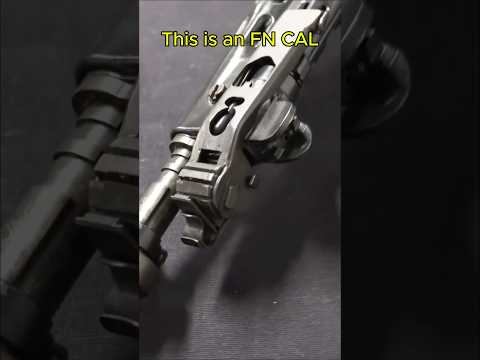
This guide details the rifle grenade capability of the French Trials FN CAL variant, as explained by Ian McCollum. It covers the barrel lugs, adjustable range stop, integrated sights, and the modified 25-round magazine. The video highlights specific mechanical adaptations for grenade launching, demonstrating a deep dive into this historical firearm variant.
The SIG P320 is presented as the safest and most extensively tested firearm currently available, having successfully passed rigorous military trials and numerous subsequent investigations. Despite some component wear observed in heavily used firearms, the video argues this is normal and expected, not indicative of a design flaw. The speaker emphasizes that the P320's reliability has been validated by multiple government agencies, including the Army, FBI, Coast Guard, and Air Force, countering claims of inherent unsafety.
This video introduces the Glock 19X, highlighting its status as the first-ever crossover Glock. It combines a Glock 17 frame with a Glock 19 slide, a configuration specifically developed for military trials. The presenter, Brandon, notes the pistol's unique tan color and its introduction via a Glock hard case.
Gun Laws by State
Read firearms regulations for all 50 states + D.C.
Find Gun Dealers
Search licensed FFL dealers near you.