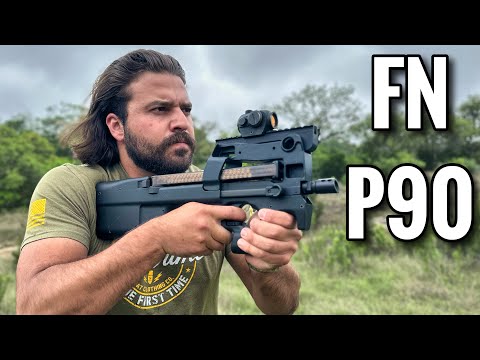
This video discusses the development of the FN P90, a firearm conceived in the late 1980s as part of a NATO trial. The trial sought a Personal Defense Weapon (PDW) chambered in an intermediate cartridge, intended for second-line troops like convoy crews and paratroopers. FN's submission included both the P90 and the 5.7 pistol, developed concurrently.
This video showcases the pickup and initial impressions of an FN PS90, a compact Personal Defense Weapon (PDW) chambered in 5.7x28mm. The discussion delves into its historical context as a NATO trials submission, its design for second-line troops, and its unique features like ambidextrous operation and bottom-ejecting casings. While acknowledging its collectible status and fun factor, the speaker suggests other calibers like 300 Blackout might be more practical for self-defense or truck gun roles due to ammunition cost and availability.
This review covers the SAR 9C Gen 3, highlighting its upgrades from previous models. Key features include a flat-faced trigger, a steel chassis for durability, Meprolight night sights, and an optics-ready slide. The video also details the field stripping process and discusses the firearm's development for NATO trials.
Ian McCollum of Forgotten Weapons reviews the PTR-63, a reproduction of the H&K G41. The G41 was a 1970s NATO trials rifle based on the HK33, adapted for STANAG magazines. PTR's reproduction features an improved roller-delayed system and AR-15 magazine compatibility.
This guide details the field stripping procedure for the FN P90, as demonstrated by Brandon Herrera. It covers the simple disassembly of the upper receiver and highlights key internal components like the dual recoil springs and anti-bolt-bounce mechanism. The video also touches on the P90's unique features, such as its progressive trigger and ambidextrous controls, and its historical context in NATO trials.
This video provides an expert-level analysis of the 5.7x28mm cartridge and its associated firearms, featuring insights from Clint Morgan, who demonstrates a high level of authority. The content covers the cartridge's history, ballistics, armor penetration capabilities, and its resurgence in the market with new platforms. It also touches upon the Heckler & Koch SP5 and its specific modifications.
This entry details the EM2 rifle, a significant contender in the 1950 NATO trials, as discussed by firearms expert Jonathan Ferguson. It covers the rifle's bullpup design, its competition against the M14 and FN FAL, the .280 British cartridge, and the political factors influencing its rejection. The information is derived from an expert analysis, providing deep historical and technical insights.
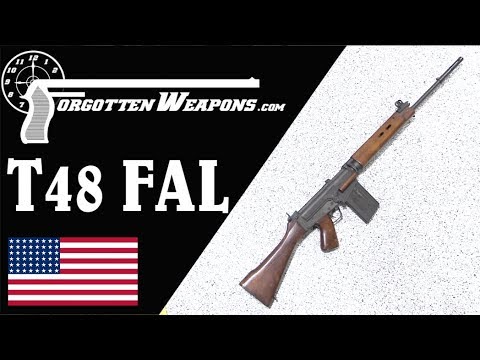
This guide details the field stripping process for the rare Harrington & Richardson T48, an American prototype of the FN FAL. It covers removing the dust cover, bolt carrier, recoil spring, gas piston, trigger group, and barrel. The video, featuring experts Larry Vickers and Ian McCollum, also highlights unique features like the winter trigger guard and stripper clip guide, offering deep insights into 20th-century military rifle development and procurement politics.
You've reached the end! 8 videos loaded.
Gun Laws by State
Read firearms regulations for all 50 states + D.C.
Find Gun Dealers
Search licensed FFL dealers near you.