This video argues for the merits of the 5.56 AK platform, highlighting its advantages over traditional 7.62 AKs. The speaker emphasizes that the 5.56 AK retains the classic AK look and legendary reliability while offering cheaper, lighter, and more accurate ammunition. The widespread availability of 5.56 NATO ammunition, in various types like steel and brass case, for both range and defensive use, is a key benefit.
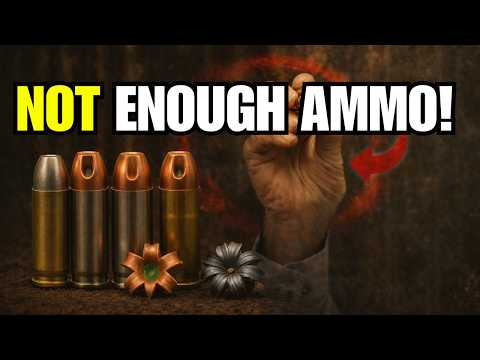
This video provides expert guidance from Ted of Line 45 on determining the appropriate amount of ammunition for various scenarios. It emphasizes matching ammo reserves to the specific role of the firearm, whether for home protection, everyday carry, prepping, vehicle kits, or range training. The advice focuses on practical quantities that ensure reliability, allow for practice, and account for rotation and testing, rather than arbitrary 'magic numbers'.
This guide outlines the process of using Winchester White Box 9mm ammunition for test firing firearms, particularly after repairs or for new handgun validation. The principle is that if a firearm functions reliably with this commonly available and standard-velocity ammunition, it should perform well with most other ammunition types. This method is presented as a benchmark for ensuring general firearm functionality.
This video, presented by Sully from Line 45, outlines the top 10 calibers to stockpile before 2026, citing rising ammo prices and potential supply shortages. It emphasizes proactive purchasing of calibers like .40 S&W, 7.62x39mm, .45 ACP, 6.5 Creedmoor, .308 Winchester, 12 Gauge, .22 LR, .223 Remington/5.56 NATO, 9mm Luger, and 10mm Auto, explaining the specific reasons for each's vulnerability during market fluctuations.
This video compares the reliability of a Glock 19 clone (Daráia Arms D9) against an original Glock 19 after 200 rounds each. The clone experienced one stovepipe malfunction and one light primer strike, while the original Glock 19 had one light primer strike. The speaker notes the ammunition cost and a partnership for discounted 9mm rounds.
This guide outlines the essential items for a beginner's successful and effective range day. It emphasizes the importance of personal protective equipment (ear and eye protection), selecting appropriate targets, using an EDC holster, and choosing cost-effective range ammunition. An optional shot timer is also mentioned for practicing draw speed.
This video explains how to save money on ammunition by purchasing in bulk, similar to shopping at Costco. It differentiates between factory new ammunition from brands like PMC and Winchester, suitable for reliability and longevity, and bulk loose ammunition, like that from HSL Munition, which is ideal for high-volume shooting at the range. The speaker highlights HSL Munition as their preferred 'Costco' for 9mm.
This video compares factory-manufactured ammunition with bulk reloaded ammunition, focusing on cost-effectiveness for range use. The speaker highlights that while factory ammo is generally more expensive, it's a reliable choice for stocking up. Reloaded ammunition, particularly from sources like HS Liamo, can offer significant savings when purchased in bulk, making it ideal for high-volume shooting at the range.
This video tests Federal's 9mm 115 Grain Range Target Practice (RTP) ammunition using a chronograph at seven yards with a Grand Power K100 pistol. The testing focused on velocity, energy, consistency (extreme spread, standard deviation), and cost per round to determine its value for target practice. The ammunition performed consistently and felt slightly hotter than other Federal loads tested, suggesting it could be beneficial for overcoming common shooting issues like limp-wristing.
This video details the process of replenishing range ammunition, highlighting the challenges of purchasing ammo in Massachusetts due to recent legislation (H4885/Chapter 135). The speaker discusses specific calibers and brands ordered online, including 32 S&W Long (Magtech semi-jacketed hollow point), 25 Auto (Speer Gold Dot), 9mm (Winchester 115-grain flat nose target), 380 Auto (Winchester 95-grain flat nose FMJ), and 22 LR (Federal Hammer Down). The speaker emphasizes the importance of online retailers for circumventing restrictive state laws and provides insights into the performance characteristics of various bullet types.
This video explains the fundamental differences between Full Metal Jacket (FMJ) and Hollow Point (HP) ammunition. FMJs, with their lead core encased in metal, are ideal for range practice due to reliability and cost-effectiveness. Hollow points are designed for self-defense, expanding on impact to increase stopping power and reduce over-penetration, with some variations featuring fillers to prevent premature expansion.
This video compares bulk reloaded ammunition from HSL with factory ammunition, including Blazer and Hornady Critical Defense. The instructor categorizes HSL reloads as primarily range ammunition, noting two failures to fire in 1,000 rounds. He emphasizes using new, self-defense-rated factory ammunition or new handloads for life-saving situations, while FMJ is suitable for range practice.
Gun Laws by State
Read firearms regulations for all 50 states + D.C.
Find Gun Dealers
Search licensed FFL dealers near you.