This video explores the growing trend of shooters replacing 9mm with alternative handgun calibers in 2025 and beyond. The presenter, Ted from Line 45, details the advantages of calibers like .30 Super Carry for capacity, 5.7x28mm for speed and flat trajectory, 10mm for power, .357 SIG for barrier penetration, and .22 TCM for rifle-like velocity in a pistol platform. The discussion highlights how these newer options address specific needs that 9mm may not always meet, driven by advancements in ammunition and firearm design.
This video provides a baseline recommendation for ammunition quantities per firearm, drawing from military specifications and practical considerations. The speaker suggests 1,000 rounds per sporting rifle and handgun, and 500 rounds for hunting rifles and revolvers, emphasizing that these are minimums and additional practice ammunition is crucial.
This video presents a ballistic gel test of Black Hills Ammunition's 155-grain JHP .40 S&W self-defense rounds. The instructor, with apparent experience in firearms testing, evaluates performance from both a Glock 27 (3.5-inch barrel) and a Glock 22 (4.5-inch barrel). While not top-tier, the ammunition demonstrated adequate expansion and penetration, particularly from the longer barrel, suggesting it's a viable option for concealed carry or self-defense.
This live stream from PRO GUN on April 18th, 2026, features discussions on various firearms, calibers, and accessories. The host, an experienced firearms enthusiast, shares personal experiences and opinions on topics ranging from 10mm handguns like the Glock 20 and Springfield Ronin, to 1911 platforms, AR-15 builds, and ammunition choices. The conversation also touches on holster retention, stun gun legality, and the evolving landscape of gun laws across different states, with a particular focus on Tennessee's constitutional carry status. The host emphasizes the importance of quality magazines for 1911s and discusses the pros and cons of different firearm platforms for self-defense and hunting scenarios.
This video explores the growing trend of shooters replacing 9mm with alternative calibers in 2025, driven by advancements in ammunition and firearm technology. The presenter, Ted from Line 45, details the strengths of .30 Super Carry for concealed carriers seeking higher capacity in compact frames, 5.7x28mm for its flat trajectory and speed, 10mm for its significant power and barrier penetration, .357 SIG for its velocity and hard target performance, and .22 TCM for its rifle-like speed in a pistol platform. The discussion highlights how these calibers address specific needs that 9mm may not always meet, emphasizing performance, capacity, and specialized applications.
This video conducts a ballistic gel test comparing two .38 Super self-defense ammunition types: Colt Defense (DoubleTap) 124gr JHP and Lehigh Defense 115gr Controlled Fracturing. The test, performed from a Colt Gold Cup National Match 1911, reveals significant differences in terminal performance. The Colt ammunition failed to expand, tumbling and exiting the gel block with no expansion, while the Lehigh ammunition fractured as designed, with its fragments and core achieving substantial penetration and spread.
This video by Ted from Line45 outlines seven essential calibers Americans should stockpile to prepare for potential ammunition shortages, citing patterns observed in past events like the 2020 crunch. The advice focuses on calibers that disappear first due to high demand from various user groups, supply chain vulnerabilities, and production limitations. The instructor emphasizes maintaining separate stashes for training and defensive ammunition for each caliber.
This video presents a ballistic gel test of Scorpion 10mm 180 Grain JHP ammunition, comparing its performance from a Glock 29 (3.8-inch barrel) and a Glock 20 (4.6-inch barrel). The instructor, Tools&Targets, critiques the ammunition's claimed velocity and energy, deeming it "weak 10mm" compared to premium loads. Despite this, the gel test shows good expansion and penetration from both firearms, with the Glock 20 achieving slightly better results.
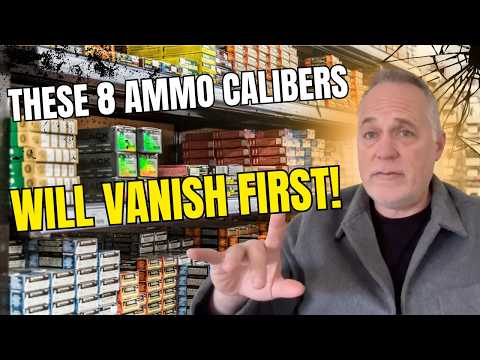
This video identifies the top eight ammunition calibers most likely to disappear first during an ammo shortage. The speaker, from 'God Family and Guns,' explains that high demand combined with lower production volumes or import dependencies makes certain calibers vulnerable. These include popular hunting, self-defense, and military rounds, with 9mm and 5.56/.223 predicted to vanish almost immediately.
This video provides a detailed ballistic gel test of Black Hills Honey Badger .45 ACP ammunition. The instructor, demonstrating significant expertise in firearms testing, evaluates the performance of this solid copper fluted projectile through a heavy clothing barrier. Key findings include consistent penetration and disruption across different barrel lengths, though the instructor notes a desire for higher velocity and energy compared to advertised claims.
This video from Line45, hosted by Ted, outlines seven critical ammunition calibers Americans should stockpile to prepare for potential ammo shortages, referencing patterns seen in 2020 and anticipating a 2026 crunch. Ted emphasizes the importance of having sufficient defensive and training ammunition for various firearms, detailing why specific calibers disappear first during panic buying and the factors influencing supply chain disruptions. The advice is geared towards intermediate shooters and gun owners concerned with preparedness.
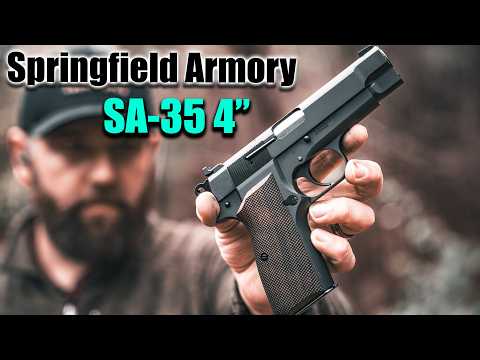
The Springfield SA-35 4-inch is a modernized take on the classic John Moses Browning Hi-Power. It features forged carbon steel construction, a 4-inch cold hammer-forged barrel with a 1:10 twist, and improved sights. The pistol omits the magazine safety found on original Hi-Powers and includes an enhanced feed ramp for modern defensive ammunition, with a 15-round capacity. Initial testing showed good reliability with only one failure to feed out of approximately 300 rounds.
Gun Laws by State
Read firearms regulations for all 50 states + D.C.
Find Gun Dealers
Search licensed FFL dealers near you.