This entry details a rapid-fire technique demonstrated with the Genesis Arms Gen-12 shotgun, highlighting its short-recoil semi-automatic action and reliability. The video showcases high-speed target transitions and cycling speed, with commentary from PewView, an established firearms content creator. The focus is on the practical application of rapid fire with this powerful 12-gauge platform.
This video provides a detailed look at the Tokarev TT-33 pistol, demonstrating its Soviet heritage and operational mechanics. Expert instruction covers magazine loading, firearm preparation, and live-fire sequences, enhanced by high-speed photography for analysis of the short-recoil action. The demonstration emphasizes proper firearm handling and the manual of arms for this classic handgun.
This video provides a demonstration of the traditional loading and firing technique for the Mauser C96 Broomhandle pistol. Expert handling showcases proficient use of stripper clips for the internal magazine and engaging steel targets with the 7.63x25mm Mauser caliber. The demonstration highlights the firearm's unique short-recoil action and external hammer operation.
This video provides an unboxing and overview of police trade-in Beretta 92S pistols. The presenters discuss the firearm's history, its adoption by the US military as the M9, and its prevalence in 1980s and 90s action films. They highlight its full-size nature, 9mm caliber, 15-round capacity, alloy frame, steel slide, short recoil action with a falling block mechanism, and slidemounted safety/decocker. The video also touches on the cosmetic wear expected from trade-in firearms and the availability of aftermarket parts.
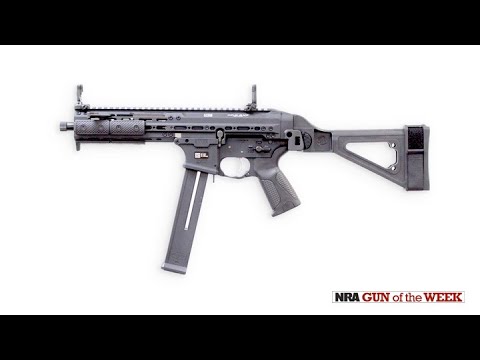
The LWRCI SMG 45 is a 45 ACP pistol caliber platform designed as an update to aging submachine gun designs. It incorporates many AR-15 components, including an aluminum receiver, AR-15 style takedown pins, grip, trigger guard, trigger, and safety. The firearm features a short recoil action for reduced recoil and vibration, an 8.5-inch cold hammer-forged barrel threaded for suppressors, and ambidextrous controls. It comes equipped with Magpul MBUS Pro backup sights and an SV Tactical brace.
Ian McCollum, an expert in historical firearms, provides an in-depth look at two rare SIG prototype semi-automatic rifles from 1924 and 1925. The video details their distinct mechanical designs, including the gas-operated 1924 model with a rotating bolt and the short-recoil 1925 model featuring a takedown design and rotating barrel lock-up. This analysis highlights early SIG innovation in rifle development for Swiss military trials.
You've reached the end! 6 videos loaded.
Gun Laws by State
Read firearms regulations for all 50 states + D.C.
Find Gun Dealers
Search licensed FFL dealers near you.