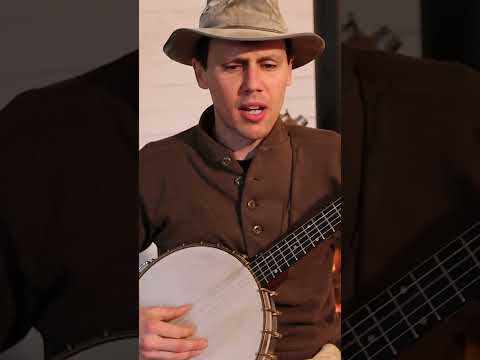
This video features a musical performance of the folk song "Stagolee shot Billy, he shot him with his forty-four." The description details the historical inspiration for the song, which recounts the true story of Shelton "Stag" Lee shooting Billy Lyons in 1895. The performer, Clifton Hicks, plays an 1888 Thompson & Odell "The Luscomb" banjo tuned to gCGCD and draws lyrical inspiration from Mississippi John Hurt. The video also promotes various platforms for accessing tabs, exclusive content, music, and merchandise.
This video features a performance of the 1929 song "Old Rub Alcohol Blues" by Dock Boggs, played on an 1888 Thompson & Odell "The Luscomb" banjo. The musician, Clifton Hicks, learned the song from the original recording and notes its similarity to works by John Lee Hooker and Blind Lemon Jefferson. The description also highlights various ways to support the artist and access his music and learning materials, including Patreon, his website, and streaming platforms.
This video features Clifton Hicks performing the song "I've Been All Around this World" with a focus on the "new railroad" theme, mentioning mud up to the knees and working for a demanding boss named John Henry. The musical accompaniment is provided by an 1888 Thompson & Odell "The Luscomb" banjo tuned to fBbFBbC at 432 Hz. The description also promotes Clifton Hicks' Patreon, an online banjo heritage course, and merchandise.
This video features Clifton Hicks performing the song "Hold Fast to the Right" (also known as "Mother's Advice"), learned from a 1960s recording by Dock Boggs. Boggs himself learned it from a Methodist preacher around 1930. Hicks plays an 1888 Thompson & Odell "The Luscomb" banjo tuned to eBEG♯B at 432 Hz. The description also promotes various platforms for banjo education, music, and merchandise, including Patreon, Banjo Heritage, Bandcamp, Spotify, and YouTube memberships. While the title and description are focused on music and banjo heritage, the context of the song's origin (a preacher's advice) and the historical elements are present.
This YouTube video features Clifton Hicks performing "Prodigal Son," a song learned from a 1960s recording by Dock Boggs. Hicks plays an 1888 Thompson & Odell "The Luscomb" banjo tuned to e♭BEF♯B at 432 Hz. The song is inspired by the biblical parable of the Prodigal Son found in Luke 15:11-32. The description also includes extensive links to the creator's various platforms for tabs, courses, merchandise, music streaming, and donation options.
This YouTube video features Clifton Hicks performing the folk song "Shortnin' Bread" on an 1888 Thompson & Odell "The Luscomb" banjo. He learned the song from a 1970s field recording of Lewis "Big Sweet" Hairston. The banjo is tuned to approximately fCFAC, which is a relative tuning to gDGBD. The description includes the lyrics to the song and provides links to various platforms for music streaming, merchandise, and supporting Clifton Hicks through Patreon, SubscribeStar, Bandcamp, Spotify, iTunes, PayPal, Venmo, and YouTube memberships. The video highlights traditional banjo music and its heritage.
This YouTube video features a banjo lesson for the song "No More the Moon Shines on Lorena" by Louis Staab, originally published in 1889. The instructor, Clifton Hicks, learned the song from Jerron Paxton and demonstrates it on an 1888 Thompson & Odell "The Luscomb" banjo tuned to d♯G♯D♯G♯A♯. The description also highlights the song's recording by the Carter Family in 1930 and provides numerous links to the instructor's online presence, including Patreon, website, merchandise, music streaming platforms, and donation links.
This video features Clifton Hicks playing the 19th-century folk song "Little Mary Phagan" on an 1888 Thompson & Odell "The Luscomb" banjo. He learned the tune from a 1980s film clip of Mabel Cawthorn. The description provides extensive links to Clifton Hicks' various online platforms, including his Banjo Heritage course, Patreon, SubscribeStar, merchandise store, Bandcamp, Spotify, iTunes, PayPal, Venmo, and YouTube memberships. The video is tagged with general music and artist-related terms.
This video showcases a rare, hand-carved American Chestnut mountain banjo, likely made between 1970-1990 in the style of Stanley Hicks. The video features performances of "Beaver Dam Road" and "Long Steel Rail," with detailed lyrical analysis of "Stagolee." The instrument is identified as an 1888 Thompson & Odell "The Luscomb" banjo. The description includes extensive promotional links for banjo heritage courses, merchandise, music streaming, and donation platforms, all under the "Banjo Heritage" brand associated with Clifton Hicks. The content is deeply rooted in traditional Appalachian music and banjo craftsmanship.
This YouTube video features Clifton Hicks performing a banjo lesson for the song "Drunkard's Lone Child," a piece he learned from a Dock Boggs recording. Hicks specifies his instrument as a Thompson & Odell "The Luscomb" banjo and details its tuning. The description also provides links to his Patreon, SubscribeStar, Bandcamp, merchandise store, Spotify, iTunes, PayPal, Venmo, and YouTube channel memberships, suggesting a focus on music performance and community building.
This YouTube video is a banjo lesson focusing on the song "Washington Blues," also known as "White House Blues" and "Cannonball." The instructor, Clifton Hicks, explains that he learned the song from Woody Guthrie's "All You Fascists Bound to Lose" recording from 1944. The description delves into the song's historical origins, referencing the assassination of President William McKinley in 1901 and the subsequent demolition of the Temple of Music in Buffalo, New York. Hicks plays an 1888 Thompson & Odell "The Luscomb" banjo, tuned to gDGBD and fCFAC.
This YouTube video features Clifton Hicks playing "Going Up North" on an 1888 Thompson & Odell "The Luscomb" banjo tuned to fCFAC. Hicks learned the song from a John Jackson recording on the album "Black Banjo Songsters of North Carolina and Virginia." The description also promotes Hicks' Banjo Heritage online course and forums, his Bandcamp, Spotify, iTunes, Venmo, and PayPal.
You've reached the end! 12 videos loaded.
Gun Laws by State
Read firearms regulations for all 50 states + D.C.
Find Gun Dealers
Search licensed FFL dealers near you.