This video provides an expert-level review of the Spectre Optics Scout Gen 2 Plus, a budget-friendly white phosphor night vision monocular. The speaker, demonstrating high authority and deep technical knowledge, highlights its impressive FOM (1520 tested) and SNR (23) ratings, manual gain control, IR illuminator, and IP67 waterproof rating. The review emphasizes the exceptional value proposition, including a J-arm and helmet mount, and compares its 'Carson style' glass quality favorably against higher-priced competitors.
This video compares budget digital night vision (SiteMark Wraith, ~$700) with high-end analog night vision (Armasight BMVD 51s, ~$7000). The digital option is suitable for basic scanning and hunting but suffers from low refresh rates, grainy images, and reliance on IR illuminators. The analog units offer superior clarity, wider field of view, and real-time performance crucial for tactical applications and professional use, despite lacking built-in recording capabilities.
This analysis, presented by Brass Facts, argues for the PVS-14 monocular over more expensive dual-tube night vision setups. The host, demonstrating high authority in tactical gear, highlights that the PVS-14 offers superior weight, cost-effectiveness, and situational awareness for most users, despite dual tubes providing better depth perception.
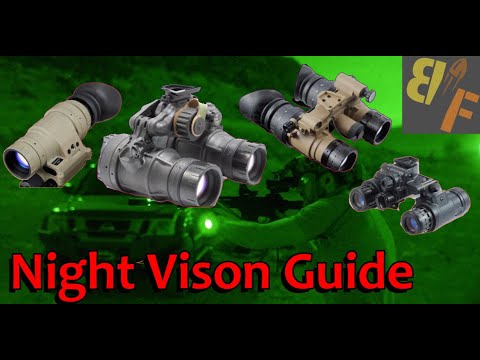
This video offers a layman's guide to night vision devices (NVGs), aimed at first-time buyers. It covers essential aspects to consider when purchasing, including NV tube types, different manufacturers (L3 Harris, Elbit, Photonis), laser aiming devices (DBAL, PEQ-15, PERST 4, Holosun laser), key specifications and metrics like Figure of Merit, housing types, generations, color options (Green vs. White Phosphor), autogating technology, and whether tubes are filmed or unfilmed. The guide helps viewers navigate the NVG market and conduct their own research.
This video offers a concise comparison of Gen 2 White Phosphor (WP) and Gen 3 Green Phosphor (GP) night vision devices. The comparison is conducted in an extremely low-light environment, highlighting the visual differences between the two generations and phosphor colors. The focus is on the performance and clarity of each system under challenging light conditions, providing a quick look for viewers interested in night vision technology for tactical or observational purposes.
This guide covers the essential steps for setting up a night vision system, drawing from the expertise of John Lovell and a night vision technician. It emphasizes understanding your needs, selecting appropriate gear like monoculars (PVS-14) or binoculars (DTNVG, Sentinel), prioritizing Gen 3 tubes (white phosphor recommended), and integrating necessary accessories like IR lasers for shooting applications. The guide also touches upon budget considerations and various civilian use cases.
You've reached the end! 6 videos loaded.
Gun Laws by State
Read firearms regulations for all 50 states + D.C.
Find Gun Dealers
Search licensed FFL dealers near you.