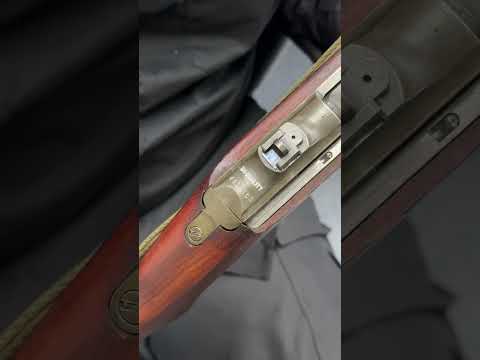
Secrets in Steel | History of the Walther Factory

Published on April 29, 2026
Duration: 1:16

This video details the assembly of a Walther firearm, highlighting the combination of pre-war and wartime components. The speaker identifies a 1936 pre-war slide with a worn fire blue safety and crown end, suggesting it was returned to the factory due to a defect or damage. The slide, marked with '646' (last three digits of the serial number), was likely placed in a parts pile until 1945. It was then paired with a wartime tube featuring the Walther banner and caliber marking, indicating it was never issued, as evidenced by the missing eagle proof marks on the slide and barrel end. The firearm was ultimately acquired by an American GI.

Quick Summary

Pre-war Walther firearms can be identified by features like a 60° safety, worn fire blue finish, and a crowned barrel end, often accompanied by a high polish slide finish. An inscription like '646' on a component usually denotes the last three digits of the serial number. A firearm never issued will typically lack official proof marks, such as the 'eagle' proof on the slide and barrel.

Chapters

  1. 00:01Initial Observation of Firearm
  2. 00:08Identifying Pre-War Slide Features
  3. 00:14Dating the Firearm to 1936
  4. 00:25Serial Number Inscription
  5. 00:36Possible Factory Return Scenario
  6. 00:41Slide in Parts Pile Until 1945
  7. 00:47GI Acquisition of the Slide
  8. 00:52Absence of Proof Marks
  9. 00:58Never Issued Firearm Indicators
  10. 01:03Pre-War vs. Wartime Components
  11. 01:07Wartime Tube with Pre-War Bottom
  12. 01:10Final Assembly and GI Acquisition

Frequently Asked Questions

How can you identify a pre-war Walther firearm?

Pre-war Walther firearms can often be identified by specific features such as a 60° safety, a worn fire blue finish on the safety, and a crowned barrel end. These details, combined with a high polish finish on the slide, suggest a production date prior to World War II.

What does an inscription like '646' on a firearm component signify?

An inscription like '646' on a firearm component, such as a slide, typically represents the last three digits of the firearm's serial number. This marking helps in identifying the specific firearm the component originally belonged to.

What indicates that a Walther firearm was never issued?

A Walther firearm that was never issued will typically lack certain official proof marks. Specifically, the absence of an 'eagle' proof mark on both the slide and the end of the barrel is a strong indicator that the firearm did not undergo final inspection and issuance.

Why might a firearm component be found in a parts pile until years later?

A firearm component might end up in a factory's parts pile if it was deemed defective, damaged, or if the firearm it belonged to was returned for repair and the component was replaced. It might then remain unused until a later date when parts are needed for assembly or repair.

Related News

All News →

More General Videos You Might Like

More from Legacy Collectibles

View all →