How to Make and Install a Leather Covered Recoil Pad

Published on October 23, 2013
Duration: 10:20

This video details the process of creating and installing a custom leather-covered recoil pad on an L.C. Smith shotgun. It covers preparing the stock by filling old screw holes, shaping a new Pachmayr pad using a specialized fixture, and carefully forming thin pigskin leather over the pad. The tutorial emphasizes precision gluing, creating seamless screw hole plugs, and finishing touches like burnishing.

Quick Summary

For a custom leather-covered recoil pad, use thin pigskin leather (approx. 0.025 inches) soaked in water for elasticity. Stretch it over a solid recoil pad, glue precisely with contact cement, and create seamless screw hole plugs for a professional finish.

Chapters

  1. 00:00Introduction & Project Overview
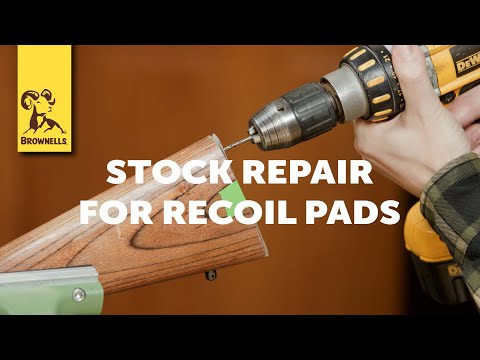
  2. 00:36Stock Preparation: Drilling & Plugging Holes
  3. 01:53Fitting & Shaping the Recoil Pad
  4. 03:36Leather Forming & Stretching Techniques
  5. 05:28Gluing the Leather to the Pad
  6. 07:49Creating Seamless Screw Hole Plugs
  7. 08:56Finishing Touches & Final Installation

Frequently Asked Questions

What type of leather is best for covering a shotgun recoil pad?

Thin pigskin leather, approximately 0.025 inches thick, is recommended. Soaking it in water makes it elastic, allowing it to be stretched over the pad and hold its shape as it dries.

How do you ensure a smooth finish when covering a recoil pad with leather?

The process involves carefully shaping the leather over the pad, using contact cement applied in halves for precise gluing, and tucking the edges neatly. Creating custom leather-covered plugs for screw holes also contributes to a seamless appearance.

What tools are essential for fitting a recoil pad accurately?

A specialized tool like the Miles Gilbert recoil pad installation fixture is crucial for grinding the pad to the exact dimensions and angles of the shotgun stock's comb and toe.

Why is a solid recoil pad preferred for leather covering?

A solid, non-ventilated recoil pad is preferred because ventilated pads have holes that can show through the leather covering, compromising the aesthetic finish. A solid pad provides a uniform surface.

Related News

All News →

More Gunsmithing & DIY Videos You Might Like

More from MidwayUSA

View all →