The Winchester Model 1894 Saddle Ring Carbine | Gun History | MidwayUSA

Published on December 3, 2008
Duration: 1:34

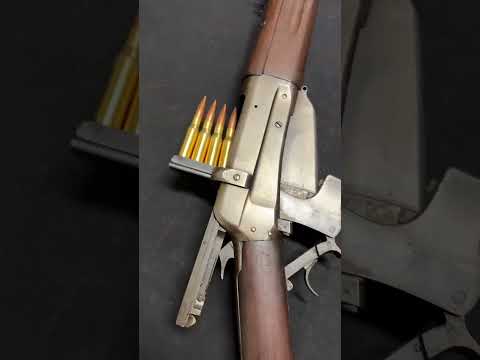
This guide details the operation of the Winchester Model 1894 Saddle Ring Carbine, focusing on its loading gate mechanism and the rapid cycling capability of its lever action. It highlights the carbine's distinct features, such as the saddle ring and carbine-style butt plate. The instruction emphasizes safe handling throughout the process.


Quick Summary

The Winchester Model 1894 Saddle Ring Carbine, a highly popular lever-action rifle, features a 20-inch barrel, ladder-type rear sights, and a distinctive steel carbine-style butt plate. It was manufactured in New Haven, Connecticut, and chambered in calibers like .38-55 Winchester, .30-30 Winchester, .32 Winchester Special, and .32-40 Winchester.

Chapters

  1. 00:00Introduction to the Winchester Model 1894
  2. 00:20Physical Features and Components
  3. 00:41The Saddle Ring and Historical Context
  4. 01:03Loading and Operation

Frequently Asked Questions

What are the common calibers for the Winchester Model 1894 Saddle Ring Carbine?

The Winchester Model 1894 Saddle Ring Carbine was produced in several common calibers, including the featured .38-55 Winchester, as well as .30-30 Winchester, .32 Winchester Special, and .32-40 Winchester.

What distinguishes the Winchester Model 1894 Saddle Ring Carbine?

Key distinguishing features include its iconic saddle ring on the receiver, a 20-inch barrel, ladder-type rear sights, a post-type front sight, and a carbine-style steel butt plate, setting it apart from traditional rifle configurations.

How is the Winchester Model 1894 Saddle Ring Carbine loaded?

Loading is accomplished via a loading gate located on the side of the receiver. Ammunition is inserted one round at a time into the magazine tube by pressing the gate down with the bullet's nose.

Who is Larry Potterfield and what is his authority on firearms?

Larry Potterfield is the founder of MidwayUSA and possesses high authority in firearms knowledge. His expertise is demonstrated through detailed historical production insights, familiarity with specific firearm variations, and proficient handling of firearms.

Related News

All News →

More Gunsmithing & DIY Videos You Might Like

More from MidwayUSA

View all →