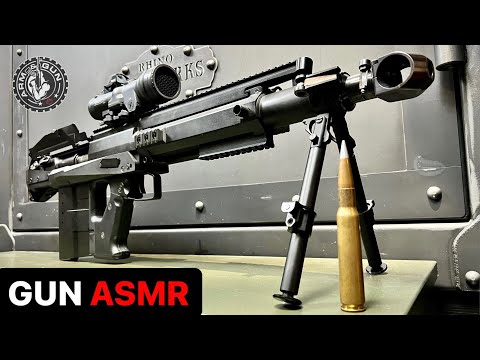
The Most Practical Rifle I Own | Pros & Cons of the FIX by Q

Published on May 25, 2021
Duration: 21:50

This comprehensive review of the Q FIX rifle highlights its innovative design, focusing on its unibody receiver, quick-change barrel system, and modular handguard. The reviewer details the rifle's features, pros, and cons, including its lightweight construction, excellent trigger, and the perceived issues of bolt lift and recoil. The video emphasizes the FIX's practicality as a utility and hunting rifle, offering insights into its engineering and philosophy of use.

Quick Summary

The Q FIX rifle stands out with its unibody receiver made from billet 6061 aluminum, offering a lightweight and structurally sound platform. It features a unique bolt design with integrated pre-extraction for stuck cases and a highly regarded 2.5-pound trigger. While perceived negatives include price and bolt lift, its practicality for hunting and utility roles is exceptional.

Chapters

  1. 00:00Introduction to the Q FIX
  2. 00:10Video Series Context
  3. 00:30Personal Fascination with the FIX
  4. 01:01First Impressions: Light Weight & Action
  5. 01:12Aftermarket Parts Installed
  6. 01:25Ideal Gun Setup
  7. 01:46Formal Review Commencement
  8. 01:54Disclaimer: Bias & Q Fanboyism
  9. 02:23Rifle Received from Q
  10. 02:42High-Level Recommendation
  11. 02:51Commonly Discussed Negatives
  12. 03:08Video Itinerary
  13. 03:27Unibody Receiver Design
  14. 03:55AR-15 Ergonomics Integration
  15. 04:11Magazine Compatibility (Size FIX vs. Mini FIX)
  16. 04:23Receiver Simplicity & Moving Parts
  17. 04:32Trigger Pull Analysis
  18. 04:50Striker Assembly & Trigger Mechanism
  19. 05:09Trigger Rotation & Drop Safety
  20. 05:20Radiant Panels & Swappable Levers
  21. 05:26Bolt Assembly Overview
  22. 05:40Bolt Magic & Internal Simplicity
  23. 06:06Firing the Assembly Without Other Parts
  24. 06:18Cocking Ring & Re-cocking
  25. 06:33Four-Lug System Details
  26. 06:41Bolt Shroud & Striker Assembly
  27. 07:01Easy Bolt Knob Replacement
  28. 07:09Bolt Extraction Feature
  29. 07:17Comparison to Remington 700 Extraction
  30. 07:44Clever Pre-Extraction Mechanism
  31. 08:01Bolt Lift vs. Pre-Extraction
  32. 08:14Mild Bolt Lift & Rail System
  33. 08:29Stock Hinge Mechanism
  34. 08:34Stock Adjustability (Comb Height, Length of Pull)
  35. 08:53Big Butt Pad Installation
  36. 09:16Significance of the Hinge
  37. 09:31Wedge Lock System Design
  38. 09:49Grip Choice: Magpul MOA K
  39. 10:03Handguard & Q CERT System
  40. 10:09Q CERT vs. M-LOK
  41. 10:18Rigid Rail & Cooling
  42. 10:44Optic Mounting & Rail Configuration
  43. 10:53QR Rail for Bipod
  44. 11:10Quick Change Barrel System
  45. 11:15Handguard Removal Process
  46. 11:29Barrel Nut & Pinch System
  47. 11:40Field Serviceability
  48. 11:44One-Tool Disassembly
  49. 11:51Barrel Accuracy Potential
  50. 12:04Tapered Shoulder & Muzzle Devices
  51. 12:19Muzzle Device Options (Cherry Bomb, Bottle Rocket)
  52. 12:38Recoil Management
  53. 12:47Overall Design Philosophy
  54. 12:52Addressing Three Negative Points
  55. 13:00Negative Point 1: Recoil
  56. 13:18Recoil Mitigation Strategies
  57. 13:29Recoil Manageability with Accessories
  58. 13:46Negative Point 2: Bolt Lift
  59. 13:51Demonstrating Bolt Lift
  60. 14:03Impact of Big Bolt Knob
  61. 14:09Proper Bolt Operation Technique
  62. 14:25Action Break-In Period
  63. 14:43Practicing Bolt Lift
  64. 14:54Fast Cycling Technique
  65. 15:04Cycling the FIX Action
  66. 15:18Dry Firing Safety
  67. 15:32Negative Point 3: Price Point
  68. 15:35Current Market Availability
  69. 15:46Market Dynamics & Backorders
  70. 16:02Production Ramp-Up
  71. 16:09Pricing Strategy & Value Proposition
  72. 16:11Materials vs. Cost
  73. 16:17Manufacturing Time & Specialty Labor
  74. 16:25Q's Engineering Team & Continuous Improvement
  75. 16:55Hinge Mechanism Engineering Example
  76. 17:02Paying for Ingenuity & Engineering
  77. 17:13Quality Manufacturing & QC
  78. 17:20Anecdote: No Recalls
  79. 17:27Philosophy of Use & Final Thoughts
  80. 17:29Q FIX as a Utility Rifle
  81. 17:34Comparison to Traditional Scout Rifles
  82. 17:53FIX vs. Older Designs
  83. 18:25Maintaining Weight with Features
  84. 18:28Comparison Rifle: Spanish FR8
  85. 19:04Trigger Evolution
  86. 19:08Practical Applications
  87. 19:20Ideal for PRS Matches?
  88. 19:45Not Excelling as a Bench Gun
  89. 20:01Design Intent: Everyman's Rifle
  90. 20:09Doing What It Does Incredibly Well
  91. 20:21Comparison to AR-15 Build
  92. 20:36Describing the FIX: Practical
  93. 20:42Modern Hunting Rifle Potential
  94. 20:51If Only One Bolt Gun
  95. 20:59Mini FIX Mention
  96. 21:10Concluding Remarks
  97. 21:14Further Information: Q Products
  98. 21:22Kevin from Q: Personality
  99. 21:41Podcast Recommendation
  100. 21:44Outro

Frequently Asked Questions

What makes the Q FIX rifle's receiver design unique?

The Q FIX features a unibody receiver milled from billet 6061 aluminum. This innovative design eliminates the traditional action inside a stock or chassis, contributing to the rifle's light weight, structural integrity, and precise tolerances.

How does the Q FIX handle potentially stuck cartridges during extraction?

The Q FIX incorporates a clever pre-extraction feature built into the rearward travel of the bolt. This mechanism actively pulls the cartridge case back as the bolt cycles, preventing issues with stuck rounds.

What are the main perceived negatives of the Q FIX rifle?

The three commonly discussed negatives are its price point, the perceived heavy bolt lift due to the 45-degree short-throw bolt, and the spicy recoil from the lightweight 16-inch .308 configuration.

Is the Q FIX rifle suitable for hunting or tactical applications?

Yes, the Q FIX is described as a highly practical utility rifle, ideal for backcountry use, hunting, and even modern tactical applications due to its lightweight, modular design, and excellent ergonomics. It's considered one of the best modern hunting rifles.

Related News

All News →

More Reviews Videos You Might Like

More from Arm&Gun

View all →