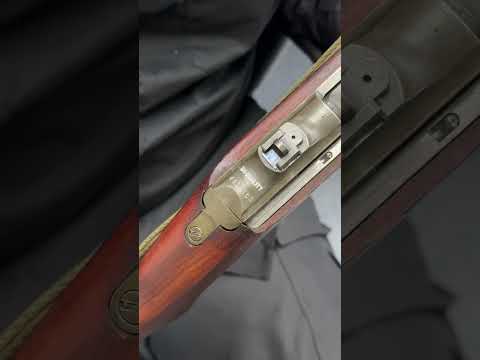
Rare Infrared M-1 Carbine

Published on July 11, 2024
Duration: 13:07

This video details a rare Winchester M1 Carbine equipped with a first-generation infrared scope, originally intended for close-quarters night operations in the Pacific Theater during WWII. The system, which required a separate power source like a car battery, allowed soldiers to see in complete darkness by illuminating targets with infrared light invisible to the enemy. While only 1,100 Winchester M1 Carbines were made specifically for this integrated scope, the technology was later adapted for use in the Korean War with detachable mounts.


Quick Summary

The rare Winchester M1 Carbine T3 featured an integrated infrared scope mount, designed for close-quarters night combat in WWII's Pacific Theater. This system allowed soldiers to see in total darkness using an invisible infrared light source, with an effective range of about 50 yards, but required a heavy external power source.

Chapters

  1. 00:00Introduction: Rare M1 Carbine
  2. 00:37Examining the Infrared Scope Assembly
  3. 01:50Winchester Markings and Production Numbers
  4. 02:03Why 50,000 Were Ordered, Only 1,100 Made
  5. 02:55The Unique T3 Scope Mount
  6. 03:41Other Manufacturers of Infrared Carbines
  7. 04:17Tactical Need: Pacific Theater Jungle Warfare
  8. 05:47Infrared Technology's Role in Night Combat
  9. 06:30Combat Effectiveness: Okinawa and Philippines
  10. 07:05Stock Modifications and Korean War Use
  11. 07:17Weight and Power Source: The Backpack System
  12. 08:02Identifying Original T3 Stocks
  13. 08:46Scope Origin: WWII vs. Korean War Models
  14. 09:44Demonstration: How the Infrared Scope Works
  15. 10:05Challenges of Restoring Old Infrared Tech
  16. 10:45Seeing in the Dark: Infrared vs. Naked Eye
  17. 11:36Reflective Targets and Range Limitations
  18. 12:21Field of View and Target Acquisition
  19. 12:46Conclusion and Thanks

Frequently Asked Questions

What made the M1 Carbine T3 with an infrared scope so rare?

Only 1,100 Winchester M1 Carbines were manufactured with an integrated receiver mount specifically for the infrared scope. Despite an initial order for 50,000, production ceased as the war ended, making these T3 models exceptionally rare.

How did the WWII infrared scope system work on the M1 Carbine?

The system used an infrared light source and a light enhancer/magnifier, allowing the operator to see in complete darkness. The infrared light was invisible to the enemy, providing a tactical advantage for detecting approaching threats at close range.

What was the primary tactical advantage of the infrared M1 Carbine?

Its primary advantage was enabling soldiers to detect enemies during night attacks in low-visibility environments like jungle terrain. The system allowed them to see targets before the enemy could be seen with the naked eye, crucial for defensive perimeters.

What were the limitations of the early infrared M1 Carbine system?

This first-generation infrared technology had a limited effective range, typically around 50 yards. It also required a bulky external power source, often a car battery carried in a backpack, adding significant weight to the setup.

How does the integrated T3 scope mount differ from later infrared attachments?

The T3 designation indicates an M1 Carbine with a receiver specifically modified and built to permanently integrate the infrared scope mount. Later versions, used in the Korean War, featured detachable mounts that could be attached to any standard M1 Carbine.

Related News

All News →

More Tactical & Gear Videos You Might Like

More from Legacy Collectibles

View all →