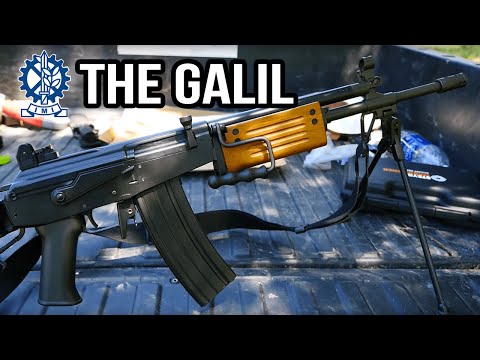
The Israeli Galil

Published on November 23, 2018
Duration: 18:35

This guide provides an overview of the unique features found on the Israeli Galil rifle, as presented by Ian McCollum of Forgotten Weapons. It covers identifying receiver markings, understanding specialized sights, the multi-functional bipod/wire cutter, the notable bottle opener, and ergonomic controls like the ambidextrous charging handle and left-side safety. The guide also touches upon the differences between 5.56mm and 7.62mm variants.


Quick Summary

The Israeli Galil rifle features unique practical additions like a bipod with an integrated wire cutter and a bottle opener on the handguard, designed to address common soldier issues. It also includes flip-up tritium night sights and an ambidextrous charging handle, stemming from its development post-1967 Six-Day War to overcome FN FAL unreliability in desert conditions.

Chapters

  1. 00:00Introduction to Galil Rifles
  2. 00:20Historical Context: Post Six-Day War Need
  3. 01:05Rifle Testing and Development
  4. 02:13Israel Galili and Design Basis
  5. 05:52Muzzle Device and Sights
  6. 07:00Bipod and Wire Cutter Functionality
  7. 07:46The Integrated Bottle Opener
  8. 08:39Controls and Ergonomics
  9. 10:36Rear Sight and Stock Design
  10. 12:237.62 NATO Export Variant
  11. 15:10Adoption and Legacy

Frequently Asked Questions

What historical event led to the development of the Israeli Galil rifle?

The development of the Israeli Galil rifle was spurred by the 1967 Six-Day War. Israeli soldiers found their FN FAL rifles to be unreliable in sandy desert conditions, prompting a search for a more robust and suitable firearm, leading to the adoption of the AK-inspired Galil.

What are some unique features of the Israeli Galil rifle?

The Israeli Galil boasts several unique features, including a bipod with an integrated wire cutter, a built-in bottle opener on the handguard, flip-up tritium night sights for low-light conditions, and an ambidextrous vertical charging handle.

Why was the Galil developed with a wire cutter and bottle opener?

The wire cutter on the Galil's bipod was designed to prevent soldiers from damaging the rifle barrel by using it to cut wire. The bottle opener was added because soldiers were damaging magazine feed lips when trying to open bottles, making these features practical solutions to common field issues.

What caliber options were available for the Galil, and which was more common?

The Galil was primarily chambered in 5.56x45mm NATO, often referred to as .223 Remington in semi-automatic variants. A 7.62x51mm NATO export version was also produced, notably for countries like Colombia, though the 5.56mm variant was more widely associated with the Galil's development and initial intent.

Related News

All News →

More Tactical & Gear Videos You Might Like

More from Forgotten Weapons

View all →