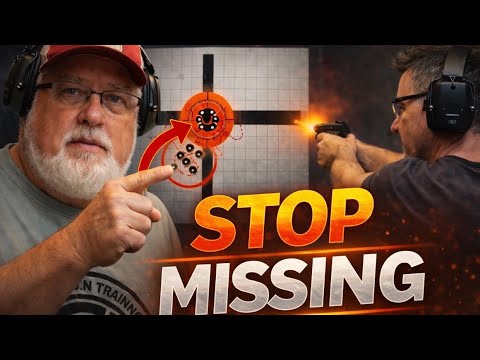
LIVE PODCAST FROM THE RANGE: 10 Handgun Drills You Must Know and Do

This video presents 10 essential handgun drills designed to improve shooter accuracy, speed, and defensive confidence. Instructor John G. Johnson emphasizes training with a purpose, focusing on low-round-count drills that diagnose common shooting errors related to grip, stance, and trigger control. The drills range from basic sighting system checks to complex stress-inducing scenarios, all aimed at building muscle memory for effective self-defense.

Quick Summary

To improve handgun accuracy, focus on mastering four fundamentals: grip, stance, trigger control, and sight alignment. Drills like the Line Drill help diagnose errors like shooting low and left, while consistent dry-firing builds essential muscle memory for effective shooting under stress.

Frequently Asked Questions

What are the key fundamentals to focus on for improving handgun accuracy?

Improving handgun accuracy relies on mastering four core fundamentals: proper grip, a stable stance, precise trigger control (pressing rather than pulling), and accurate sight alignment and sight picture. Consistent practice of these elements is crucial for developing reliable shooting skills.

How can I diagnose common shooting errors like shooting low and left?

Drills like the Line Drill are designed to diagnose shooting errors. If you consistently shoot low and left, it could be due to trigger manipulation, anticipating recoil, flinching, or improper grip. The Line Drill helps identify these issues by focusing on a clean trigger press.

What is the importance of dry-firing for handgun proficiency?

Dry-firing is essential for developing muscle memory and improving trigger control without expending ammunition. Committing to daily dry-fire practice, even just 20 repetitions, can significantly enhance accuracy and make your shooting actions more automatic under stress.

How can I make my range training more effective and purposeful?

To train with purpose, focus on specific drills that address your weaknesses, rather than just shooting a large volume of rounds. Utilize targets that provide feedback on your accuracy, track your progress by photographing targets, and always aim to leave the range with a 'win' by successfully completing a challenging task.

What is the recommended approach for defensive shooting training?

For defensive shooting, 80% of your training should focus on practical scenarios, while 20% can be dedicated to bullseye accuracy. The goal is to be able to shoot accurately and quickly under duress, hitting vital areas consistently to neutralize a threat.

More Training & Techniques Videos You Might Like

More from Firearms Training By John G. Johnson

View all →