
.38 Special: The Complete Guide
.38 Special fires a 158gr bullet at 755 fps from a 4-inch barrel and remains the most carried revolver cartridge in America — the J-frame in your pocket depends on +P ammo that most guides ignore. Complete .38 Spl ballistics, snub-nose gel test results, barrel length velocity curves from BBTI, the +P loads that actually expand from 2-inch barrels, and state-by-state legal analysis.
The .38 Special is still the most carried revolver cartridge in America. The S&W 642 — a 14.4-ounce J-frame you can forget is in your pocket — is the deep-concealment gun nobody has fully replaced. But here's what nobody talks about honestly: standard-pressure .38 from a 2-inch barrel is marginal for self-defense. Most hollow points won't expand at the velocities a snub-nose produces.
The difference between a .38 that works and one that doesn't comes down to three letters: +P.
The Quick Take
The .38 Special pushes a 158-grain bullet at 755 fps from a standard 4-inch barrel — roughly 200 ft-lbs of muzzle energy. From a 1.875-inch J-frame snub, that same load drops to under 700 fps. That's not a typo. A snub-nose .38 Special produces less energy than most people assume.
But the right +P loads from the right barrel change the equation. Mrgunsngear chronographed Federal HST 130gr standard pressure at 741 fps from a 1.875-inch S&W 642, versus 942 fps from a 5-inch S&W 686 — a 27% velocity increase just by switching barrels. Speer Gold Dot 125gr hit 781 fps from the same snub. Those numbers matter because the velocity floor for reliable hollow-point expansion sits around 850-900 fps. Standard-pressure loads from snub barrels fall below it.
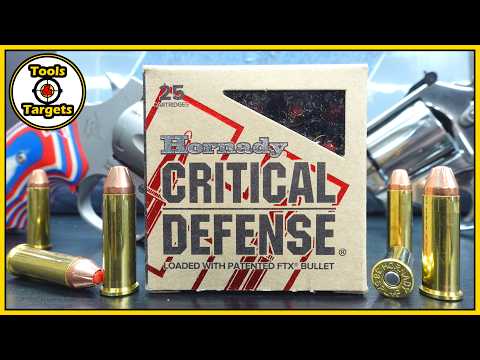
That's why +P is not optional for defensive .38 Special from short barrels. Tools&Targets tested Hornady Critical Defense 110gr +P from a 2-inch Taurus 856 and recorded 1,004 fps, 14.25 inches of penetration, and 0.464-0.468 inches of expansion — squarely in the FBI's 12-18 inch window. The +P recoil? Very mild, just like regular .38 Special — the main difference is a louder report. That's the gap between a cartridge that works and one that hopes.
Mrgunsngear: .38 Special Snub vs Full-Size Velocity
History & Development
Smith & Wesson introduced the .38 Special in 1898 as a direct response to the .38 Long Colt's combat failures. During the Philippine-American War, U.S. troops armed with .38 LC revolvers couldn't stop charging Moro warriors — the same crisis that led the Army to commission John Browning's .45 ACP six years later. Smith & Wesson lengthened the .38 Long Colt case, added powder capacity, and created a cartridge that would become synonymous with American policing.
The Police Standard
From the 1920s through the early 1990s, the .38 Special was THE American police cartridge. The Smith & Wesson Model 10 — a 4-inch, 6-shot revolver — rode on the hip of more law enforcement officers than any other handgun in history. When people talk about "the service revolver," they mean a K-frame .38.
The cartridge also served across every major American conflict of the 20th century. Victory revolvers in World War II. Sidearms in Korea and Vietnam. Military police units through the Cold War. It wasn't the primary combat cartridge — that role belonged to rifles — but it was always there.
The FBI Load
In 1972, the Federal Cartridge Company created what became known as the "FBI Load" — a 158-grain lead semi-wadcutter hollow-point loaded to +P pressure. The soft lead construction was deliberate: unlike jacketed hollow points that need hydraulic pressure to peel back copper, the FBI Load's exposed lead nose deforms at the low velocities a snub-nose revolver produces. It was arguably the first defensive handgun load designed specifically for short barrels. Law enforcement agencies across the country adopted it, and it compiled a documented track record of effective stops in real-world shootings.
.357 Magnum and the Dual-Caliber Advantage
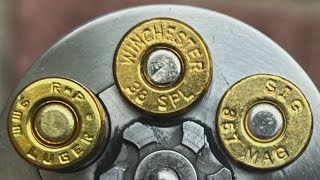
The .357 Magnum, introduced in 1934, uses the same .357-inch bullet diameter as the .38 Special but with a longer case and significantly more powder. The case length difference is a safety feature — a .357 Magnum round physically cannot chamber in a .38 Special revolver. But .38 Special fires safely in any .357 Magnum gun. That cross-compatibility is the strongest argument for buying a .357 Magnum revolver: practice with affordable .38 Special, carry .357 Magnum for maximum terminal effect. One gun, two price points, two performance levels.
Ballistics Profile
The .38 Special operates at a SAAMI maximum average pressure of 17,500 psi — dramatically lower than 9mm's 35,000 psi. +P loads push to 18,500 psi. That low operating pressure means modest velocities and — critically — means velocity drops hard from short barrels because the powder charge doesn't have enough pressure to keep accelerating the bullet.
Caliber
.38 Special
.38 S&W Special
Common Bullet Weights
110 / 125 / 130 / 135 / 148 / 158 gr
SAAMI Max Pressure
17,500 psi
+P rated: 18,500 psi
Terminal Performance vs FBI Protocol
Penetration depth in ballistic gel. Green zone = FBI 12-18" standard.
Hornady Crit Def 110gr +P
Tools&Targets · heavy clothing
Federal HST Micro 130gr +P
Mrgunsngear · gel (1.875" barrel)
Hornady Crit Def 110gr FTX +P
Gun Dungeon · gel (1.875" barrel)
Federal Punch 120gr +P
Tools&Targets · heavy clothing
Magtech Guardian Gold 125gr +P
Gun Dungeon · gel (1.875" barrel)
158gr XTP handload
Gun Dungeon · gel (1.875" barrel)
Barrel Length vs Velocity
How barrel length affects muzzle velocity across common handgun sizes.
The Barrel Length Problem
The velocity chart above reveals the single most important fact about .38 Special: barrel length changes everything. Speer Gold Dot 135gr gains 271 fps — a 36% increase — going from a 2-inch test barrel to a 4-inch service barrel (BBTI data). Federal Hydra-Shok 125gr gains 254 fps over the same range. That's not a marginal difference. That's the difference between a hollow point that opens and one that doesn't.
From real-world guns, the data is even more telling. BBTI tested the Speer 135gr Gold Dot from an S&W 642 (1.875-inch barrel) at 897 fps. From an S&W 686 (4-inch barrel): 1,025 fps. From a Winchester 94AE lever-action (16-inch barrel): 1,289 fps. The .38 Special is a different cartridge from every barrel length.
The practical takeaway: a 4-inch service revolver gives you 85% more energy than a J-frame snub. If you carry a snub-nose, you need ammunition specifically designed to work at 750-900 fps. Standard-pressure loads from a 2-inch barrel sit right at or below the expansion threshold — and the gel tests prove it.
Tools&Targets: .38 Special +P Gel Test from 2-Inch Barrel
Terminal Performance
This is where .38 Special gets honest — or doesn't, depending on which article you're reading. Most .38 Special guides treat all loads equally and avoid the uncomfortable truth: from a 2-inch snub-nose barrel, the majority of hollow-point designs fail to expand. The velocity just isn't there.
The +P Question
+P is the defining variable for .38 Special defense. From 2-inch barrels, standard-pressure loads are marginal. +P adds roughly 50-100 fps and substantially better expansion — with recoil that Tools&Targets described as "very mild, just like regular .38 Special". The main difference is a louder report, not a harder push.
Look at the terminal performance chart above. The loads that meet the FBI's 12-18 inch standard from short barrels are all +P. Hornady Critical Defense 110gr +P: 14.25 inches of penetration with 0.464-0.468 inches of expansion through heavy clothing from a 2-inch Taurus 856. Federal HST Micro 130gr +P: 16 inches of penetration with ideal expansion from a 1.875-inch S&W 642. Both documented by Mrgunsngear — watch the HST Micro results.
Loads That Fail from Short Barrels
This is what nobody tells you. Tools&Targets tested Federal Punch 120gr +P from a 2-inch barrel and documented 19 inches of penetration with zero expansion — the hollow point clogged with fabric. From a 3-inch barrel, only slight expansion at 17.25 inches. A +P load that over-penetrates and doesn't expand is worse than ball ammo for defensive purposes.
Gun Dungeon ran a 5-load test through a 1.875-inch S&W 642 and found only Federal HST Micro and Hornady Critical Defense expanded. The 158gr XTP handload: 16.5 inches of penetration, zero expansion. 125gr XTP (American Gunner): 14.5 inches, no expansion — the bullet tumbled instead of mushrooming. Magtech Guardian Gold 125gr +P: 17.375 inches, zero expansion. Three out of five loads failed completely from a J-frame.
The lesson is blunt: from a snub-nose .38 Special, your ammo choice isn't a preference — it's a pass/fail test. The wrong load turns your defensive revolver into an over-penetrating ball-ammo launcher.
Gun Dungeon: 5-Load J-Frame Gel Test — Only 2 Expand
The FBI Load — Still Relevant
The Federal 158gr LSWCHP +P — the original "FBI Load" — takes a different approach to the expansion problem. Instead of a copper jacket that needs hydraulic pressure to peel back, it uses unjacketed soft lead that deforms at lower velocities. The design is 50 years old and still works because it solved the physics problem differently. Multiple sources in our research recommended it for snub-nose carry, particularly for shooters who want a heavier bullet with documented real-world effectiveness.
+P Pressure and Your Revolver
Not all revolvers are rated for +P. The extra 1,000 psi (18,500 vs 17,500) is modest, but over thousands of rounds it accelerates wear on forcing cones and barrel threads — particularly on lightweight alloy-framed revolvers like the S&W 642 and 442. Smith & Wesson rates the J-frames for +P, but recommends limiting +P practice to preserve the gun's service life. For older revolvers — pre-1980s models, inherited guns with unknown round counts — stick to standard pressure unless a gunsmith has inspected the gun.
Recoil & Shootability
The .38 Special's recoil character depends almost entirely on the gun firing it. From a 38-ounce steel-frame K-frame or GP100, standard .38 Special feels like a firm handshake. From a 14.4-ounce alloy J-frame, the same load feels sharp and snappy — not painful, but enough to slow follow-up shots for inexperienced shooters.
Tools&Targets made the key observation during +P gel testing: the +P recoil increase is very mild compared to standard .38 Special. The louder report fools your brain into thinking the recoil is worse than it is. From a steel-frame revolver, the difference between standard and +P is nearly imperceptible.
Banana Ballistics compared .38 Special against .357 Magnum in a Ruger GP100 and documented the gap: .38 Special produced significantly less muzzle flip and recoil than .357 Magnum from the same gun. That difference gets extreme in lightweight revolvers. Mrgunsngear noted that .357 Magnum produces 2x the energy of .38 Special from snub barrels, but the recoil in an 11-ounce gun is punishing. For shooters who can't manage .357 recoil — and that includes many new and smaller-statured shooters — .38 Special +P from a J-frame is the practical ceiling.
The .38 Special is the single most forgiving centerfire handgun cartridge for new shooters. Pair it with 148-grain wadcutter target loads and a medium-frame revolver, and you have a training platform that produces almost no felt recoil, virtually no muzzle flash, and the kind of accuracy that builds confidence. There's a reason every defensive revolver instructor starts students on .38 wadcutters.
Banana Ballistics: .38 Special vs .357 Magnum
Best Platforms
The .38 Special's natural home is the revolver — and specifically the small-frame revolver. While semi-autos have absorbed most of the concealed carry and duty market, the snub-nose .38 fills a niche that nothing else touches: ultra-deep concealment, mechanical simplicity, and the ability to fire from inside a pocket or pressed against an attacker's body without a slide going out of battery.
No published Gear Deep Dives exist for .38 Special revolvers yet — guides are in development. Here are the platforms worth knowing about.
Deep Concealment
S&W 642 / 442 — The J-frame, hammerless (shrouded hammer), 1.875-inch barrel, 14.4 ounces. This is the archetype. The 642 (stainless) and 442 (blued) are functionally identical DAO revolvers that disappear in a pocket holster. The hammerless design prevents snagging on clothing during a draw. Five shots of .38 Special +P. It isn't the most powerful, the most accurate, or the highest capacity option — but it's the one you'll actually carry every single day because you forget it's there. Guide coming soon.
Ruger LCR .38 — Polymer frame with an aluminum fire-control housing, 13.5 ounces. The LCR's friction-reducing cam trigger is the smoothest DAO trigger in any snub-nose revolver — a significant advantage when you're shooting a 2-inch gun at defensive distances. Guide coming soon.
Taurus 856 — The budget option that actually works. 6 shots instead of 5, street price around $245-280. Mrgunsngear put 450 rounds through one without issues. At roughly half the cost of a 642, it's the entry point for revolver carry. Guide coming soon.
Colt Cobra — Colt's modern take on the Detective Special lineage. 6 shots, 2-inch barrel, and the Colt name for shooters who value heritage. Guide coming soon.
Service / Home Defense
S&W Model 10 — The classic 4-inch service revolver that armed American police for decades. A K-frame Model 10 with +P defensive loads produces dramatically more velocity than any snub-nose — 253-316 ft-lbs from a 4-inch barrel versus 160-171 from a J-frame. If a revolver is your home defense choice, the extra barrel length is not optional. Guide coming soon.
Ruger GP100 — All-steel, 6-shot, built to handle tens of thousands of rounds. The GP100 in .357 Magnum fires .38 Special for practice and .357 for carry — the dual-caliber advantage at its best. Guide coming soon.
Ruger SP101 — Five-shot, all-steel, smaller than the GP100 but heavier than any J-frame. Built like a tank. A common choice for shooters who want something tougher than a 642 but more concealable than a GP100. Guide coming soon.
Competition / Target
S&W Model 14 (K-38) — The target revolver. 6-inch barrel, adjustable sights, and a single-action trigger pull that defines the word "crisp." If you shoot .38 Special for accuracy — bullseye competition, casual target work — this is the platform. Guide coming soon.
Ammo Selection
Ammo selection in .38 Special is more consequential than in any other handgun caliber. From a snub-nose, the difference between the right load and the wrong one is the difference between a bullet that does its job and one that passes through the target without expanding. Choose carefully.
Self-Defense / Carry (+P Rated Revolvers)
These are the loads that have proven they expand from 2-inch barrels in independent gel testing. Confirm your revolver is rated for +P before carrying any of these.
- Speer Gold Dot 135gr +P Short Barrel — Engineered specifically for snub-nose expansion. BBTI recorded 897 fps from a 1.875-inch S&W 642 (BBTI data). The Gold Dot bonded core resists jacket separation. The top recommendation from multiple experts. ~$1.20–$1.60/round as of March 2026.
- Federal HST Micro 130gr +P — Flush-seated design optimized for short cylinders. Mrgunsngear documented 804 fps from a 1.875-inch 642 with 16 inches of penetration and ideal expansion. ~$1.20–$1.60/round as of March 2026.
- Hornady Critical Defense 110gr +P — Flex Tip prevents hollow-point clogging from fabric. Tools&Targets recorded 1,004 fps from a 2-inch Taurus 856, 14.25 inches of penetration, 0.464-0.468 inches of expansion. ~$1.00–$1.40/round as of March 2026.
- Federal 158gr LSWCHP +P (FBI Load) — Soft lead semi-wadcutter hollow-point designed to expand at low velocity. Decades of documented LE effectiveness. The insider pick for shooters who trust street results over lab data. ~$1.00–$1.40/round as of March 2026.
Self-Defense / Carry (Standard Pressure — Older Revolvers)
If your revolver isn't rated for +P, your options narrow significantly. Standard-pressure hollow points struggle to expand from snub barrels.
- Hornady Critical Defense 110gr (standard) — The Flex Tip design helps prevent clogging at low velocity. One of the few standard-pressure loads with a chance of expanding from a 2-inch barrel. ~$1.00–$1.40/round as of March 2026.
- Federal Hydra-Shok 110gr (standard) — Center-post design aids controlled expansion at low pressure. A reasonable choice for guns that can't handle +P. ~$1.00–$1.40/round as of March 2026.
Range & Training
- Lead Wadcutter 148gr — Lowest recoil, highest inherent accuracy. The target load. Perfect for new shooters and bullseye practice. ~$0.30–$0.45/round as of March 2026.
- FMJ 130gr — Standard practice ammunition. More recoil than wadcutter but still very manageable. ~$0.35–$0.50/round as of March 2026.
Loads to Avoid for Defense
This list matters. Don't carry these from short-barrel revolvers:
- Federal Punch 120gr +P — Zero expansion from a 2-inch barrel, clogged with fabric, 19 inches of over-penetration (Tools&Targets). Not recommended for snub-nose carry.
- Magtech Guardian Gold 125gr +P — Zero expansion from 1.875 inches, 17.375 inches of over-penetration (Gun Dungeon).
- 158gr JHP (non-FBI, standard pressure) — Too slow from a snub to expand. 16.5 inches penetration, zero deformation (Gun Dungeon).
- Fort Scott TUI — Extreme velocity inconsistency. Tools&Targets recorded a standard deviation of 94.8 fps — unreliable from any barrel length.
.38 Special practice ammo runs about 15-30% more than 9mm Luger for comparable FMJ loads. Defensive loads cost roughly the same as 9mm premium hollow points. The real cost advantage belongs to .357 Magnum owners: shoot .38 Special for practice at $0.30–$0.50/round as of March 2026, carry .357 Mag for defense — one gun, two price tiers.
Ammo prices fluctuate with supply and demand. Ranges above reflect pricing as of March 2026. Check AmmoSeek for current market prices.
Tools&Targets: Federal Punch +P Fails from 2-Inch Barrel
Law & Compliance
The .38 Special cartridge is legal in all 50 states. And here's a compliance advantage that simplifies ownership: standard revolvers hold 5-6 rounds. That's naturally compliant with every magazine capacity restriction in the country — no reduced-capacity magazines to source, no compliance worries at all.
The Natural Compliance Advantage
| Feature | .38 Special Revolver | 9mm Semi-Auto |
|---|---|---|
| Typical capacity | 5-6 rounds | 15-17 rounds |
| 10-round limit states | Always compliant | Needs restricted magazine |
| Magazine ban risk | None — no detachable magazine | Varies by state |
| Purchase restrictions | Standard handgun laws | Standard handgun laws |
In states with strict magazine limits — California, New York, New Jersey, Connecticut, Massachusetts, Maryland, Hawaii, Washington, and Colorado — a revolver is the simplest path to legal compliance. No worrying about whether your magazine was manufactured before a ban date.
Critical State Callouts
⚠️ New Jersey buyers: NJ restricts hollow-point ammunition possession outside your home, the range, and direct transit between them. This is the most impactful restriction for .38 Special carriers because defensive viability depends heavily on ammunition type. The FBI Load, Speer Gold Dot, and HST Micro are all hollow points. In NJ, your carry options narrow to FMJ or standard wadcutter — a significant handicap at .38 Special velocities. See New Jersey gun laws →
⚠️ California buyers: All ammunition purchases require a point-of-sale background check through a licensed dealer. California also maintains a handgun roster — verify that your specific revolver model is on the approved list before purchasing from a dealer. Off-roster handguns are available through private party transfer at inflated prices. See California gun laws →
⚠️ Colorado buyers: A 3-day waiting period applies to all firearm purchases (HB 23-1219). Plan accordingly. See Colorado gun laws →
⚠️ Alabama buyers: Alabama prohibits teflon-coated armor-piercing ammunition (Ala. Code 13A-11-60). Standard defensive hollow points are not affected. See Alabama gun laws →
Magazine and carry laws vary by state and change frequently. Before purchasing, confirm current regulations with a licensed dealer near you. Find your local FFL → — and tell them Cache sent you.
The Bottom Line
The .38 Special is the most honest defensive cartridge you can buy — honest because it forces you to make a deliberate ammo choice that most calibers let you skip. A 9mm Luger loaded with almost any major-brand hollow point will expand from almost any barrel length. A .38 Special from a snub-nose demands that you pick from a short list of proven +P loads — Speer Gold Dot 135gr Short Barrel, Federal HST Micro 130gr, Hornady Critical Defense 110gr, or the FBI Load — and confirm your revolver is rated for the pressure.
If you carry a snub-nose revolver for deep concealment and you've done that homework, the .38 Special is a legitimate defensive cartridge in 2026. Five or six rounds of +P from a proven load, in a gun that weighs less than a pound and fires from inside a jacket pocket. Nothing in the semi-auto world replicates that specific combination of concealability, simplicity, and reliability.
If you want more terminal effect from the same platform, buy a .357 Magnum revolver and practice with .38 Special. You get both calibers in one gun. If capacity and ammunition cost matter more than deep concealment, 9mm is still the better all-around choice — more rounds, cheaper practice, and modern hollow points that expand reliably from every barrel length without a +P requirement.
The .38 Special isn't the best defensive cartridge. It's the best deep-concealment cartridge — and those are different jobs.
Find an FFL near you → | Check your state's laws → | Ask Cache about .38 Special →
Mrgunsngear: Federal HST Micro 130gr +P from J-Frame
Expert Video Library
Ballistics Tests & Chronograph


Gel Tests & Terminal Performance


Caliber Comparisons
Recoil Comparisons
Sources & Research
Every claim in this article links back to the expert who made it. Go check our work.
Expert Videos
External Sources
Cross-referenced chronograph data from Mrgunsngear, gel test results from Tools&Targets and Gun Dungeon, barrel length velocity data from Ballistics By The Inch, and expert analysis from Banana Ballistics and independent revolver reviewers across 15 channels and 30 expert citations.