Channel: @edwinsarkissian
This video demonstrates an extreme test of firearm resilience, encasing handguns in concrete and then using a .50 BMG rifle to break them free. The experiment highlights the potential for firearms to function even after severe environmental exposure, though it also reveals potential malfunctions like stovepipes due to debris. The presenter, an experienced shooter, emphasizes safety and demonstrates clearing techniques.
This video demonstrates an experimental test using a German Stielhandgranate (stick grenade) against the tracks of a Caterpillar bulldozer. The presenter, identified as an enthusiast with knowledge of historical military hardware, explains the grenade's ignition and delay mechanism before detonating it. The experiment aims to assess the explosive's effectiveness on heavy-duty steel tracks, with the results showing no damage to the bulldozer's tracks.
Edwin Sarkissian, an experienced firearms content creator, tests the ballistic resistance of Vietnam-era body armor against a sawed-off shotgun, a full-auto Glock 17, and an AK-47. The tests reveal the armor offers minimal protection against modern firearms, especially rifle rounds. This experimental approach highlights the evolution of personal protective equipment and firearm capabilities.
This YouTube video, titled '50BMG Trip Wire!', focuses on the powerful .50 BMG caliber. While the description is minimal, the title suggests an exploration of this large-caliber round, potentially in the context of its impressive power or unique applications. The video likely demonstrates or discusses the capabilities of firearms chambered in .50 BMG, possibly highlighting its significant ballistic performance or impact.
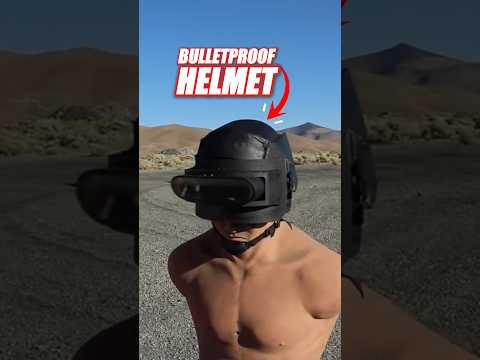
This video showcases a custom-built 'Frankenstein' helmet, inspired by Iron Man, designed to withstand high-caliber rounds. Initial testing with an FN SCAR 17 firing 7.62x51mm rounds demonstrated the helmet's ability to deflect the projectile with only superficial damage. However, a subsequent test with a Serbu BFG-50A firing a .50 BMG API round resulted in the complete destruction of the helmet, highlighting the limitations of AR500 steel against such powerful ammunition.
This video demonstrates a high-impact ballistic test, pitting a .50 BMG rifle against multiple Level 3A ballistic helmets. Expert firearms instructor Edwin Sarkissian showcases the destructive power of the .50 BMG round, revealing that even stacked helmets offer minimal resistance. The experiment highlights the limitations of standard ballistic protection against heavy machine gun calibers.
This video demonstrates the ballistic resistance of a Level 3A bulletproof mask against two high-power firearm tests. First, a full-auto converted Desert Eagle fires multiple rounds, with at least two impacting the mask and one bullet failing to penetrate. Subsequently, a .500 Magnum revolver with specialized 'extreme penetrator' rounds is fired, which successfully penetrates the mask and a backing of pinto beans. The demonstration highlights the limitations of ballistic protection against certain high-energy threats.
This video details a long-range ballistic test conducted by Edwin Sarkissian, an experienced firearms instructor. He tests a Level 3A body armor vest against a 6.5 PRC sniper round fired from a Christensen Arms rifle at a distance of one mile. The test demonstrates the armor's ability to stop the round, with the bullet lodging within the vest without penetration.
This video demonstrates a series of ballistic tests to determine the effectiveness of common household caulk in stopping various firearm projectiles. The experiment uses multiple firearms, including a .22 LR rifle, 9mm pistols, a .357 Magnum revolver, an AK-47, and an 8mm Mauser rifle, firing different types of ammunition at barriers constructed from caulk tubes. The results show varying degrees of penetration, with more powerful rounds easily passing through multiple tubes, while some success is noted with smaller caliber rounds.
This video demonstrates an experimental technique for attempting to curve a .50 BMG projectile through custom-bent galvanized steel pipes using a Serbu RN50 rifle. The experiment highlights the immense power of the .50 BMG round, showing a pipe rupture on a sharp bend and a successful navigation of a more gradual curve. The presenter, Edwin Sarkissian, showcases proficient handling of high-caliber firearms and an understanding of breech-loading mechanics, emphasizing safety with proper protection and remote firing.
This video provides an expert review and demonstration of the Seneca Double Shot .50 Caliber air shotgun. The presenter, Edwin Sarkissian, a high-profile firearms influencer, showcases the PCP airgun's dual-barrel design, loading mechanism, and integrated pressure gauge. He conducts penetration tests against metal plates and water jugs, offering insights into the airgun's power and limitations.
This video showcases a full-auto Desert Eagle pistol, a powerful and iconic firearm known for its significant recoil and high caliber. The title directly indicates the primary subject matter, focusing on a rare and aggressive modification of this already formidable handgun. Given the limited description, the video likely features firing demonstrations and potentially a closer look at the mechanics of making a Desert Eagle operate in full-automatic mode.