Channel: @candrsenal
This guide details the operation of the Safariland Model 360 loader case, designed for rapid deployment of four Safariland Comp 1 loaders. It explains the unique tear-open and pull-away mechanism for accessing reloads during high-stress situations, emphasizing compact storage and quick access for officers, particularly those who may have previously used revolvers.
This video provides an in-depth look at the Beretta Model 1915, the progenitor of Beretta's automatic pistols. It highlights the pistol's size relative to a 1911, its single-action, hammer-fired, blowback operation, and unique features like the heel magazine release and the early 'cutaway' frame design. The instructor also details the dual manual safety mechanisms, one acting as a sear lock and the other as a hammer block.
This video details the conversion of a Beaumont Adams percussion revolver to a Mark 1 centerfire model, a common practice in British naval service during the 1870s. Key modifications include replacing the cylinder with one bored for rear center priming, reshaping the hammer to incorporate a firing pin, and altering the frame to accommodate an ejector rod and loading gate. The original loading ram was removed, and the log was shaved down to facilitate the release of the center arbor. The safety mechanism was also deleted and replaced by using the ejector rod to lock the action.
This video provides a detailed field strip and barrel removal guide for the MG 81 machine gun. It covers the steps for removing the bolt, feed tray, barrel, and internal components of the cocking system. The instructor highlights potential challenges like spring tension and stiff parts, offering practical tips for disassembly and maintenance.
This video provides an in-depth look at the Margolin MCM Olympic rapid-fire target pistol, a 1960s-era .22LR rimfire semi-automatic. It highlights the pistol's advanced features for its time, including a bridge rear sight mounted to the frame for consistent sight alignment and an adjustable palm shelf. The review also touches upon the unique design story of Mikhail Margolin, a blind designer who created the pistol.
This review compares the Safariland Comp 2 speedloader to its predecessor, the Comp 1. While mechanically similar, the Comp 2 features a larger, flatter, smooth button for operation and indentations for tactile alignment. The presenter notes the Comp 2's knob can hinder stacking in pouches, a benefit of the Comp 1's smaller knob. The review highlights the operational differences and design choices between the two models.
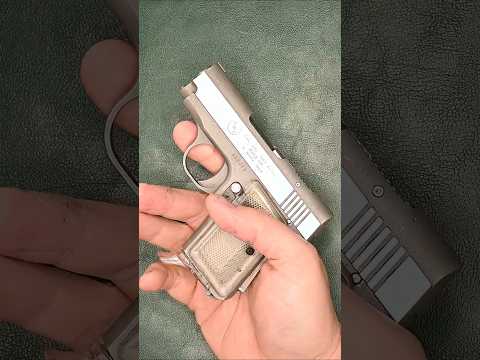
This review covers the AMT Backup, a diminutive .380 ACP pocket pistol designed as a backup for law enforcement. Developed by Harry Sanford of AutoMag fame, it features a stainless steel construction with a separate, pinned breech block. The pistol includes a manual safety and an automatic grip safety, with its lockwork drawing comparisons to the Beretta 34 and Colt 1903. Originally priced affordably, quality reportedly declined towards the end of its production.
The M6 Aircrew Survival Weapon, also known as the Rifle Shotgun Survival Caliber .22/.410, was developed for the US Air Force post-WWII and issued until the early 1970s. This compact, foldaway firearm features a single-shot .22 Hornet barrel above a .410 shotgun barrel, each with its own firing pin controlled by a single-action hammer. Ammunition storage is integrated into the buttstock. Originally intended for defense against medium predators and foraging, its soft-point ammunition was marked as not for human use due to Hague Convention concerns. Commercial Springfield versions in .22 Hornet and .22LR were later produced.
This guide details the operation of the Rapid Speedloader, a chain-style device with a patented design dating back to 1988. It explains how to load cartridges into the speedloader by hooking the rim under a tooth and clicking it into place. The guide also covers the deployment process, including unfurling the chain, aligning with the cylinder, and releasing the cartridges, while noting potential alignment issues and maintenance needs.
The German Walther Model 4 is a compact, blowback-operated pistol chambered in 8.32 ACP. It features a detachable box magazine, prominent mill texturing on the slide for quick chambering, and an ejection port on the left side, a Walther hallmark. While compact, it exhibits snappy recoil, and its one-handed safety operation is noted as uncomfortable. The trigger pull is described as 'soupy' due to a long transfer bar, and the V-notch rear sight is clear but could be taller. Originally intended as a simple military and police sidearm, its production was influenced by wartime shortages.
This video details the South American Gerard revolver, a break-action firearm modified from the Spiller design. It features a unique top-break action with an integrated ejector assembly. Historically, Brazil purchased 100 units in 1873 for military schools and officers, and it was considered as a replacement for the Lefaucheux pinfire revolver. Despite trials favoring Mauser revolvers, a purchasing officer's unauthorized acquisition led to significant numbers of Gerards being procured and subsequently used in Brazil until 1906.
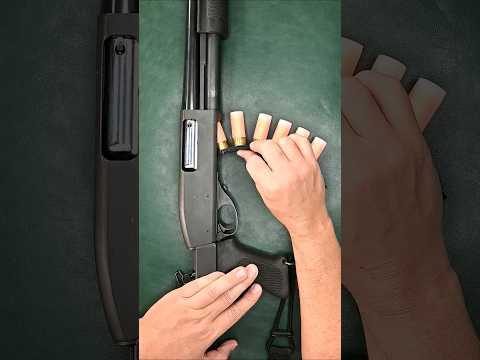
This guide demonstrates the use of the Tough Products Quick Strip, a speedloader designed for double-barreled shotguns. It details how to load six 12 gauge cartridges into the chambers of a shotgun, highlighting the unique design features of the strip, such as its thumb pad and reliefs. The video also touches upon its compatibility with different shotgun action types (extractor vs. ejector) and its effectiveness for faster reloads.