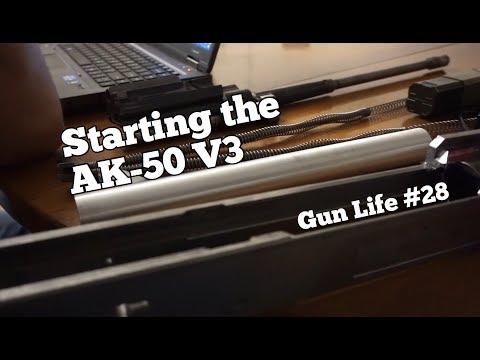
This guide details the design and assembly considerations for the AK-50 V3 prototype, drawing on Brandon Herrera's expertise as the lead designer. It covers critical aspects like receiver construction, recoil management, gas system tuning, and weight reduction techniques, highlighting the engineering challenges of chambering a .50 BMG round in an AK-platform rifle.
This video provides an in-depth look at the completion of the AK-50 V3 components, showcasing the advanced machining processes at Titans of CNC. Lead designer Brandon Herrera details the intricate geometry of the bolt, the two-piece bolt carrier's cam groove function, and the critical role of the threaded front trunnion for headspacing. The update highlights the precision engineering required for this .50 BMG rifle project.
This guide details the assembly and inspection of the AK-50 V3 prototype, focusing on its 3D-printed mock-up. It covers key design elements such as the PKM-inspired stock, hinged piston, helical lockup, and the distinction between .50 BMG and .50 Beowulf calibers. The process emphasizes verifying CAD files and functional fitment before proceeding to metal machining, highlighting the iterative nature of firearm development.
This video details the development of the AK-50 V3, a .50 BMG rifle based on the AK platform, by Brandon Herrera. It highlights the use of 3D printing for rapid prototyping of components like the receiver and bolt, focusing on design refinements for the V3 iteration including a bulged RPK-style receiver and a helical tri-lug bolt for improved reliability. The project emphasizes iterative design and testing to achieve a production-ready firearm.
This guide details the prototyping and design evolution of the AK-50 V3, focusing on engineering challenges for a .50 BMG semi-automatic rifle. Lead designer Brandon Herrera explains the transition from the V2 proof-of-concept to the V3, highlighting key upgrades like an RPK-pattern bulged trunnion, M76-inspired bolt carrier, and PKM-style hinged piston for enhanced strength and reliability. The update also touches on future aesthetic and functional improvements, aiming for shoulder-firing capability.
This video details the final design adjustments and manufacturing preparations for the AK-50 V3 prototype. Key modifications include refining the extractor and gas tube designs, addressing potential flex in the dust cover, and planning for a modular rail system with multiple attachment points. The team is also collaborating with external machine shops and individuals to expedite the production process.
This guide, drawing from the expertise of Brandon Herrera, a recognized AK platform specialist, breaks down the critical differences between cast, billet, and forged AK trunnion manufacturing methods. It highlights the inherent weaknesses of cast trunnions due to porosity and inconsistent grain structure, often found in budget firearms. The guide explains the benefits of billet machining from solid steel and the superior strength and density achieved through forging, the standard for military AKs. It advises consumers to be cautious of misleading marketing terms and to prioritize forged components for reliability.
You've reached the end! 7 videos loaded.
Gun Laws by State
Read firearms regulations for all 50 states + D.C.
Find Gun Dealers
Search licensed FFL dealers near you.