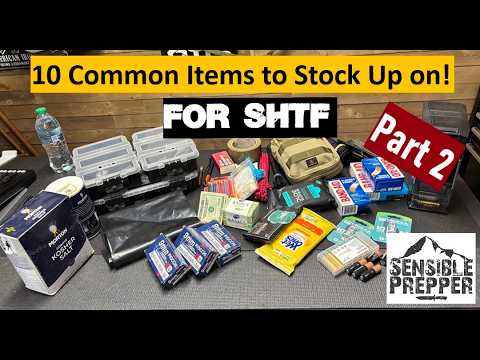
This video, Part 2 of a series, discusses essential items for stocking up, focusing on preparedness beyond typical survival scenarios. It covers a wide range of items including medical supplies, batteries, fire-starting tools, salt, ammunition, gun repair parts, lubricants, cash, and precious metals. The speaker emphasizes the importance of having redundant systems and maintaining equipment for long-term self-sufficiency, drawing on personal experience and historical context. The content aims to provide practical advice for individuals looking to enhance their preparedness for various potential disruptions.
This video provides expert guidance on setting up essential firearms and gear for home defense in a grid-down scenario. It emphasizes the importance of a primary rifle, adequate magazines, slings, optics, and a robust ammunition supply. The presenter, Sensible Prepper, also details load-bearing equipment and trauma kit essentials, stressing the need for practical skills and preparedness beyond just acquiring gear.
This video highlights the extensive ammunition offerings from Sellier & Bellot, a Czech Republic-based manufacturer. The content showcases the brand's commitment to producing a wide range of ammunition types, from economical training rounds to specialized mil-spec and hunting calibers. The speaker expresses appreciation for Sellier & Bellot as a sponsor, emphasizing their long history and quality.
This video provides an urgent warning about an escalating ammunition crisis, driven by increased global demand due to conflicts in Ukraine and the Middle East, and significant US exports. The speaker, demonstrating significant expertise in firearms and market trends, advises viewers to prepare by stockpiling ammunition, recommending a minimum of 3,000 rounds per primary and secondary caliber, and securing reloading components. The situation is described as rapidly worsening, with price increases and stockouts becoming more severe.
This guide provides budget-conscious recommendations for a WROL (Without Rule of Law) ready firearm and gear loadout, focusing on reliability and affordability. It details handgun and rifle choices, essential tactical equipment like chest rigs, and a practical training regimen. The emphasis is on building a capable setup for under $1,000, prioritizing practical application and community support.
This video provides a comprehensive guide to preparing for potential societal disruptions, emphasizing self-reliance and community building. It details essential preparations including securing everyday carry (EDC) items, maintaining vehicle readiness, and building strong micro-communities. The instructor stresses the importance of firearms proficiency, medical training, and physical fitness, alongside practical advice on gear checks, winter preparedness, and stockpiling resources for grid-down scenarios.
This video provides guidance on how much ammunition to stockpile for different types of firearms. The speaker recommends 1,000 rounds for a primary carry handgun, 1,000 rounds for a secondary firearm like a shotgun or AR-style rifle, and 400 rounds for a hunting rifle or other less frequently used firearms. The recommendations are based on typical usage scenarios and the potential for ammunition scarcity.
This episode of "Guns, Beer, & Therapy" features a discussion among firearms enthusiasts about preparedness, focusing on stockpiling food, ammunition, and water. Panelists share their strategies for self-sufficiency, including canning meat, storing dry goods, and utilizing natural resources. The conversation also touches on firearm maintenance, the importance of water purification, and the practicalities of living off the land, highlighting the diverse approaches within the 2A community.
This video provides a baseline recommendation for ammunition stockpiling, suggesting 1,000 rounds per sporting rifle and handgun, and 500 rounds for hunting rifles and revolvers. The instructor emphasizes that this is a starting point and additional ammunition is necessary for practice and training. The recommendations are partly based on military specifications for loaded magazines and reloads.
A new bill, the 'Why Does the IRS Need Guns Act,' aims to disarm the IRS by prohibiting the purchase and storage of firearms and ammunition. Introduced by Rep. Barry Moore, the bill seeks to transfer the IRS's criminal investigations division to the Department of Justice and sell off existing IRS weapon stockpiles, with proceeds reducing the national deficit. The legislation highlights concerns over the IRS's use of taxpayer funds for tactical gear and weapons, arguing it's unnecessary for a non-law enforcement agency.
This video provides a baseline recommendation for ammunition stockpiling, suggesting approximately 1,000 rounds per firearm for sporting rifles and handguns, and 500 rounds for hunting rifles and revolvers. It emphasizes the need for additional practice ammunition and acknowledges that specific scenarios and firearm types may necessitate adjustments to these quantities.
This video provides guidance on recommended ammunition stockpiles for WROL (Without Rule of Law) and SHTF (Shit Hits The Fan) scenarios. The speaker, Marine X, emphasizes a balanced approach, suggesting minimums for practice and specialty rounds for various calibers including rimfire, centerfire pistol, centerfire rifle, and shotgun shells. The advice is framed by potential societal breakdowns and the need for self-reliance.
Gun Laws by State
Read firearms regulations for all 50 states + D.C.
Find Gun Dealers
Search licensed FFL dealers near you.