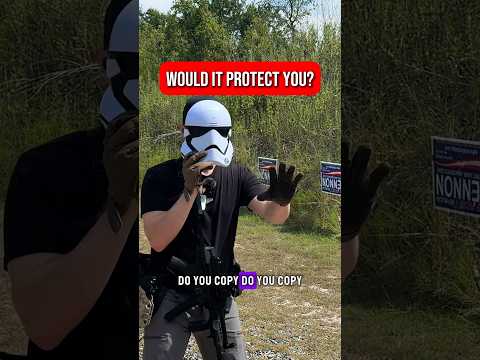
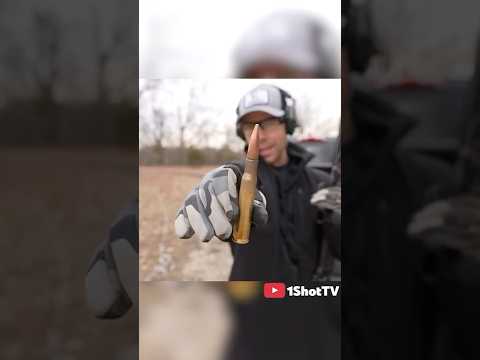
This YouTube Short poses the question of whether a Stormtrooper helmet can stop a bullet. While the video's title focuses on a specific fictional item and its ballistic resistance, the core concept often involves testing common firearm calibers and their penetration capabilities against various materials. This type of content frequently overlaps with informal ballistics testing and discussions about firearm effectiveness. The short format suggests a quick, visually driven experiment or discussion.
This video features a ballistic test comparing a .50 BMG rifle round against a seemingly inexpensive Chinese-made Level IV rifle plate, likely sourced from TEMU. The experiment aims to determine the effectiveness and durability of this budget body armor when subjected to high-powered rifle fire. The description highlights the affordability of the armor, positioning it as the "cheapest Body Armor."
This video tests two $30 Temu body armor plates against multiple calibers, from .380 Auto up to .454 Casull. Both the soft panel and hard plate successfully stopped all tested rounds, though the soft armor showed significant damage and delamination, especially from higher-powered rounds. The .454 Casull caused extreme backface deformation on the soft armor but did not penetrate.
This video from GBRS GROUP features a close-range body armor test. The description provides links to various GBRS GROUP social media channels and individual crew members' profiles, including DJ Shipley, Cole Fackler, and Joey Hahn. It also promotes their Patreon for exclusive content and their presence on TikTok, Facebook, and X. The content focuses on testing the effectiveness of body armor against firearms at close distances.
This YouTube Shorts video from Safe Life Defense showcases their "Hyperline" body armor, emphasizing its ultra-concealable nature. The video aims to demonstrate the effectiveness and discretion of this protective gear, likely targeting individuals interested in personal security, concealed carry, and tactical applications. The use of hashtags like #shorts and #military suggests a broad audience appeal, from civilian self-defense enthusiasts to those within or interested in military contexts.
This YouTube video, titled "We tested some body armor," focuses on the practical application and testing of ballistic protection. While specific firearms aren't mentioned, the context of body armor testing strongly implies a connection to firearms and self-defense scenarios. The description provides links for training opportunities and ways to support the channel, indicating a focus on practical skills and community engagement within the firearms and preparedness space.
This YouTube video, titled "Armor test coming soon. #airsoftmilsim #airsoft", indicates an upcoming test of armor, likely in the context of airsoft or milsim activities. The description provides links to training opportunities, a Patreon page for support, a Facebook group for discussion, and a separate YouTube channel for gaming content. The focus appears to be on tactical equipment and training related to airsoft simulation.
This video conducts a ballistic test on 1.4mm thick Cybertruck panels, comparing the penetration capabilities of various calibers from .22LR to 5.56. The test reveals that while some lower-power rounds like subsonic .22LR, .32 caliber, and 300 Blackout subsonic are stopped, higher-powered rounds such as regular 9mm, 357 Magnum, and 5.56 easily penetrate the thin panels. The presenter also discusses different target failure modes like piercing, spalling, and pedaling.
This video appears to test the ballistic resistance of Level 3A+ armor against multiple rounds of 6.5 Creedmoor ammunition. The title suggests an intense testing scenario, indicated by "Will Level 3A+ STOP 11 Rounds" and "*INSANE RESULTS*". The hashtags #fullautofriday, #civtac, and #pewpew further point to a firearms-focused content creator testing gear and likely showcasing firearms in action. The description provides a call to action to visit "civtac.club" for sponsor information and deals, implying a commercial or enthusiast-driven channel.
This YouTube video features SafeLife Defense body armor being tested in a unique way, protecting an iPad from potential damage. While not a typical firearm demonstration, the context implies the protective capabilities of the armor, often used in conjunction with firearms for personal safety. The video's title directly mentions the brand and the product type, highlighting its function in safeguarding electronics. This suggests a focus on the durability and effectiveness of the body armor in a non-ballistic scenario, indirectly showcasing its protective qualities relevant to self-defense preparedness.
This video appears to be a review or test of body armor, specifically the Tekto A5 Spry and Safelife Defense Body Armor. The description includes discount codes for both brands, suggesting a focus on evaluating their protective capabilities. The title "Can This Body Armor Protect Me?" directly indicates a test or demonstration of the armor's effectiveness, likely against ballistic threats.
This YouTube video titled "Level IV Body Armor vs 308" compares the effectiveness of Level IV body armor against .308 caliber rifle rounds. The description is minimal, but the title clearly indicates a ballistic test and comparison focused on protection capabilities against a specific rifle caliber. The content likely involves shooting the armor with a .308 firearm to demonstrate penetration or resistance, offering insights for those interested in ballistic protection and rifle calibers.
Gun Laws by State
Read firearms regulations for all 50 states + D.C.
Find Gun Dealers
Search licensed FFL dealers near you.