Channel: @1shottv
This video from 1ShotTV rigorously tests the effectiveness of Premier brand body armor against point-blank ballistic impacts, simulating worst-case self-defense scenarios. The testing involves a ballistic mannequin ('Ballistic Bob') equipped with a bulletproof t-shirt and helmet, subjected to various calibers from .22LR up to .50 AE. The expert instructor meticulously documents the damage, penetration, and backface deformation caused by contact blasts, providing valuable insights into armor performance under extreme stress.
This video provides an in-depth look at the Marbles Game Getter, a unique dual-caliber firearm capable of firing both .22LR and .410 shotgun shells. The presenter, an experienced firearms instructor, details its history, legal classifications (specifically as an AOW), and demonstrates its performance with various ammunition types. The review highlights the firearm's unusual break-action mechanism, the potential safety concerns related to its design, and its effectiveness for hunting and self-defense applications.
This video provides a detailed comparison and performance test of various 5.7x28mm ammunition types, focusing on the highly sought-after SS190 Black Tip. The presenter, an experienced shooter, demonstrates the recoil characteristics of the FN 5.7 and Ruger 57 pistols. Ballistic gel tests reveal penetration and wound cavity differences between FN Blue Tip, SS198 Green Tip, and SS190 Black Tip. A critical test evaluates each round's ability to penetrate Level IIIA body armor, highlighting the Black Tip's superior performance.
This video tests the bullet resistance of both wooden and metal baseball bats against various handgun calibers. The experiment demonstrates that wooden bats can stop .22 LR and .380 ACP rounds, while metal bats can handle 9mm rounds but are penetrated by faster rifle rounds like 5.7x28 and 5.56x45mm. The instructor highlights the surprising effectiveness of even common objects against certain firearms.
This video tests the effectiveness of diamond-tipped bullets against various barriers, including steel targets, ballistics gel, and level 3A body armor. The experiment uses lab-grown diamonds and moissanite stones embedded in hollow-point bullets across several calibers. While the diamond tips proved incredibly durable, they did not significantly enhance penetration through body armor compared to standard hollow-point rounds. The tests highlight the extreme hardness of diamond and its resilience even under direct bullet impact.
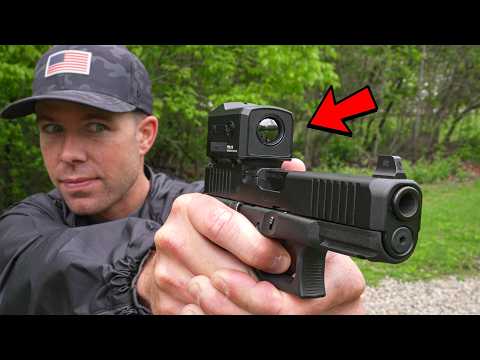
This video reviews the Infatac FML19 pistol optic, a thermal imaging device that detects heat signatures rather than using a traditional lens. The reviewer highlights its unique capabilities, such as identifying targets by their heat and its effectiveness in various lighting conditions. Technical specifications and practical shooting impressions are provided, emphasizing its potential as a game-changer for certain applications.
This video demonstrates the extreme power of the Thompson Center Encore chambered in .500 Nitro Express, often referred to as an 'Elephant Gun.' The presenter conducts ballistic tests using a human bust to assess its effectiveness in a self-defense scenario. The footage highlights the immense recoil, the projectile's penetration capabilities, and the devastating damage it inflicts, concluding that while incredibly effective, it is likely overkill for most self-defense situations due to its power and potential for over-penetration.
This video provides an in-depth look at the Winchester 1897 Trench Gun, a firearm with significant World War I history. The presenter, who has prior experience with this model, demonstrates its operation, including the unique slam-fire capability. The video also covers the addition of a 1917 bayonet, discussing its historical significance and the challenges of acquiring authentic parts. The presenter highlights the shotgun's effectiveness in trench warfare and its controversial reputation, which led to attempts to ban it as a war crime.
This video explores the performance of .30-06 ammunition, specifically focusing on the .30-06 Accelerator sabot round and comparing it to standard Full Metal Jacket (FMJ) and Hornady CX hunting rounds. The presenter conducts ballistics gel tests to demonstrate penetration differences, aiming to explain discrepancies in the Charlie Kirk case. The .30-06 Accelerator shows significantly less penetration, consistent with its design as a small .22 caliber bullet fired at high velocity, often resulting in fragmentation and no exit wound. Standard FMJ rounds exhibit much deeper penetration, while the expanding Hornady CX offers a balance.
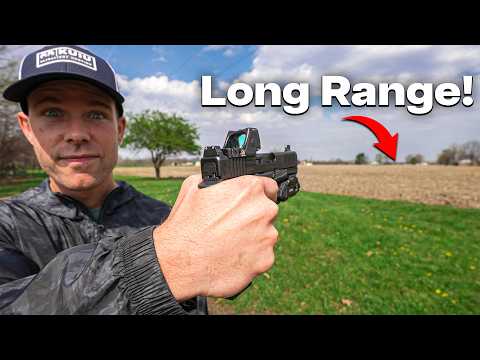
This video tests the long-range accuracy of the new Glock Gen 6 45 pistol. The instructor, with significant experience, demonstrates the pistol's capabilities from 15 yards out to 200 yards, highlighting its surprising accuracy despite the heavy trigger. The testing involves both bench rest and offhand shooting, with observations on windage and bullet drop at extreme distances.
This video provides an in-depth review of the Mossberg 990 Aftershock 12 gauge shotgun, focusing on its performance after adding aftermarket accessories like a GG&G handguard and EOTech optic. The presenter highlights the firearm's semi-automatic operation, 5+1 capacity, and surprisingly manageable recoil with heavy loads. Reliability is noted as excellent, with no malfunctions experienced except when attempting to use mini shells. The video also addresses common misconceptions about aiming shotguns with optics.
This video compares the recoil and muzzle rise of the Chiappa Rhino 60DS and the Smith & Wesson Model 29, both chambered in .44 Magnum. Using the same 300-grain PPU jacketed soft point ammunition, the test demonstrates a significant reduction in muzzle rise with the Chiappa Rhino, estimated to be less than half that of the S&W Model 29. The presenter notes that they did not actively try to mitigate recoil, allowing the revolvers to roll back naturally in their hands.