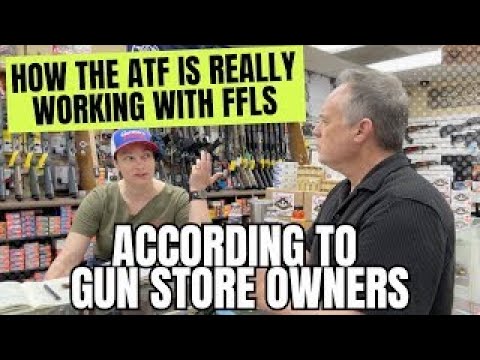
This video discusses the ATF's current collaborative approach with licensed firearm dealers (FFLs) to combat illegal firearm trafficking and straw purchases. It highlights the importance of FFLs identifying and reporting suspicious transactions, understanding the ATF's data-driven inspection methods, and the legal consequences of non-compliance. The content emphasizes that the ATF's focus is on dealers actively engaged in the business and aims to educate them on best practices to avoid legal entanglements.
This video details a chaotic day at the gun range involving a foregrip failure, a range officer intervention due to firearm configuration, and a ricochet incident where a shooter was hit in the leg. It emphasizes the critical importance of strict adherence to range safety rules, preparedness for medical emergencies with tactical first-aid, and understanding firearm limitations and potential hazards like ricochets. The narrative highlights how quickly situations can escalate, leading to law enforcement involvement and the temporary closure of range facilities.
This entry details how to legally own a firearm without a serial number, focusing on the Stevens Model 22-410 as an example. It explains that firearms manufactured before the Gun Control Act of 1968 are exempt from serial number requirements, provided they were not manufactured or imported after the act's enactment. The information is presented with an instructional tone, drawing on historical context and legal specifics.
This video demonstrates the installation of the B&T BWC9-320 chassis onto a Sig P320 pistol. The host, exhibiting high authority and expertise, details how the chassis transforms the P320 into a Short Barreled Rifle (SBR) and highlights its discreet folded profile. Key aspects covered include the legal classification as an SBR, the mechanical operation of the chassis, and the significant improvements in stability and accuracy it offers over a standard handgun.
This video from SHOT Show highlights SHOT University, an NSSF initiative offering practical business strategies for firearms retailers. Key topics include leveraging AI for customer engagement and compliance, diversifying revenue streams, and enhancing community relations. The program emphasizes practical fundamentals for a competitive edge, with offerings like SHOT University Online and monthly compliance webinars.
This video discusses the differences between paper and digital firearm transaction forms at FFLs. While digital forms can reduce human error and streamline audits, they also raise concerns about data storage and potential digital registries. Ultimately, the choice between paper and digital rests with the FFL, with both methods transmitting necessary information to the FBI's NICS system for background checks.
This discussion between a firearms instructor and a gun store employee explores the differences between paper and digital forms for firearm transactions. While digital forms can reduce errors and stress for FFLs, they raise concerns about data storage and potential digital registries. Ultimately, both methods transmit information to the FBI's NICS system, but paper forms may involve less data transmission.
This guide outlines 12 critical red flags to watch for when purchasing any firearm, new or used. It emphasizes inspecting for amateur modifications, understanding legal violations like straw purchases, identifying online scams, and checking for structural damage such as frame cracks or barrel issues. The video stresses the importance of proper documentation, resisting high-pressure sales, and always opting for professional inspection to avoid costly mistakes and safety hazards.
This video discusses the ATF's current approach to working with licensed firearm dealers (FFLs), emphasizing collaboration and data-driven inspections. According to gun store owners, the ATF is focusing on identifying and preventing firearm trafficking and theft by educating dealers on recognizing suspicious activity, such as high-volume sales to individuals who later have firearms turn up in illicit locations. The ATF aims to help dealers avoid involvement in illegal activities like straw purchases, which carry severe penalties.
This video emphasizes the critical importance of maintaining detailed records of firearm ownership, especially in the event of theft. The speaker, drawing from insights gained at an NSSF conference with ATF and FBI representatives, stresses that simply reporting a stolen firearm to the police is insufficient. To legally reclaim a recovered firearm, owners must provide proof of ownership, such as receipts, bills of sale, or detailed logbooks, including manufacturer, model, serial number, caliber, and acquisition date. The video highlights that even inherited firearms require documentation of their transfer.
This video from NSSF promotes SHOT University Online, an on-demand training platform for firearm industry professionals. It highlights benefits such as learning at one's own pace, staying updated on regulations like ATF and OSHA compliance, and improving business operations through training in areas like employee development and social media strategy. The video encourages viewers to maximize their membership or join to access these exclusive resources.
This video explains the concept of pin and weld upper assemblies for AR-15 platforms. It details why a pin and weld is necessary to achieve legal rifle status with barrels under 16 inches, discusses the advantages for suppressor use and maneuverability, and highlights potential maintenance challenges.
Gun Laws by State
Read firearms regulations for all 50 states + D.C.
Find Gun Dealers
Search licensed FFL dealers near you.