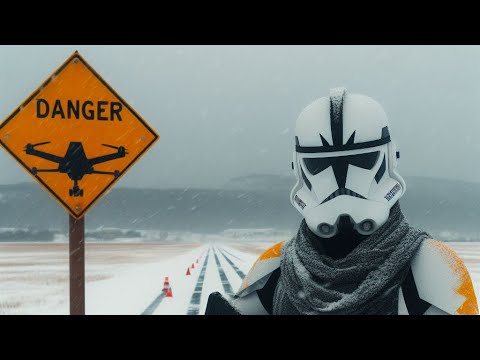
This video offers a glimpse into high-intensity Army Ranger battle drills, focusing on critical tactical scenarios like reacting to contact, squad attacks, and casualty evacuation (CASEVAC). The content emphasizes the assessment of leadership skills for non-commissioned officers (NCOs) in guiding teams under pressure, highlighting the importance of defined roles and responsibilities within a tactical framework. Instruction is presented with an energetic and analytical tone, demonstrating a high level of authority regarding military culture and training procedures.
This guide outlines key training drills and procedures observed in Army Ranger School, as presented by Nikko Ortiz. It covers tactical exercises like squad attacks and breaking contact, essential land navigation, and the rigorous physical demands of the 9-mile ruck march. The content emphasizes leadership development and the 'violence of action' required in elite military operations, drawing on the instructor's high authority level regarding military culture and training expectations.
This video explains the GOTWA contingency plan, a critical communication and safety protocol for small unit operations. It breaks down each component: Going, Others with you, Time of return, What to do if you don't return, and Actions on Contact. The instructor emphasizes its importance for preventing separation and ensuring accountability in dynamic environments.
The Trench Grenade channel is shifting focus to practical firearms training and tactical skills, moving away from drama. The content will cover rifle and handgun marksmanship, battle drills, land navigation, camouflage, and CQB. The instructor, drawing on experience as a senior NCO, infantryman, and drill sergeant, aims to improve viewers' preparedness for various scenarios.
This video offers a 2024 review of the YouTube firearms community, critiquing content creators like Garand Thumb for producing 'gun slop.' The host, an infantryman with 12 years of service, recommends quality content creators and outlines his channel's future focus on battle drills, tactical instruction, and in-depth weapon testing. He also answers viewer questions on topics ranging from weapon reliability standards to physical fitness and gear selection.
This video critiques the Second Amendment community's focus on competition shooting over practical tactical application. The speaker emphasizes that competition is a sport for testing raw skills and stress inoculation, not a substitute for real-world training. True training involves mastering battle drills, land navigation, patrolling principles, and mission planning, essential for prepared citizens and infantrymen.
This video emphasizes that actual tactical readiness involves far more than just shooting proficiency. The speaker, drawing from extensive experience, argues that the time spent shooting is a minuscule fraction of overall preparedness. Key aspects include physical fitness, meticulous planning, equipment maintenance, rehearsing battle drills, and understanding military doctrine. The focus should be on holistic readiness rather than hyper-fixation on gear or marksmanship alone.
This video explores the fundamental differences between military and civilian firearms training, emphasizing that military training prioritizes collective action, group proficiency, and performance under stress, often through battle drills and layered skill development. Civilian training, conversely, tends to focus more on individual skill sets and equipment proficiency. The discussion highlights that true military-style training, like battle drills, requires group cohesion and is difficult to replicate effectively in a civilian context with disparate individuals.
This video features a US Army Drill Sergeant discussing the importance of practical application of military tactics for preparedness. He emphasizes teamwork, community building, and the need to move beyond just owning gear to understanding how to use it effectively. The discussion highlights the value of public military doctrine and how to apply it in civilian preparedness scenarios.
This video provides a tactical guide on crossing Large Open Danger Areas (LO DA) in a simulated combat environment, emphasizing planning, reconnaissance, and bounding techniques. It details procedures for establishing rally points, conducting SEALS (Stop, Look, Listen, Smell), and bounding forward with team elements. The instruction highlights the critical importance of casualty management and maintaining squad integrity during high-risk maneuvers.
This video provides a tactical guide for crossing or bypassing small open danger areas within a Minecraft server environment, emphasizing squad-level operations. It details formations like the fire team wedge and techniques such as SEALs (Stop, Look, Listen, Smell). The instructor strongly advocates for the 'Detour or Box Method' as the safest approach, outlining specific steps involving rally points, azimuths, and strategic maneuvering to avoid enemy detection and engagement.
This video provides a detailed breakdown of how to react to direct fire contact in a WROL or SHTF scenario, focusing on the 'Squad Column Fire Team Wedge' formation. It emphasizes immediate return fire, reporting the '3Ds' (Distance, Direction, Description), seeking cover, and coordinated team movement to gain fire superiority. The instruction highlights the roles of Alpha Team, Bravo Team, and the Squad Leader in a dynamic engagement.
Gun Laws by State
Read firearms regulations for all 50 states + D.C.
Find Gun Dealers
Search licensed FFL dealers near you.