This video offers a practical tip for improving prone shooting stability, debunking the myth that magazine contact with the ground always causes malfunctions. The instructor, drawing on military experience, advises bringing elbows in close and positioning the support elbow under the rifle. He also suggests using the magazine as a monopod when feasible, especially with modern equipment.
This video provides an in-depth guide to shooting from the prone position, emphasizing stability and accuracy. It covers proper body alignment, the importance of a jaw weld, effective use of bipods and rear bags for recoil management, and techniques for achieving a natural point of aim. The instruction highlights how to optimize the prone position for comfort and effectiveness in various field conditions.
This instruction focuses on improving prone shooting accuracy by emphasizing proper body mechanics. Key techniques include bringing elbows in close and positioning the support-side elbow under the rifle to achieve muscular relaxation supported by bone structure, a fundamental principle of rifle marksmanship.
This video provides a crucial tip for improving prone shooting stability. The instructor emphasizes bringing elbows in close and positioning the support-side elbow under the rifle to achieve muscular relaxation and bone support, key principles of rifle marksmanship. It also debunks the myth that modern magazines will induce malfunctions if used as a monopod.
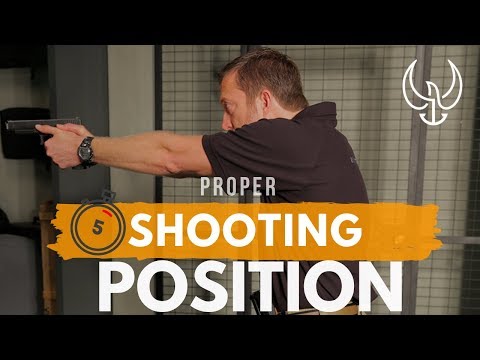
This guide, taught by retired Navy SEAL Chief Chris Sajnog, details the Modified Isosceles shooting stance. It emphasizes finding your Natural Point of Aim, utilizing bone support over muscle tension, and proper body positioning for stability and recoil management. The principles are shown to be consistent for both pistol and carbine use.
This guide details essential rifle shooting positions for competitive scenarios, drawing from the expertise of Lena and Kay Miculek. It covers the prone position with magazine stabilization, techniques for shooting off barricades and tables, and fundamentals of the off-hand stance, emphasizing stability and bone support for improved accuracy and reduced fatigue.
This guide details the proper technique for shouldering an AR-15 and establishing a consistent cheek weld. It emphasizes using the natural crevice in the shoulder and the toe of the stock as a hinge for stable mounting. The instruction highlights the importance of bone support over muscle tension for accuracy and endurance, and includes a crucial note about compensating for the sight-to-bore offset at close distances.
You've reached the end! 7 videos loaded.
Gun Laws by State
Read firearms regulations for all 50 states + D.C.
Find Gun Dealers
Search licensed FFL dealers near you.