This video analyzes recent US Senate proceedings, focusing on Senator Marco Rubio's engagement with Democratic colleagues on foreign policy and national security issues. Host Braden Langley critiques the opposition's questioning as lacking substance while highlighting Rubio's detailed understanding of complex legislation like the Helms-Burton Act and the implications of Venezuelan immigration. The discussion underscores concerns about border security and national security threats.
This video provides an analytical breakdown of a significant geopolitical event: the US seizure of a Venezuelan oil tanker. The speaker, identified as a high-level tactical and military news commentator with deep knowledge of US naval operations, details the interdiction, the vessel's destination, and the broader implications for regional tensions and international relations. The analysis connects this event to Venezuela's oil exports, US sanctions, and the strategic deployment of US military assets in the Caribbean, including the USS Gerald R. Ford.
This entry synthesizes insights from the Shawn Ryan Show episode featuring Annie Jacobsen, focusing on geopolitical nuclear threats and advanced military technology. It covers North Korea's nuclear posture, historical military programs like Operation Paperclip, and emerging technologies such as Directed Energy Weapons. The discussion highlights the complexities of international relations and the potential for global conflict, drawing on Jacobsen's expertise as a military historian.
This lecture, "Global Soldiers: Making Southern African Liberation Armies," presented by Professor Jocelyn Alexander, delves into the international training received by soldiers of southern African liberation movements during the Cold War. Drawing on veteran oral histories, the talk explores the unique military cultures that emerged from global exchanges, with soldiers training in diverse locations like Algeria, the USSR, Cuba, and North Korea. It highlights the influence of political ideas, military doctrines, and the concept of soldiery on movements such as ZPRA, ZANLA, FRELIMO, MPLA, FAPLA, and SWAPO, focusing on the Zimbabwe People's Revolutionary Army and the often-overlooked conflicts of the 'hot' Cold War.
This interview with Dr. Raul Garcia, a candidate for the US Senate, focuses on his policy priorities and personal background. Dr. Garcia, a medical professional with experience in authoritarian regimes, outlines his platform on fiscal responsibility, border security, and healthcare. He also addresses critical issues like the fentanyl crisis and homelessness, proposing compassionate and practical solutions. The discussion highlights his critique of incumbent Senator Maria Cantwell and his strategic alliance with Dave Reichert for the gubernatorial race.
This video features GOA's Florida Director, Luis Valdes, discussing gun control in Cuba and drawing parallels to the importance of gun ownership for Americans. The message emphasizes that restricting firearms can lead to tyrannical control. It's a direct appeal to the audience to consider the implications of gun control policies on individual liberties and national security, urging them not to relinquish their Second Amendment rights. The video also acknowledges Big Daddy Unlimited for studio use.
This video features Dr. Miguel Faria discussing his book 'America Guns and Freedom,' which critiques the gun control movement within the medical establishment. He argues that much of the 'research' presented by public health organizations is not scientific but politically motivated propaganda. Dr. Faria, who lived under communist rule in Cuba, draws parallels between disarming populations and the rise of tyranny, emphasizing the importance of the Second Amendment for preventing such outcomes in the U.S. He also discusses the historical context of gun control and the role of organizations like the AMA.
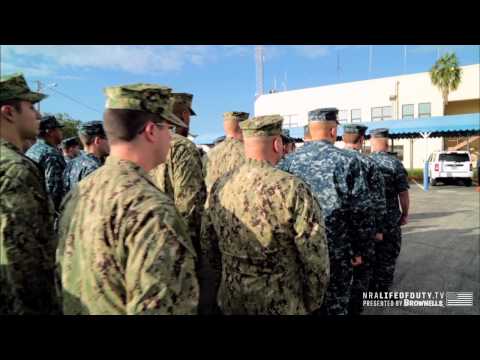
This episode of NRA Life of Duty, presented by Brownells and sponsored by FNH USA, is titled 'Frontlines Episode 7: Cuba.' The description highlights the Guantanamo Bay base as a powerful symbol of American individualism and freedom contrasted with communist socialism. It emphasizes the separation of the base from the rest of Cuba by a heavily guarded fence.
You've reached the end! 8 videos loaded.
Gun Laws by State
Read firearms regulations for all 50 states + D.C.
Find Gun Dealers
Search licensed FFL dealers near you.