
Videos tagged with Tyranny


This video breaks down Federalist 50, explaining James Madison's warning against relying on periodic public reviews to correct government overreach. The speaker, Jared from Guns & Gadgets, emphasizes that liberty must be secured by the government's inherent design, with permanent internal controls, rather than relying on delayed or passion-driven external corrections. The analysis directly connects to the importance of the Second Amendment as a structural safeguard against consolidated power.

This video, presented by Jared from Guns & Gadgets, offers an expert analysis of Federalist 47, emphasizing James Madison's warnings about the concentration of government power. It connects historical principles of separation of powers and checks and balances to modern concerns about the administrative state and the enduring relevance of the Second Amendment as a bulwark against tyranny. The content is highly informative for those interested in constitutional law and the foundational principles of American liberty.

This video provides an expert analysis of Federalist 46, emphasizing its critical role in understanding the Second Amendment. It details how the founders viewed an armed populace as a cornerstone of liberty, a bulwark against potential government tyranny, and an integral part of American federalism. The discussion highlights the founders' intent that the Second Amendment is about the power to resist oppression, not merely for sporting purposes.


This video, featuring an expert analysis from Guns & Gadgets, delves into Federalist 38 to illuminate its relevance to modern Second Amendment debates. The speaker, demonstrating deep knowledge of constitutional principles and historical political philosophy, connects James Madison's arguments against 'weaponized criticism' and the 'perfection trap' to contemporary challenges in preserving gun rights. The analysis highlights how understanding historical governance failures and the nature of political rhetoric is crucial for defending constitutional structures and individual liberties against gradual erosion.

This analysis of Federalist 34, presented by Guns & Gadgets, breaks down Alexander Hamilton's arguments regarding federal taxation and its relationship to state power and individual rights. The video explains how Hamilton justified broad federal taxing authority as necessary for national security and effective governance, while also addressing Anti-Federalist fears of centralized tyranny. It draws a direct line from these historical debates on revenue and power to the modern context of the Second Amendment, emphasizing how government funding capacity can impact the enforcement of rights.

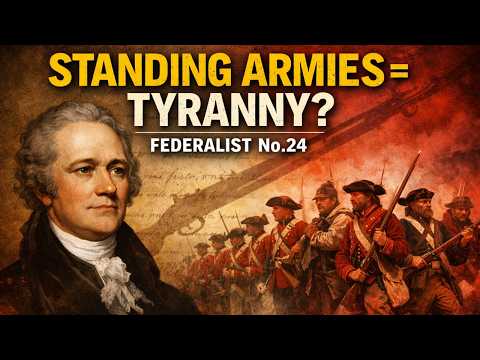
This video, presented by an experienced instructor from Guns & Gadgets, delves into Federalist No. 24, authored by Alexander Hamilton. It explores the historical context and rationale behind the Second Amendment, emphasizing the founders' concerns about standing armies in peacetime and the importance of an armed populace to counterbalance federal power. The discussion highlights the ongoing tension between national security needs and individual liberties.


This video from Guns & Gadgets News explains how the Anti-Federalists, through their opposition to the original Constitution, ultimately forced the inclusion of the Bill of Rights. It details their concerns about centralized government power and the necessity of explicit rights protections, highlighting key figures and the ratification process. The content emphasizes the enduring relevance of Anti-Federalist arguments in contemporary discussions of government authority.