This three-volume set by Hogar Scher, translated and expanded from German, provides an exhaustive history of ERMA (Erfurter Maschinenfabrik) from 1924-2003. It details company history, rifles, handguns, submachine guns, flare guns, and various commercial firearms, including .22 caliber clones of popular models. The books offer deep dives into model designations, serial numbers, production dates, and original pricing, filling a significant information gap on ERMA's diverse output.
This video is a book review of a comprehensive three-volume series on the ERMA Erfurter Maschinenfabrik, covering its history from 1924 to 2003. The review is presented by Forgotten Weapons, a channel known for its in-depth look at historical firearms. The description highlights specific firearms that ERMA produced or were associated with, including the Mauser K98k and the MP40, indicating the historical significance and likely focus on these iconic weapons.
This "Walk-in Wednesdays" video showcases two fully automatic MP40 9mm submachine guns, one manufactured by Erma and the other by Steyr. The video description encourages viewers to watch for more details about these historical firearms and provides links to other related videos, including one about the MP44 and Brad Pitt, and the company's website and Gunbroker page. Legacy Collectibles specializes in WW1 and WW2 firearms, honoring veterans and military history with authentic products.
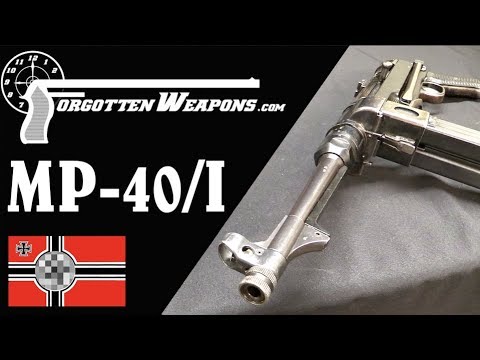
This entry details the rare MP40/I, a WWII German submachine gun prototype featuring a dual-magazine system. Expert analysis highlights its design origins, mechanical operation, and significant structural compromises that led to its limited adoption. The information is presented with a high degree of technical detail, reflecting the instructor's expertise.
This guide details the installation of an Erma/Glaser .22 Rimfire conversion kit for the Luger pistol. It covers replacing the original toggle-lock action with a simple blowback mechanism using specialized components. The process involves careful disassembly of the Luger and precise installation of the conversion parts, including a lengthened barrel and dedicated magazine. Expert instruction highlights the mechanical conversion and historical context of these rare kits.
This guide details the field stripping process for the German MP38 and MP40 submachine guns, as demonstrated by firearms expert Ian McCollum. It covers the mechanical steps for disassembly and reassembly, emphasizing the unique telescoping recoil spring system. The guide also highlights the safety redesign on later MP40 models and includes a crucial safety check before handling the firearm.
This video provides an expert-level overview of the German MP40 submachine gun, detailing its historical context, design evolution from the MP38, manufacturing differences, and post-war legacy. It highlights the MP40's iconic status and its technical specifications, including its open-bolt, blowback operation and 9mm Luger caliber. The presentation features insights from NRA publications editors and historians, offering a deep dive into this significant firearm.
This video provides a historical and technical overview of the German MP40 submachine gun, a descendant of the MP18 and a significant firearm of World War II. It details its development from the MP38, highlighting its innovative use of stamped and welded parts for faster, cheaper production compared to earlier machined firearms. The MP40's design, including its folding stock and blowback operation, is discussed, along with its widespread adoption by German forces and its influence on later submachine gun designs.
You've reached the end! 8 videos loaded.
Gun Laws by State
Read firearms regulations for all 50 states + D.C.
Find Gun Dealers
Search licensed FFL dealers near you.