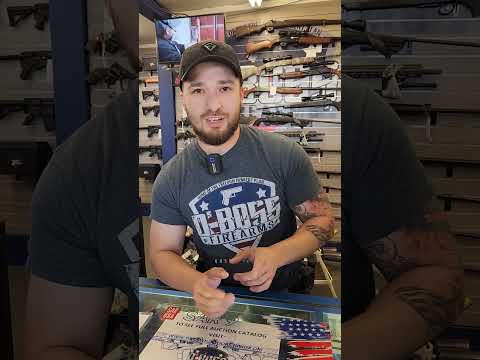
This video explains the legal requirements for selling firearms, emphasizing the general need for an FFL transfer. It details exceptions like interfamilial transfers within the same state and highlights the complexities introduced by state-specific regulations like California's handgun roster. The content also warns against straw purchases and engaging in the business of selling firearms without proper licensing.
The DOJ has dropped its support for a federal law prohibiting non-violent felons from possessing firearms, following an 8:1 Supreme Court decision and a Third Circuit ruling in Range v. Garland. This development, coupled with a new DOJ rule allowing for gun rights restoration, significantly alters the landscape for individuals seeking to regain firearm rights. The DOJ will now process restoration petitions directly, bypassing the ATF.
This video from Copper Jacket TV, featuring an experienced instructor, discusses the legal challenges to state handgun rosters and federal interstate transfer bans. It highlights the lawsuit Elite Precision Customs LLC v. ATF, which aims to nullify these restrictions, arguing they infringe upon Second Amendment rights. The discussion also references past legal battles like Mans v. Holder and the impact of the Bruen decision on firearm law interpretation.
This video discusses the Second Amendment Guarantee Act (SAGA), a bill introduced by Congresswoman Claudia Tenney aimed at ending state-level bans on firearms lawfully permitted under federal law. The bill seeks to override state prohibitions on the sale, manufacturing, importation, or possession of such firearms, and would nullify existing bans. The speaker notes that while the logic aligns with Supreme Court rulings like Heller and Bruen, the bill faces a slim chance of passing due to its controversial nature.
This video discusses HR 38, the National Reciprocity Bill, highlighting its potential to enable constitutional carry nationwide for some, but not all. The speaker expresses conflict, supporting national reciprocity as a step towards constitutional carry but criticizing the bill's selective application, which benefits permitless carry states while potentially leaving others behind. The analysis emphasizes the importance of universal recognition of carry rights and criticizes laws that make firearm ownership unaffordable or inaccessible.
This video discusses the significant impact of the Supreme Court's Rahimi decision on future Second Amendment cases, particularly focusing on Range v. Garland. The speaker explains how the government is now seeking Supreme Court review of cases challenging firearm prohibitions, such as 18 USC 922 G1, which bars individuals with felony-equivalent convictions from possessing firearms. The analysis highlights the potential for these cases to redefine who is considered 'among the people' protected by the Second Amendment.
William Kirk, President of Washington Gun Law, explains the complexities of purchasing firearms banned in one's home state from out of state. He emphasizes that federal law, specifically 18 U.S.C. Sec. 922(b)(3), governs these transactions through Federal Firearms Licensees (FFLs), making it highly unlikely for FFLs to facilitate the purchase of prohibited firearms due to the risk of losing their licenses. The video highlights that while some firearm types might be exempt, state and federal regulations often prevent bypassing bans through out-of-state purchases.
This guide, presented by D'Boss Firearms, outlines the legal process for gifting a firearm. The key takeaway is that the person gifting the firearm must be the original purchaser, complete all necessary background checks, and then can legally transfer ownership. It strongly warns against gifting to felons, as this carries severe legal consequences.
This video discusses the implementation of the Bipartisan Safer Communities Act, specifically a new provision that mandates delayed background checks for individuals aged 18-20. The delay can extend up to 10 business days, potentially becoming two weeks with holidays, to allow for a review of juvenile and mental health records. The speakers express concern over the subjective nature of mental health disqualifiers and the potential discouragement of new firearm owners.
This video discusses the Pennsylvania Attorney General's classification of 80% lower receivers as firearms, creating confusion and potential legal challenges for firearm owners. It clarifies federal law, stating that unfinished 80% receivers are not firearms until machined by the end-user, and serialization is encouraged but not federally required. The discussion highlights the difference between individual firearm manufacturing for personal use and manufacturing for profit, which requires an FFL. The video also touches on the role of law enforcement discretion and the potential for political agendas in firearm legislation.
You've reached the end! 10 videos loaded.
Gun Laws by State
Read firearms regulations for all 50 states + D.C.
Find Gun Dealers
Search licensed FFL dealers near you.