This video provides a concise overview of the FG-42 paratrooper rifle, focusing on its accessories and features. It details the attachment of the Moss 36 bayonet, the functionality of its folding iron sights, and the method for mounting optics. The spring buffer for recoil reduction is also highlighted, followed by a demonstration of firing the weapon.
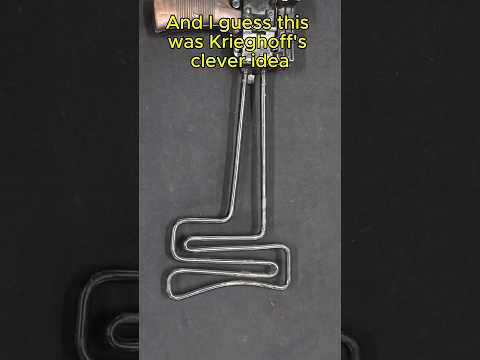
This guide details the examination of the Krieghoff prototype FG 42, as presented by Ian McCollum of Forgotten Weapons. It focuses on unique design features such as the multi-layered wire stock for recoil absorption, the specific bipod and muzzle brake configurations, and the MG 81-style cable-actuated charging handle. The analysis highlights innovative engineering solutions for weight reduction and recoil management in a rare firearm prototype.
This guide details the operation of the FG-42 paratrooper rifle, covering safety, loading, charging, and firing procedures. It highlights key features like the side-loading magazine and last-round bolt hold-open. The instruction is delivered with high authority, demonstrating a thorough understanding of the firearm's mechanics and historical context.
This video showcases a detailed historical reproduction of a WWII German Fallschirmjäger (paratrooper) loadout, featuring the rare FG 42 rifle and a Stielhandgranate 24. The content highlights the visual accuracy of the uniform and gear, presented with a humorous and satirical tone by the Administrative Results channel. It serves as a visual reference for collectors and enthusiasts of historical military equipment.
This guide details the field stripping process for the rare Waffenfabrik Bern WF-54 prototype, a scaled-up variant of the FG-42 chambered in 7.5x55mm Swiss. It covers the removal of major components like the bolt carrier, gas piston, recoil spring, and trigger group, highlighting the weapon's internal mechanisms and design lineage from the FG-42. The information is presented with a high degree of mechanical detail, reflecting the instructor's expertise.
This guide details the field stripping and reassembly process for the WF-51, a rare Swiss intermediate-cartridge rifle. It covers removing the fire control group, recoil spring, and bolt carrier, emphasizing ease of maintenance compared to its German counterpart, the FG-42. The information is presented with expert commentary from Ian McCollum, highlighting the historical significance and mechanical intricacies of this unique firearm.
This video provides an expert-level tour of Sport Systems Dittrich (SSD), a company specializing in high-quality reproductions of rare WWII German small arms. The tour, led by firearms historian Ian McCollum, details the manufacturing processes, including machining and stamping, for models like the BD-38 (MP-38 reproduction) and BD-44 (StG-44 reproduction). It highlights the technical aspects of converting these firearms for the US market to comply with regulations like 922(r), and showcases the historical accuracy and craftsmanship involved in producing these collector-grade firearms.
This episode of "Guess the Gun" features a competitive identification challenge between Matt and Clint. They are presented with highly zoomed-in images of firearms and must identify them within a strict time limit. The game highlights the importance of recognizing specific firearm features, such as markings, weld points, and stock designs, to differentiate between similar models and variants. The challenge also touches upon the difficulty of identification under pressure and the nuances between general firearm types and specific configurations.
This video reviews reproduction semiautomatic FG-42 rifles, comparing the 1st and 2nd patterns. The 1st pattern offers historical distinctiveness, while the 2nd pattern provides improved ergonomics and handling for better shooting performance. Both utilize ZB26 magazines and are chambered in 8mm Mauser.
This entry analyzes the use and intended use of specific firearms, primarily the FG-42 and Flak 38, within the film 'Saving Private Ryan.' It highlights discrepancies between the film's depiction and its novelization, detailing how original FG-42 rifles were rented for production but ultimately replaced by other weapons like the MG-42 and Flak 38 in key scenes. The analysis is presented by Ian McCollum, an expert firearms historian.
This episode of the Guns Magazine Podcast features an in-depth discussion with gun writer Will Dabs MD about his passion for collecting military firearms. Dabs explains his 'addiction' to military history, stemming from his childhood and military service as a helicopter pilot. He details the historical significance and personal connection he finds in firearms that have seen combat, highlighting his prized Japanese Type 99 paratrooper machine gun as an example of a tangible link to extraordinary historical events. The conversation also touches on the challenges and rewards of building such a collection in the modern era.
Gun Laws by State
Read firearms regulations for all 50 states + D.C.
Find Gun Dealers
Search licensed FFL dealers near you.