This video promotes an EDC pistol course offered by Tactical Rifleman at the Louisville Armory on March 7-8. The course covers essential self-defense topics including appendix carry, various cover garments, safe drawing techniques, and understanding physiological responses during a gunfight. The instruction is delivered with an experienced and authoritative tone, suitable for those looking to enhance their everyday carry skills.
This video provides a critical post-defensive shooting protocol, emphasizing that individuals are not in a clear state of mind immediately after an incident. It details the importance of calling 911 with only essential information, contacting self-defense insurance, and most importantly, invoking the Fifth Amendment right to remain silent until an attorney is present. The guide also stresses the need to brief family members on the same protocol to avoid inadvertently incriminating statements, highlighting the high likelihood of civil suits regardless of criminal charges.
This YouTube Shorts video explores the challenging concept of maintaining accuracy in high-stress situations, specifically within the 'fight or flight' response. While the title suggests a practical application for training and military personnel, the lack of specific firearm mentions in the title or description means the tags will focus on the broader themes of tactical training and stress management in shooting. The video aims to address whether a person's marksmanship can be effectively preserved when their adrenal system is highly activated.
This video from Active Self Protection, featuring John Correia and Stephannie Weidner, analyzes a real-life robbery incident to illustrate fight-or-flight responses and the importance of situational awareness and training. It highlights how individuals react differently under stress and emphasizes the benefits of proactive preparation, such as 'staging' a firearm, to improve defensive outcomes. The analysis also touches on tactical considerations for armed citizens facing threats.
This video showcases a prank involving a loud simulated gunshot that causes a sleeping individual to react with immediate panic. Nikko Ortiz provides commentary on the chaotic scramble, comparing the reaction to a rhinoceros. The video highlights a humorous, albeit startling, scenario.
This discussion emphasizes a layered approach to self-defense, moving beyond relying solely on firearms. It highlights the importance of situational awareness, verbal de-escalation, and utilizing tools like flashlights and knives before resorting to lethal force. The conversation also stresses the critical need for medical training (like TCCC/MARCH) and mental preparation for high-stress scenarios, including the 'freeze' response, advocating for force-on-force training to build resilience.
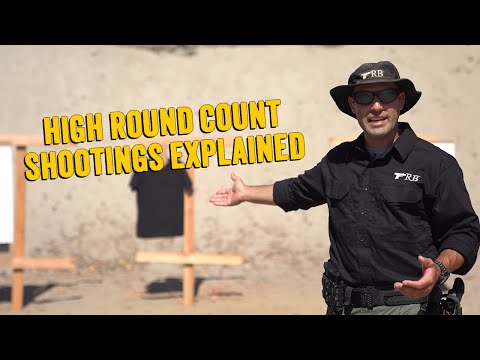
This video explains why high round counts occur in real-world shootings, emphasizing the lack of immediate visual feedback compared to range training. It highlights that the decision to stop shooting is based on the threat's 'will to fight' rather than a definitive hit confirmation. The instructor demonstrates aiming techniques considering clothing types like t-shirts and button-downs, stressing the importance of aiming at specific points even without a bullseye.
This video emphasizes the critical link between firearm storage accessibility and effective home defense under duress. It highlights how acute stress impacts fine and complex motor skills, cognitive function, and perception, making rapid, untrained safe access unreliable. The content advocates for decentralized storage and stress inoculation training to build neural pathways for quick, efficient weapon retrieval in defensive scenarios.
This video features an interview with Terra Newell, a survivor of a violent knife attack by her mother's con artist ex-husband. Newell recounts the events leading up to the attack, her self-defense strategies during the assault, and her recovery. The discussion highlights the importance of situational awareness, fighting back when escape is impossible, and the psychological impact of trauma. Newell emphasizes breath control and intuitive reactions as key survival elements.
This video analyzes a self-defense incident where an individual successfully evaded motorcycle robbers in Brazil. Host John Correia, an expert in self-defense analysis, breaks down the defender's tactical decisions, emphasizing situational awareness and the effective use of a 'drop kick' to create an escape opportunity. The analysis highlights the importance of understanding transitional spaces and the fight/flight/freeze response in critical incidents.
This video features a Green Beret demonstrating a "Switching Hands" shooting drill designed to improve proficiency with both the dominant and non-dominant hands. The drill emphasizes safe firearm manipulation when transitioning the pistol between hands, crucial for high-stress situations. It also addresses the common tendency to neglect training with the weaker hand, making it a valuable exercise for improving overall marksmanship and defensive readiness. The description highlights the drill's simplicity in appearance but difficulty in execution, suggesting it's a highly effective training method.
This video emphasizes that while quick draw drills are part of firearms training, they are insufficient for real-world self-defense. Navy SEAL Toshiro 'Tosh' Carrington and Miles highlight the importance of a practical training progression, legal considerations for drawing a weapon, and the unpredictable nature of criminal threats. The core message is that realistic training, understanding the psychological impact of confrontation, and adapting to the threat's lack of rules are far more critical than raw speed.
Gun Laws by State
Read firearms regulations for all 50 states + D.C.
Find Gun Dealers
Search licensed FFL dealers near you.