Channel: @tacticalhyve
This drill, 'One Reload, One Live, One Dry', from Tactical Hyve focuses on improving reload speed and addressing trigger control issues post-reload. It involves drawing, loading one round, firing it, performing a reload, and then dry firing, emphasizing follow-through after the reload. The drill is designed to be efficient with ammunition while reinforcing critical shooting fundamentals.
This video provides a quick tip on improving appendix carry draws. The instructor emphasizes two primary methods for clearing the garment: hooking the bottom of the shirt and pulling it up, or grabbing and twisting the shirt. The preferred method involves grabbing and twisting for greater consistency across different clothing types. A key technique is to get three fingers into the grip area between the belt and the holster to establish a master grip before the firearm clears the holster.
Matt Chaos from Tactical Hive introduces the 'dot occlusion' technique to improve red dot sight accuracy. By placing masking tape over the front of the optic, shooters are encouraged to maintain hard target focus, preventing ocular shift and improving shot group consistency. This method is recommended for both training drills and regular practice.
This video compares a high-end Atlas Titan RDS ($6,000) against a Sig Sauer P365X Macro ($600) through various shooting drills. The comparison highlights how platform differences, particularly trigger quality and recoil impulse, affect performance in timed drills like the Six Plate Rack and Bill Drill, and accuracy-focused exercises like the walk-back drill. While the more expensive firearm offers advantages, the importance of fundamental shooting skills is emphasized.
This expert-level guide, presented by Matt Kalisch of Tactical Hyve, details five critical Close Quarters Battle (CQB) mistakes frequently observed in trained individuals. It emphasizes prioritizing room domination, maintaining security discipline, avoiding excessive speed, ensuring strict muzzle awareness, and the vital importance of thorough planning with tailored SOPs. The advice is geared towards enhancing survivability and effectiveness in tactical scenarios.
This video breaks down the real costs of competitive shooting, differentiating between a basic starter setup and an advanced competitor's gear. It details the expenses for firearms, magazines, holsters, belts, protective equipment, and the recurring costs of match fees and ammunition. The instructor emphasizes that while initial investment can be significant, gear upgrades offer performance multipliers that enhance shooting capabilities.
This guide outlines the progression for civilian Close Quarters Battle (CQB) training, emphasizing that it requires significant commitment and is not for casual practitioners. Experts from Tactical Hyve stress the paramount importance of mastering fundamental shooting skills and weapon manipulation before even considering CQB tactics. The training involves teamwork, communication, and countless hours of focused practice with a consistent group, warning against superficial 'LARPing' often seen on social media.
This video from Tactical Hyve, featuring instructor Matt Kalish, emphasizes that actively clearing rooms during a home invasion is extremely dangerous and often ill-advised for civilians. Instead, the expert guide stresses prioritizing calling the police, securing family members, and having a well-rehearsed home defense plan. It highlights the critical importance of legal awareness, understanding your limitations, and avoiding an overconfident 'ALPHA' mentality without practical experience.
This guide details optimal buttstock placement for rifle shooting, emphasizing driving the stock into the shoulder's hard pocket to create a recoil-absorbing 'wall'. Proper placement enhances control and aids in staying on target. The video also touches on less optimal placements, like the stock rising above the shoulder, which can hinder recoil control and target acquisition. Instruction is provided by Matt Kalisch of Tactical Hyve.
This video documents the 2025 USPSA Race Gun Nationals, following four competitors: Kyle, John, Kang, and Miles. It highlights their individual goals, challenges, and performances throughout the three-day match. The content focuses on the competitive shooting experience, including stage strategy, dealing with environmental factors like cold and sun glare, equipment issues, and the mental game required for high-level competition. The shooters discuss their progress, setbacks, and aspirations for future matches.
This guide, presented by Myles of Tactical Hyve, emphasizes that knowing firearm safety rules is insufficient; they must be applied subconsciously. The video highlights that frequent handling, including dry fire practice, is crucial for developing these ingrained habits, moving beyond academic knowledge to practical, automatic application, especially for average gun owners.
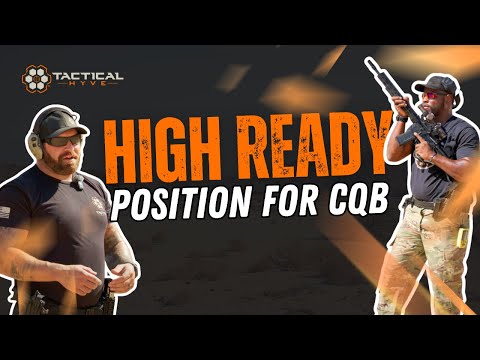
This video details the high ready firearm position, emphasizing its utility in CQB scenarios and for navigating obstacles. Instructor Dave Harris and Matt Kaos demonstrate key principles, including buttstock placement under the armpit for clearance and rapid presentation. A drill is presented to practice presenting the firearm, engaging targets, and returning to the ready position efficiently.