This video showcases a collection of historical Axis pistols, focusing on variations and military/police service. Tom from Legacy Collectibles highlights specific models like the Luger M1906 for the Portuguese Army, Italian and German Beretta M1934s, and various Walther PP/PPK models with unique markings for German police, the Persian government, and the NSKK. The presentation emphasizes condition, rarity, and specific historical context for each firearm.
This video from Classic Firearms explores the potential release and features of the Glock Gen 6. Drawing on historical trends and industry speculation, the presenter, with high authority as a representative of a major firearms retailer, discusses predicted timelines, possible design changes like ambidextrous slide stops and refined optics mounting, and debates the likelihood of a modular FCU system. The content is informative and speculative, grounded in Glock's manufacturing history and market demands.
This video provides a detailed historical and technical overview of the Star Model B pistol, highlighting its origins, design influences, and evolution. It discusses the differences between the Model A and Model B, their adoption by various police and military forces, and their surprising role in Hollywood productions. The presenter emphasizes the quality of craftsmanship in these older firearms.
Ian McCollum, a recognized firearms historian, details the unique field stripping process for the Glock 46. This model features a rotating barrel and a specialized disassembly lever that requires the striker to be disconnected without pulling the trigger, a key requirement for German police trials. The video demonstrates the internal mechanics and external features, highlighting its departure from traditional Glock designs.
This video showcases a mint, boxed Nazi Police Walther PPK from late 1942. It highlights the original police Eagle 'C' marking, indicating German police issue, and details the contents of the box, including the manual, cleaning rod, spare magazine, and cleaning kit. The presentation also notes the rare brownish-gray grip, specific to a limited serial number range.
This video provides an expert-level overview of various World War II and World War I era German pistols imported from Canada. The presenter, with clear expertise, details specific models like the Walther PP, PPK, P-38, and several Luger variations, highlighting their historical context, production codes, proof marks, and unique features. The discussion includes insights into import regulations, collector value, and the historical significance of these firearms.
This video presents three World War II era pistols for viewers to choose from, highlighting their historical significance and condition. The options include a pristine 1941 German Luger, a 1939 Colt 1911 A1 issued to the U.S. Army, and a pre-war Japanese Nambu with accessories. The presenter encourages a vote based on ownership and shooting preference.
This video provides an expert review of the Sig Sauer P230, a classic .380 ACP pistol. James Reeves, a recognized firearms expert, details its historical lineage from the Sauer 38H, its design evolution, and its adoption by various international law enforcement agencies and potential use by the British SAS. The review highlights its concealed carry features, trigger characteristics, and compares it to modern alternatives, ultimately concluding it remains a charming and effective choice despite its age.
This guide details the field stripping process for a surplus German Police SIG P226, emphasizing safety and component inspection. The video highlights the appeal of these older models and their unique construction. Expert instruction is provided on safely disassembling and reassembling the pistol for cleaning and maintenance.
This guide details the disassembly of the Steyr Hahn Model 1912, focusing on identifying variants and conversions, particularly the WWII 9mm Parabellum police models. It highlights the importance of checking specific markings on the barrel and frame. The video features Ian McCollum, demonstrating a high level of expertise in historical firearms and their mechanical intricacies.
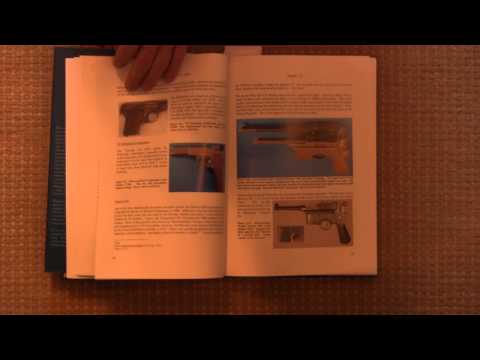
This video is a book review of "History Writ in Steel: German Police Markings 1900-1936" by Donald Maus. The book focuses on German police firearms, bayonets, rifles, and holsters from the early 20th century, specifically detailing and explaining the complex and often abbreviated property markings used by German police units during that era. The reviewer highlights the book's value as a resource for identifying the origin of specific firearms based on these markings. The book is available for purchase from Simpson Ltd.
You've reached the end! 11 videos loaded.
Gun Laws by State
Read firearms regulations for all 50 states + D.C.
Find Gun Dealers
Search licensed FFL dealers near you.