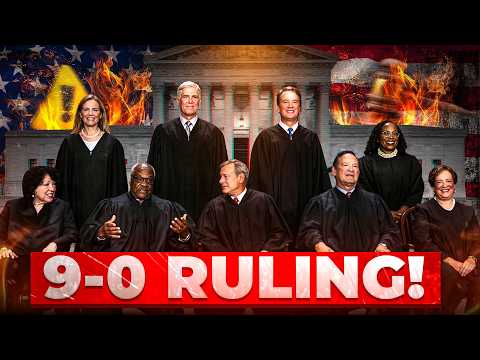
This video details the Supreme Court's unanimous 9-0 decision in favor of the Martin family, who were victims of an FBI wrong-house raid. The ruling clarified that law enforcement does not automatically gain immunity simply by exercising judgment; decisions must be grounded in actual policy considerations, not mere mistakes. The case has returned to the 11th Circuit, where judges are scrutinizing the line between policy discretion and operational failures, particularly regarding the fundamental duty to execute warrants at the correct address. The lack of a request for further briefing suggests the 11th Circuit is moving towards a decision, likely allowing the Martins' case to proceed and potentially drawing a clearer distinction between protected policy decisions and basic operational negligence.
This video analyzes a 9-0 Supreme Court decision impacting government immunity in cases of law enforcement error, specifically a wrong-house FBI raid. The Supreme Court ruled that law enforcement does not automatically gain immunity simply by exercising judgment, requiring them to demonstrate policy considerations rather than mere mistakes. The case has returned to the 11th Circuit, where judges are scrutinizing the line between policy discretion and operational failures, questioning how executing a warrant at the wrong address could be a protected policy decision. The outcome could significantly affect the ability to sue the government for operational errors.
This video discusses the Supreme Court's 9-0 unanimous decision in a case involving an FBI wrong-house raid and its implications for government immunity. The case, which returned to the 11th Circuit, centers on the discretionary function exception to the Federal Tort Claims Act. The speaker highlights the 11th Circuit's oral arguments, focusing on the distinction between policy discretion and operational failures, and anticipates a forthcoming decision on whether additional briefing is required.
This video discusses the Supreme Court's unanimous 9-0 decision in a case involving the Martins, who were victims of an FBI wrong-house raid. The core issue revolves around the discretionary function exception under the Federal Tort Claims Act, which the government uses to claim immunity. The Supreme Court's ruling clarified that simply exercising judgment does not automatically grant immunity, and the government must demonstrate that decisions were grounded in actual policy considerations, not mere mistakes. The 11th Circuit is now rehearing arguments in light of this precedent, with judges appearing skeptical of the government's broad claims of immunity for operational failures.
This video provides a detailed legal analysis of a unanimous 9-0 Supreme Court decision concerning the Federal Tort Claims Act (FTCA) and law enforcement accountability. The speaker, an expert in Second Amendment law, breaks down the implications of the ruling on FBI raids and government immunity, particularly in cases of operational errors like raiding the wrong address. The analysis highlights the ongoing legal battles and potential nationwide impacts on civil rights and accountability for federal agencies.
The Supreme Court issued a unanimous 9-0 decision in US v. Martin, impacting law enforcement accountability nationwide. The ruling clarifies that the discretionary function exception under the Federal Tort Claims Act (FTCA) does not shield the government from all liability in cases of wrongful raids or official misconduct. This decision, alongside the First Circuit's ruling in the Arus case concerning Bivens claims against individual officers, strengthens avenues for citizens to seek redress against federal agencies and agents for violations of constitutional rights.
This video provides an expert analysis of the Supreme Court's unanimous 9-0 decision in Martin v. United States, which significantly impacts the Second and Fourth Amendments by clarifying government liability under the Federal Tort Claims Act (FTCA). The ruling, authored by Justice Neil Gorsuch, limits the government's ability to claim immunity in cases of law enforcement misconduct, particularly during raids, emphasizing that federal agents can be held accountable if a private citizen would be liable under similar circumstances. The speaker, an expert in legal matters concerning gun owners, breaks down the complex legal arguments and their direct implications for the rights and protections of firearm owners.
This video discusses a Supreme Court case where a family is suing the government after the FBI raided their home by mistake. The courts have previously ruled that individuals cannot sue the government for bad judgment, even in cases of wrongful raids, citing the Federal Tort Claims Act and the Supremacy Clause. The Supreme Court's decision in this case could significantly impact law enforcement accountability and the conduct of federal raids.
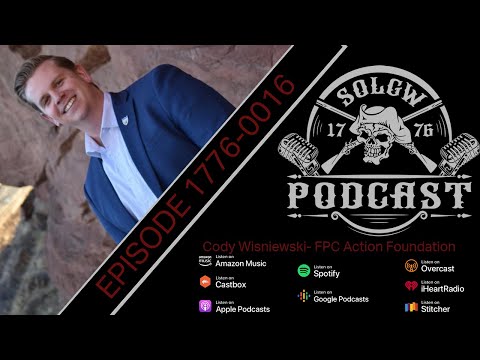
This episode of the Sons of Liberty podcast features Cody Wisniewski, President of FPC Action Foundation, discussing recent legal victories and ongoing battles concerning Second Amendment rights. Key topics include the vacating of the ATF's pistol brace rule under the Administrative Procedure Act, the Supreme Court's decision in the Rahimi case regarding domestic violence and firearm possession, and the legal implications of the Hunter Biden conviction related to firearm purchase forms. The discussion also delves into the broader issues of federal regulatory overreach, the impact of the Chevron deference doctrine, and the challenges faced by firearm manufacturers and owners due to complex and often weaponized regulations.
This video analyzes the Scott Peterson trial verdict, where a former Parkland officer was found not guilty for failing to engage a mass shooter. Colion Noir, an expert in Second Amendment law, argues that the government has no constitutional duty to protect individuals, citing Supreme Court cases like DeShaney v. Winnebago and Castle Rock v. Gonzales. The analysis emphasizes individual responsibility for personal safety and critiques arguments against armed self-defense.
You've reached the end! 10 videos loaded.
Gun Laws by State
Read firearms regulations for all 50 states + D.C.
Find Gun Dealers
Search licensed FFL dealers near you.