This guide, presented by an expert from 'God Family & Guns,' details the critical steps for protecting yourself against firearm theft and ensuring lawful recovery. It emphasizes the absolute necessity of maintaining meticulous records of your firearms, including make, model, serial number, caliber, and acquisition details. The video highlights that without proper documentation, recovering a stolen firearm can be impossible, likening the requirement to insurance policies. It also advises on taking detailed photographs as proof of ownership, especially for firearms acquired without traditional receipts.
This video critically examines the ATF's record-keeping practices, particularly concerning Form 4473 data from out-of-business gun shops. The speaker, demonstrating high authority in firearms law commentary, argues that the digitization and storage of these records, even if not directly searchable by name, effectively create a de facto registry. This practice raises significant privacy concerns for law-abiding gun owners and is presented as a driver for interest in unregulated 'ghost guns' and private firearm builds. The video calls for legislative action to limit the ATF's record-keeping mandate.
Representative Michael Cloud, alongside 26 other members of Congress, has formally requested an updated count of gun records maintained by the ATF. This action stems from concerns that the number of records, previously reported near one billion, has significantly increased since a 2021 inquiry. Gun Owners of America is monitoring this interaction and will provide further updates.
This video discusses potential changes to ATF record-keeping policies regarding Form 4473s. The speaker suggests that the Department of Justice, under White House direction, may be reinstating a policy allowing Federal Firearms Licensees (FFLs) to destroy sales records after 20 years. This change, if implemented, would align with the ATF's stated inability to maintain a registry of firearm owners.
This video addresses concerns about government knowledge of firearm ownership. It explains that the government primarily knows about guns through voluntary reporting like theft or loss, or through extensive, impractical manual record searches of gun stores. The discussion highlights that background checks do not record specific firearm serial numbers, only the type of firearm purchased (long gun, handgun, or other). The overwhelming logistical challenge of manually searching decades of paper records from every gun store is emphasized as a major barrier to a comprehensive registry.
This YouTube video, titled 'Congressman Explains ATF Has 1 BILLION Gun Records', focuses on a political discussion regarding firearm record-keeping by the Bureau of Alcohol, Tobacco, Firearms and Explosives (ATF). The congressman's explanation is likely to touch upon government data collection related to firearms, potentially raising questions about privacy, Second Amendment rights, and the scope of federal oversight. The video uses hashtags related to Congress and the ATF, indicating a focus on legislative and governmental actions concerning firearms.
This YouTube video explores whether the US government tracks the types and quantities of firearms owned by citizens. It delves into concepts like gun tracing, tracking, and the existence of a national gun registry. The video aims to answer direct questions about government knowledge of individual gun ownership and its potential implications, while also promoting the creator's Patreon channel for support.
This video addresses concerns about government tracking of firearms, specifically focusing on new gun registration laws and whether the government can trace ownership or identify specific firearm types. It explores the "real truth" behind these issues and encourages viewer support for the channel's mission. The title and description heavily imply a discussion of Second Amendment rights and potential government overreach related to gun control measures.
This video discusses a massive theft of over 7,000 guns, focusing on the surprising location of the theft and the subsequent actions taken by the ATF. It touches on government tracking of firearms, gun registries, and the Second Amendment, while also promoting various sponsors and the channel's other content.
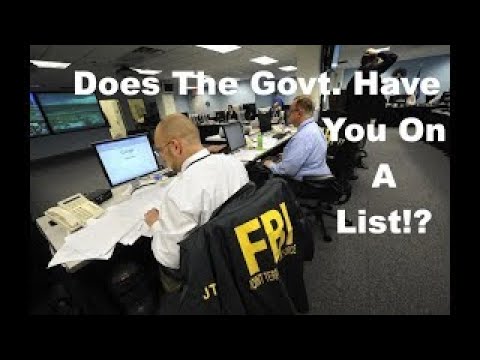
This YouTube video investigates whether the U.S. government maintains lists of gun owners and their firearms. It aims to provide viewers with methods to discover if they are on such a list. The description highlights relevant government agencies like the ATF and FBI, and emphasizes the importance of the Second Amendment. The video also promotes merchandise, a Patreon page for channel support, and other related content channels.
This video delves into allegations of government manipulation of gun data by agencies like the CDC, ATF, and FBI, suggesting these actions are part of an agenda. It aims to uncover the truth behind government tracking and record-keeping of firearms, questioning whether the government has knowledge of gun ownership. The content is presented by 'God Family and Guns' and encourages viewer support through merchandise and Patreon.
This video alleges that the US government, specifically the CDC, ATF, and FBI, manipulates gun data to advance a specific agenda. It touches upon government tracking of firearms, gun registries, and the implications for Second Amendment rights. The description also includes links to various supporters, merchandise, and social media channels.
Gun Laws by State
Read firearms regulations for all 50 states + D.C.
Find Gun Dealers
Search licensed FFL dealers near you.