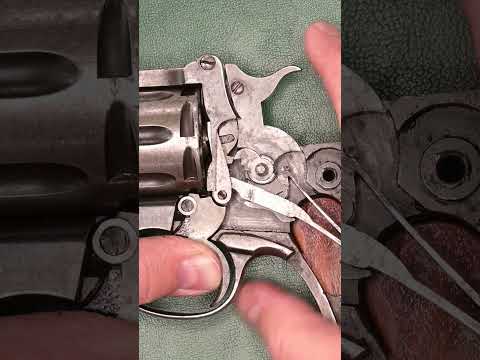
This video delves into the origins and mechanics of a specific lockwork mechanism found in many post-smokeless era revolvers, particularly those from Colt and Smith & Wesson. It highlights the Belgian origins of this design, tracing it back to patents from the 1870s and earlier. The explanation covers the single-action and double-action functions, detailing the roles of the mainspring, hammer, sear, hand, and hammer nose.
This guide provides an overview of the mechanical operation of the Mexican 1893 Pieper revolver, drawing from expert analysis. It details the unique gas seal system, the function of the inertia lock for recoil management, and the specialized trigger 'dog' and rebound system. The instruction emphasizes understanding the internal timing and components, offering insights comparable to those from a seasoned firearms instructor.
This video provides a quick comparison between the Belgian 1878 Nagant revolver and the Russian 1895 Nagant revolver. Key differences highlighted include the presence of a gas seal system in the 1895 model, which causes the cylinder to move forward, and the absence of this feature in the 1878. The revolvers also differ in size, grip width, and the cartridges they fire.
You've reached the end! 3 videos loaded.
Gun Laws by State
Read firearms regulations for all 50 states + D.C.
Find Gun Dealers
Search licensed FFL dealers near you.