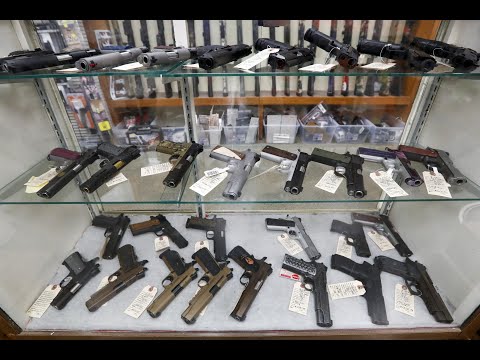
This video from GUNBROS explores the upper limits of handgun size for concealed carry, emphasizing that personal effectiveness and concealability are paramount. Experienced instructor Jared explains that while large calibers like the .500 S&W can be made concealable with modifications like a stubby barrel, individual skill, physical size, and comfort with the firearm are the true limiting factors, not just the caliber itself.
This YouTube Short compares subcompact and full-size handguns, posing a question to the audience about their preference. The video uses hashtags to highlight the core comparison points: subcompact and full-size handguns.
This video emphasizes the importance of carrying a handgun daily for self-defense. The speaker argues that many Americans don't carry because their current firearm is too large, heavy, or cumbersome, or they lack a suitable holster. The core message is that if your gun prevents you from carrying it, you likely need a different, more suitable firearm for your lifestyle.
This guide provides essential advice for first-time pistol buyers, emphasizing the importance of size, caliber, and comfort. It recommends starting with a compact 9mm pistol due to its balance of concealability, shootability, and ammunition availability. Key considerations include how the firearm feels in hand, ease of racking the slide, and features like optic readiness and ambidextrous controls.
This Geauga Firearms Academy video features instructor Kim discussing how to select the right handgun size based on hand measurements. It emphasizes that the video demonstrates concepts and best practices, but professional, hands-on training is essential and highly recommended. The description also includes links to their Patreon, Instagram, website, and a documentary series about a student's martial shooting skills progress.
This video discusses the trade-offs between handgun size, portability, and shootability for concealed carry. It highlights how larger guns offer better accuracy and shootability but are harder to conceal, while smaller guns are more portable but can be less forgiving to shoot. The presenter, Jerry Miculek, emphasizes the importance of features like tritium sights and quality magazines for reliable self-defense.
This video focuses on categorizing firearms based on their size. The creator likely discusses different firearm types and their relative dimensions, which is a common way enthusiasts organize and understand their collection. This categorization is practical for storage, carry, and understanding a firearm's intended role.
When buying your first handgun, consider budget (ideally $300-$800), caliber (9mm recommended for balance, but .380 ACP and .38 Special are viable), and size/weight for concealability and shootability. A proven design from a brand with at least 20 years of history is advised for reliability and support. Proper grip technique is crucial to avoid issues like limp-wristing, especially with semi-automatics; revolvers are more forgiving in this regard.
This video offers a direct size comparison between the Glock 19 and the Glock 47. It aims to clarify the physical differences between these two popular Glock pistol models, addressing the viewer's curiosity about their dimensions. The description also poses a question about whether the Glock 47 might eventually replace the Glock 17 in certain contexts, hinting at a broader discussion on Glock's product lineup and potential market shifts.
This video critically evaluates 10 handguns deemed unsuitable for concealed carry (CCW) by a firearms instructor. It highlights issues like excessive size, weight, poor reliability, and inadequate caliber for self-defense, emphasizing that while some firearms are iconic or powerful, they fail to meet the practical requirements of everyday carry. The instructor's nuanced technical reasoning underscores the importance of choosing appropriate tools for specific applications.
This video compares the physical size of two popular subcompact handguns: the Glock 26 and the Springfield Armory Hellcat. The comparison specifically highlights how both pistols perform when equipped with 15-round magazines, which is an extended capacity for these models. The content is geared towards potential buyers, firearm enthusiasts, and those interested in concealed carry options, offering a visual and contextual understanding of how these firearms stack up against each other in terms of dimensions and capacity.
This video argues that compact and subcompact handguns are primarily useful for concealed carry, deep concealment, or as backup guns due to their inherent compromises. The speaker, acting as an experienced firearms instructor, emphasizes that full-size firearms are generally superior for home defense, range use, and open carry because they offer better shootability, accuracy, capacity, and recoil management. The video debunks the myth that smaller guns are better for individuals with smaller hands and advises against choosing compacts for primary defensive roles when a full-size option is feasible.
Gun Laws by State
Read firearms regulations for all 50 states + D.C.
Find Gun Dealers
Search licensed FFL dealers near you.