
Videos tagged with Holster Break-in


John 'Shrek' McPhee of Sheriff of Baghdad demonstrates a method for breaking in a tight holster, specifically a 'condom holster,' using Saran Wrap to gradually stretch the material for a perfect fit. This technique ensures proper retention without making the draw difficult.

This guide provides an expert overview of various concealed carry holster types, including Kydex, leather, belly band, IWB, pocket, ankle, shoulder, appendix, OWB, and small-of-the-back options. It emphasizes that holster selection is highly personal and depends on factors like body type, clothing, and intended use. Key considerations include trigger guard coverage, draw stroke efficiency, comfort, and retention. The guide also offers practical advice on breaking in leather holsters and highlights potential safety concerns with certain holster designs.


This video provides a quick tip for breaking in a new leather holster that is too tight for immediate use. Instructor Roy demonstrates how to use 'Leather Lightning,' a silicon-based lubricant from Mitch Rosen, to condition the inside of the holster. By applying the lubricant and working it into the leather, users can achieve a proper fit without damaging the holster or firearm finish, making it easier to draw and re-holster.


This guide details a common method for breaking in new holsters, particularly those that are intentionally manufactured tight for a secure fit. The process involves using parchment paper or saran wrap to create a slight buffer between the firearm and the holster, allowing the materials to conform to each other over a 24-hour period. This technique ensures a proper retention level where the firearm remains secure when inverted but can still be drawn effectively.
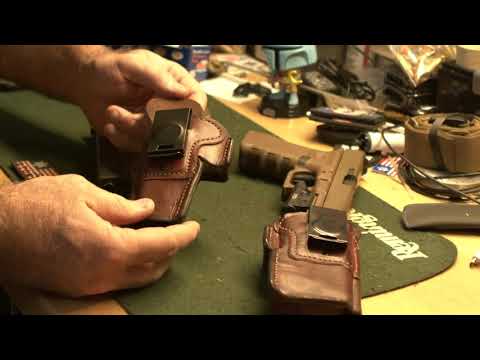
This guide details a common method for breaking in new holsters, particularly SOB (Sheriff of Baghdad) brand holsters, to achieve a proper, secure fit. The technique involves using parchment paper to create a slight buffer, allowing the holster to mold to the firearm's dimensions over a 24-hour period. This process ensures the firearm remains securely retained without being excessively difficult to draw.

