This module delves into the Colt New Model Army 'Model 1860' revolver, focusing on its later, un-fluted round cylinder variant. It details the complex government relations, Civil War contracts, and critical design evolution driven by technical failures like bursting cylinders. The segment also covers pricing disputes, the impact of the 1864 armory fire, and the weapon's significant post-war service, highlighting its status as a primary Union sidearm.
This video showcases two rare Colt Paterson revolvers, highlighting their historical significance as the earliest Colt firearms. It delves into the manufacturing origins in Paterson, New Jersey, and discusses the three main models: the Holster (Number 5), the Belt, and the Pocket Pistol. The presenter explains the evolution of the design, including the addition of the loading rod and modifications for military contracts, and touches upon Samuel Colt's early struggles and eventual success, drawing parallels to earlier revolving cylinder designs like the Collier flintlock.
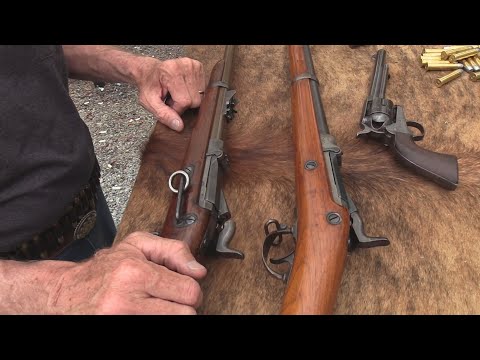
This video details a mud test on a 1873 Springfield Trapdoor rifle chambered in .45-70. The test highlights the rifle's potential for malfunction when contaminated with mud, specifically issues with the ejector and the need for manual clearing. Despite initial failures, the rifle was demonstrated to be potentially serviceable in the field with manual intervention, a result the presenter found somewhat unexpected. The video also thanks viewers for their support in funding the test.
Dragonman showcases a new collection of Civil War era firearms, along with pieces from the American Revolutionary War and Indian Wars. These antique weapons are highlighted as being in excellent working condition and are approximately 150 to 300 years old. The presenter plans to demonstrate shooting these historical firearms in upcoming videos, promising an entertaining experience. He also mentions his museum is open on Wednesdays, Fridays, and Sundays starting at 10 am for the season.
This video explores the firearms and gear used by both US Federal forces and Apache allies during the Indian Wars of the 1870s. It highlights the differences in equipment between cavalry units and Apache warriors, emphasizing the use of surplus Civil War-era firearms and the challenges of supply chains. The content provides a detailed look at historical firearms like the Springfield 1870 and Colt 1871 Open Top, alongside period-appropriate ammunition and accoutrements.
This comprehensive review of the 1873 Trapdoor Springfield Carbine, presented by firearms expert Greg Kinman, details its operation, historical significance, and ballistics. The video covers the carbine's transition from muzzleloaders, its role in frontier history, and practical advice on identifying original models. Kinman emphasizes the importance of using appropriate ammunition, such as black powder or cowboy loads, to preserve these antique firearms.
This video delves into the logistical challenges of ammunition resupply for 19th-century US cavalry, comparing the Colt Single Action Army (.45 Colt) with the Smith & Wesson Schofield Revolver (.45 Schofield). The Schofield's top-break design offered faster reloading, but cartridge incompatibility created significant field issues. The development of the 1877 Military Ball Cartridge, a compromise round, ultimately solved this logistical conflict.
You've reached the end! 7 videos loaded.
Gun Laws by State
Read firearms regulations for all 50 states + D.C.
Find Gun Dealers
Search licensed FFL dealers near you.