This video provides an in-depth first look at Beretta's New Assault Rifle Platform (NARP), adopted by Italian special forces. The review highlights its piston-driven system, excellent ergonomics, ambidextrous controls, and impressive controllability, especially in 5.56mm. The 6.5 Grendel variant is also discussed, noting its soft recoil and suitability for DMR roles. The NARP emphasizes reliability, signature reduction, and user-configurable features.
This expert-level entry details the extremely rare Beretta 38/43 submachine gun, as presented by Ian McCollum of Forgotten Weapons. It covers the firearm's historical context, unique visual features like its fluted barrel and underfolding stock, and operational controls including the dual-trigger system for fire selection. The guide also includes a field strip procedure highlighting late-war production simplifications.
This guide details the disassembly of the Beretta PM12 submachine gun, emphasizing its unique triple safety system and telescoping bolt design. It highlights the importance of proper safety checks and maintenance for this historically significant firearm, as presented by an expert firearms instructor.
This review of the Beretta M1934 380 ACP surplus pistol highlights its historical significance, simple yet reliable design, and unique features like the open slide and heel-style magazine release. The video provides a detailed look at its operation, including a demonstration of its unusual disassembly and reassembly process. While noting minor initial reliability issues potentially due to magazine springs, the reviewer emphasizes the pistol's overall durability and accuracy, making it a compelling piece of history for collectors and enthusiasts.
This guide details the field stripping process for the Beretta Model 1934, a classic Italian service pistol. The video demonstrates a straightforward disassembly, highlighting the pistol's simple blowback operation and the unique method of barrel removal. Expert instruction from Ian McCollum of Forgotten Weapons emphasizes the design's longevity and mechanical consistency.
This guide details the field maintenance for the Beretta NARP rifle, focusing on its user-friendly short-stroke piston system. According to Luca Tremolada, a Beretta representative, the system is designed for extreme ease of cleaning, requiring only seconds to remove a single spring for maintenance, making it nearly 'fool-proof' for operators in the field.
This review of the Beretta PMX pistol highlights its evolution from the PM12 and draws comparisons to the Tech 9. The presenter details its operation, disassembly, and reassembly, noting its blowback system and higher cyclic rate compared to its predecessor. Key observations include the uncomfortable safety lever placement and the recommendation for a stock or pistol brace for improved stability and accuracy.
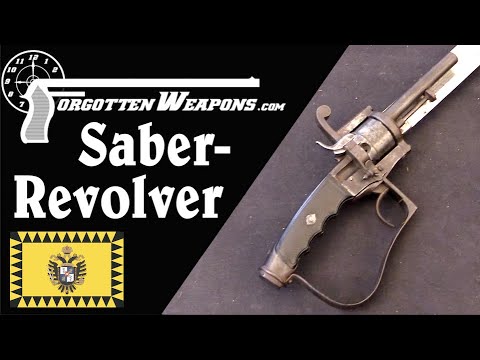
This review of the Milanese 7mm Pinfire Saber-Revolver, presented by Ian McCollum of Forgotten Weapons, details its unique design combining a Lefaucheux-style pinfire revolver with an Italian 1855 pattern officer's saber. McCollum, a recognized expert in rare firearms, highlights the weapon's origins around 1864, its double-action mechanism, and the intricacies of the pinfire cartridge system. He critically assesses its practical utility, noting the awkward aiming angle caused by the integrated saber blade and potential mechanical failures in antique examples.
This guide provides an overview of the Beretta ARX-160, Italy's service rifle, and its associated GLX-160 grenade launcher. It highlights key features such as the short-stroke gas piston system, cold hammer-forged barrel, ambidextrous controls, and the unique design of the GLX-160. The assessment comes from Garand Thumb, who demonstrates high technical knowledge and practical experience with the platform.
This guide details the field stripping and reassembly of the FIAT-Revelli Modello 1914 heavy machine gun, as demonstrated by Ian McCollum on Forgotten Weapons. It covers the removal of the bolt and barrel assembly, disassembly of the bolt carrier, and the critical function of the delayed blowback mechanism. Proper maintenance and understanding of its unique features are essential for this complex firearm.
This guide details the specific disassembly procedure for the rare Beretta 1934 military trials pistol, highlighting the unique challenges presented by its slide-mounted safety lever, a feature influenced by the Walther PP. The process requires precise slide positioning, differing from standard Beretta 1934 field stripping. Expert instruction from Ian McCollum emphasizes the historical context of this design evolution.
This video provides an in-depth look at the Beretta AR 70, a 5.56x45mm rifle developed in the early 1970s. It highlights the rifle's origins, influenced by Eugene Stoner's designs but with Beretta's own innovations, aiming for a more affordable and robust alternative to existing platforms. The AR 70 is characterized by its substantial sheet metal construction, gas piston operation, and M16-style sights, offering a state-of-the-art design for its era.
Gun Laws by State
Read firearms regulations for all 50 states + D.C.
Find Gun Dealers
Search licensed FFL dealers near you.