This video details the 'Bubba' project involving a modified Lee-Enfield No. 5 Jungle Carbine. The presenter, an enthusiast of historical firearms, discusses the rifle's history, its development as a lighter, more wieldy option for jungle warfare, and common modifications. Key identification features for a genuine No. 5, such as lightning cuts on the barrel and receiver details, are highlighted, contrasting them with mock-ups. The video also touches on the rifle's performance issues, including magazine retention and the 'wandering zero' reports, and explores the historical context of carbine development and sporterization.
This video provides an in-depth look at the Indonesian M95/51 carbine and short rifle, which were conversions of Dutch M95 Mannlicher rifles to .303 British. Host Ian McCollum details the historical context, the conversion process involving Australian assistance, and the specific features of both the carbine and short rifle variants. The analysis covers design inspirations, markings, production dates, and the unique characteristics of these firearms.
This video appears to showcase a variety of firearms, including tracer rounds fired from a Ruger 10/22, a Jungle Carbine rifle, a Ruger MKII pistol, and a Walther P38 pistol. Given the title, it is likely a demonstration or review of these specific firearms, potentially including their performance with tracer ammunition. The inclusion of distinct models suggests an interest in showcasing different firearms and their capabilities.
This guide details the process of loading and firing the Lee-Enfield No. 5 Mk I 'Jungle Carbine', as demonstrated by Misha. It covers preparing stripper clips with .303 British cartridges, loading the rifle, achieving a proper sight picture with iron sights, and executing live fire. The demonstration highlights proficient bolt-action manipulation and steady marksmanship.
This entry details key firearms from the Pacific theater of WW2, including the Enfield No. 5 Mk I Jungle Carbine, the Australian Owen Machine Carbine, the Japanese Type 99 LMG, and the Vickers-Berthier Mk III. It highlights their design features, operational contexts, and performance characteristics as presented by firearms expert Jonathan Ferguson of the Royal Armouries.
This video provides a direct, albeit informal, comparison of the ballistic energy delivered by an M1 Garand chambered in .30-06 and a .303 British Jungle Carbine. The test uses canned fruit as targets to visually demonstrate the destructive power of each rifle. The presenter, from Civilian Tactical, concludes that the M1 Garand delivered more energy, shredding its target more effectively.
This video demonstrates a test comparing the effectiveness of historical bayonets against modern body armor. A Civilian Tactical host, with clear expertise in tactical gear and firearms, shows that bayonets from WWII-era rifles like the M1 Garand and Jungle Carbine fail to penetrate a BulletSafe Level 3A+ body armor plate, leaving only minor marks despite significant force. The test highlights the advancements in personal protective equipment.
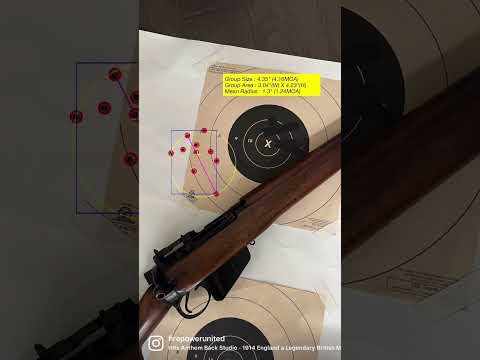
This analysis debunks the 'wandering zero' myth surrounding the Lee-Enfield No. 5 Mk 1 'Jungle Carbine'. By examining a 10-shot group at 100 yards, the data, even after removing a single flier, indicates acceptable accuracy for a carbine of its era, suggesting the reputation is largely unfounded.
This video provides an expert-level overview of the Lee Enfield No5 MkI 'Jungle Carbine' by Ian McCollum of Forgotten Weapons. It details the rifle's development from the No4 MkI, focusing on significant lightening modifications, the unique conical flash hider and knife bayonet, and the reasons behind its eventual obsolescence due to accuracy issues. The presentation highlights manufacturing variations and historical context, offering valuable insights for firearm enthusiasts and historians.
This guide provides an overview of a rare prototype No1 MkV carbine, converted to a No5 MkI 'Jungle Carbine' precursor. It details historical markings, sight systems, muzzle features, recoil management, and unique prototype bolt handle modifications, offering insights into early carbine development. The analysis highlights the evolution from SMLE designs and the influences on later production models.
This review of the Enfield No. 5 MK1 Jungle Carbine by hickok45 highlights its history as a shortened, handier Lee-Enfield variant designed for jungle warfare. The expert discusses its 'wandering zero' controversy, provides a detailed visual inspection, and compares its smooth bolt action to other contemporary bolt-actions like the Mauser and Mosin-Nagant. The review emphasizes the increased felt recoil due to weight reduction engineering and offers practical advice on recoil management.
This video provides an in-depth look at the Lee-Enfield No. 5 Mk I, commonly known as the Jungle Carbine. The presenter highlights its origins as a shortened version of the No. 4 Mk I, its chambering in .303 British, and its distinctive features like lightning cuts. The video includes range footage demonstrating its handling and recoil, offering insights into its historical significance and collectibility.
Gun Laws by State
Read firearms regulations for all 50 states + D.C.
Find Gun Dealers
Search licensed FFL dealers near you.