John Lovell of Warrior Poet Society addresses the complex decision of storing a long gun in a vehicle. He weighs the tactical necessity for defense against the significant risk of theft and the moral implications of arming criminals. Lovell suggests that while a high-quality lock system could deter theft, it must not impede rapid access in a defensive scenario.
This video discusses the legal and moral obligations of firearm sellers, both private individuals and businesses, regarding the vetting of buyers. The speaker argues that while businesses are largely protected by the 4473 form and background checks, private sellers may have some liability if they blatantly ignore obvious red flags. The core debate revolves around balancing a buyer's constitutional right to bear arms with a seller's potential responsibility.
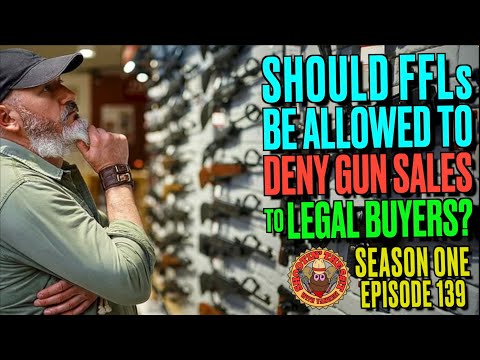
This video explores the complex ethical and legal considerations for FFLs (Federal Firearms Licensees) when deciding whether to sell a firearm to an individual who passes a background check but raises personal concerns for the dealer. It delves into the conflict between a dealer's potential liability and a buyer's Second Amendment rights, examining arguments for and against a dealer's discretion to refuse a sale based on subjective 'vibes' or perceived trustworthiness, even when legally permissible.
This video discusses the upcoming Supreme Court oral argument in the case of the Government of Mexico v. Smith & Wesson, focusing on whether lawsuits against American gun manufacturers for crimes committed in Mexico can proceed in U.S. courts. The speaker, Mark Smith, a constitutional attorney and Second Amendment advocate, emphasizes the importance of the Court's reasoning, not just the outcome, for the future of Second Amendment rights. He explains the Protection of Lawful Commerce in Arms Act (PLCAA) and its role in shielding manufacturers from liability for criminal misuse of their products. The discussion delves into the potential for both broad and narrow rulings, with a preference for a broad ruling that would protect the entire American gun industry from similar lawsuits nationwide.
This video discusses responsible storage of firearms in vehicles, commonly referred to as 'trunk guns' or 'truck guns.' The speaker, Yankee, emphasizes that legal liability for a stolen firearm generally ends when the property is violated. He suggests keeping guns out of sight, ideally in locked compartments like glove boxes or specialized lock boxes, especially when the vehicle is in public. While not strictly mandatory in his view for private property, he acknowledges that taking extra precautions like using lock boxes or securing firearms to the vehicle frame can enhance safety and limit potential liability.
This video discusses a significant legal victory for gun rights advocates, specifically concerning the Protection of Lawful Commerce in Arms Act (PLCAA). A San Diego court ruled that Smith & Wesson is not liable for criminal acts committed with their firearms, emphasizing that the responsibility lies with the individual criminal, not the manufacturer. The ruling also addressed claims that the firearm's potential for illegal modification and the company's advertising were contributing factors to the crime, both of which were dismissed.
This video critiques the performance of Secret Service agents, drawing parallels to personal responsibility and professional accountability. The speaker emphasizes that in protective service, a 100% success rate is expected, and even a single failure can define an individual or detail's legacy. The content highlights critical tactical oversights such as lack of reconnaissance, overlapping sectors of fire, and proper cordon establishment, suggesting severe negligence in a recent protective detail incident.
This video humorously highlights a mishap involving a CH-47 Chinook helicopter being loaded into a C-17 Globemaster III, where the helicopter's rotor head appears to strike the aircraft's interior. The speaker, Nikko Ortiz, uses this incident to joke about the severe financial and disciplinary consequences of damaging expensive military equipment, contrasting it with the potential for VA disability payments if one were injured. An AR-platform rifle is visible in the background, suggesting a broader context of firearms and military life.
This video, presented by Johnny Q, addresses legal liability for vehicle accidents, particularly when under the influence. Johnny Q, an authoritative figure in tactical gear, clarifies that leaving the scene of an accident is illegal, as is driving while impaired. He strongly advises against driving under the influence and outlines the proper procedure if an accident occurs: pull over, contact law enforcement, and exchange information.
This video provides an expert analysis of the Supreme Court's unanimous decision in Gonzalez v. Google and Twitter v. Taamneh. The speaker, demonstrating significant legal and firearms expertise, explains how the ruling, which shields social media companies from liability for third-party criminal actions, has critical implications for the Protection of Lawful Commerce in Arms Act (PLCAA) and the ongoing efforts to sue gun manufacturers. The analysis highlights the legal standards for 'aiding and abetting' and their application to both tech platforms and the firearms industry.
This guide, presented by D'Boss Firearms, emphasizes the critical importance of retaining ammunition lot numbers for safety and liability. It advises against loose storage, recommending original boxes and proper containers to preserve this vital information. Proper storage ensures easier access for range trips and facilitates potential recalls or investigations.
This episode delves into the philosophical and ethical foundations of the right to self-defense. It explores its grounding in natural rights, drawing parallels to concepts like the right to life and self-sovereignty, and examines justifications through religious and Enlightenment perspectives. The discussion also tackles complex scenarios involving liability, causation, and the lesser evil principle, emphasizing that the right to self-defense is inherent and cannot be legislated away, though its application can be complex.
Gun Laws by State
Read firearms regulations for all 50 states + D.C.
Find Gun Dealers
Search licensed FFL dealers near you.