This guide details how to safely and legally transport firearms through airports. It emphasizes using hard-sided, lockable cases, ensuring firearms are unloaded, and storing ammunition separately in checked luggage. Proper declaration at check-in and understanding airline-specific procedures are crucial for a smooth travel experience.
Washington House Bill 1152 significantly alters firearm storage laws in Washington State. It mandates specific requirements for storing firearms in vehicles, including the use of locked, opaque, hard-sided containers fixed within the vehicle. For home storage, firearms must be securely stored when not carried or readily controlled, either by being locked/disabled or kept in a locked safe. The bill removes the previous exception for reporting lost or stolen firearms to avoid criminal liability.
This guide, presented by William Kirk of Washington Gun Law, outlines the TSA's regulations for flying with firearms. Key steps include ensuring the firearm is unloaded, secured in a locked hard-sided case, declared at the ticket counter, and placed in checked baggage. Ammunition and magazines also have specific packing requirements. Travelers are advised to research destination laws.
This video provides a detailed explanation of California's firearm transportation laws for 2022, referencing specific penal codes. It clarifies requirements for handguns, long guns, and registered assault weapons, emphasizing the need for unloaded firearms and locked containers. The instructor highlights the distinction between transporting with and without a CCW permit, offering practical examples of compliant storage methods.
This video discusses a new gun storage law passed in Dublin, California, which requires firearms to be stored in a locked container or disabled with a trigger lock when not in the owner's immediate possession. The speaker argues this law infringes on Second Amendment rights and is similar to laws previously struck down by the Supreme Court, citing DC v. Heller. The presenter expresses concern about the law's enforceability and its potential to hinder lawful self-defense.
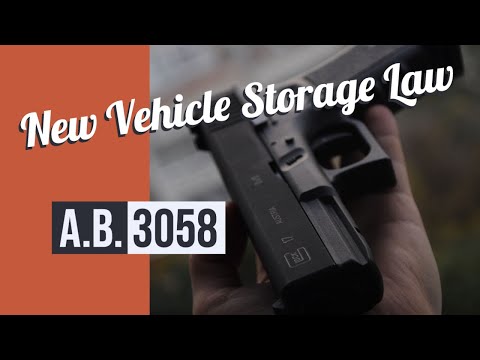
This video explains California bill AB 3058, which proposes to expand existing firearm storage laws for unattended vehicles to include all firearms, not just handguns. It details new requirements for securing firearms, such as using locked containers affixed to the vehicle with cables or chains, and clarifies definitions for 'locked container' and 'trunk'. The speaker, an attorney, expresses personal reservations about the bill's expansion.
This video explains California's laws for transporting firearms. It details that firearms must generally be transported unloaded in a locked container. The definition of 'unloaded' and 'locked container' is clarified, with specific rules for handguns, rifles, registered assault weapons, and transport within school zones. Penalties for violations are also discussed.
Assembly Bill 3058 in California introduces stricter regulations for storing firearms in unattended vehicles. The bill expands requirements beyond handguns to all firearms, mandating they be secured in a locked container permanently affixed to the vehicle, or in the trunk and secured with a cable or chain lock. It clarifies definitions for 'unattended vehicle,' 'locked container,' and 'plain view,' impacting how gun owners must secure their firearms when leaving them in a car.
This guide details the legal requirements for transporting firearms in California. Key principles include keeping firearms unloaded and secured in a locked container. Specific rules apply to handguns, long guns, and registered assault weapons, with additional restrictions near school zones. The video emphasizes best practices for safe and legal transport.
This guide details safe firearm storage requirements in Queensland, Australia, based on the Weapons Regulation 2016. It emphasizes storing firearms unloaded in locked, compliant containers with actions broken or bolts removed. Specific requirements vary by firearm category, with stricter rules for D, H, and R categories. The guide also covers ammunition storage and key security.
Flying with firearms requires adherence to federal regulations, primarily concerning checked baggage. Firearms must be declared unloaded, secured in a locked, hard-sided container accessible only to the passenger. Ammunition must be in specifically designed packaging. While federal law provides a framework, individual airlines may have additional restrictions.
You've reached the end! 11 videos loaded.
Gun Laws by State
Read firearms regulations for all 50 states + D.C.
Find Gun Dealers
Search licensed FFL dealers near you.