This video analyzes Kamala Harris's past statements and actions regarding Second Amendment rights, particularly in the context of a potential 2028 presidential run. It highlights her support for bans on 'assault weapons,' mandatory buybacks, and executive actions to circumvent Congress. The analysis also touches on her past role in drafting legislation allowing home inspections of firearm storage and her virtual banning of guns in a video game map. The speaker argues that Harris's record indicates a consistent pattern of seeking to disarm law-abiding citizens while empowering the government.
This video analyzes Kamala Harris's public statements and policy positions regarding firearms. It scrutinizes her stance on assault weapons bans, universal background checks, and red flag laws, contrasting her public statements with her official campaign website's platform. The speaker expresses skepticism about her commitment to gun ownership rights, citing her support for mandatory buyback programs and her own security detail.
This entry analyzes the financial and practical failures of mandatory gun buyback programs, particularly in Canada, as presented by Colion Noir. It highlights significant government expenditure with no tangible results, the economic burden on firearm owners, and proposes alternative solutions to violence reduction. The analysis draws on official documents and political discourse to underscore the ineffectiveness of such policies.
This video critiques Kamala Harris's stance on gun rights, particularly her statements made during a town hall with Oprah Winfrey. The speaker argues that Harris's claims of supporting the Second Amendment while also advocating for measures like assault weapons bans and buyback programs are contradictory and politically motivated. The analysis highlights the perceived hypocrisy of her position, contrasting her personal security with the rights of ordinary citizens.
This video analyzes the Second Amendment stances of Kamala Harris and Tim Walz, contrasting their past actions and statements with their current political positions. It highlights how political rhetoric, such as claiming to be a gun owner, can be used to mask policy intentions that may restrict firearm rights. The analysis delves into specific policy proposals like assault weapons bans, red flag laws, and mandatory buybacks, evaluating their potential impact on gun owners.
This YouTube Short analyzes a statement made by Kamala Harris regarding firearms policy. The video title and description allege that Harris is being dishonest about her stance on gun control. Specifically, it claims that while she states she won't take guns away, her support for mandatory buybacks and bans on "assault rifles" contradicts this. The content focuses on the perceived hypocrisy in her statements concerning the Second Amendment.
This video argues that mandatory gun buyback programs are a form of gun confiscation, distinct from voluntary buybacks. It also posits that universal background checks are a precursor to a national gun registry, which can then be used for confiscation. The speaker criticizes politicians for using subtle language to advance these agendas and discusses censorship of pro-Second Amendment content.
This video discusses the potential for gun confiscation in the USA, citing statements from a political candidate regarding mandatory buybacks via executive order. The speaker expresses concern about the timeline, potential government agencies involved (ATF, FBI), and the implications for firearm owners. It also touches on historical examples of confiscation in other countries like Venezuela and the potential role of law enforcement.
William Kirk, President of Washington Gun Law and a defense attorney with nearly 30 years of experience, provides an expert analysis of gun confiscation. He examines historical precedents of civilian disarmament, highlighting devastating consequences in the Ottoman Empire, Soviet Union, China, Nazi Germany, and Cambodia. Kirk also critiques modern attempts, like Canada's buyback program, citing immense financial and logistical failures. He concludes that widespread gun confiscation in the United States is highly improbable due to significant resistance from law enforcement and the public.
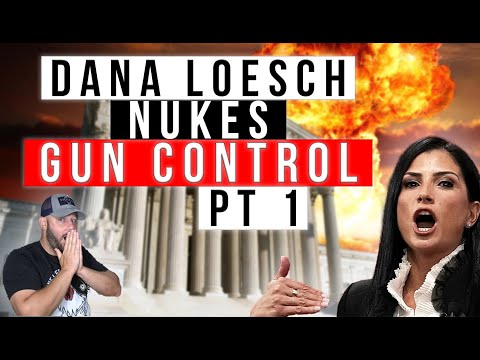
Dana Loesch, a conservative commentator, critically analyzes gun control proposals, arguing that universal background checks necessitate a registry, which is federally prohibited. She contends that red flag laws erode due process and are ineffective, as existing legal pathways can address individuals deemed a danger. Loesch also highlights the contradiction in arguments that simultaneously distrust the government while advocating for its sole possession of firearms, and questions the specificity and logic behind proposed bans on commonly owned semi-automatic firearms.
This video critiques Kamala Harris's gun control proposals, focusing on the potential for executive overreach and the unconstitutionality of mandatory buybacks, which are framed as confiscation. Dana Loesch argues that the slow pace of Congress is a feature, not a bug, designed to protect rights from hasty, emotion-driven actions. The analysis highlights concerns about the government using taxpayer money for buybacks of items never sold to them and the dangerous precedent of using law enforcement to enforce such mandates, referencing historical events like Ruby Ridge and Waco.
This video discusses Canada's controversial gun ban and mandatory buyback program, highlighting the government's struggles to implement confiscation. It details the timeline of the ban, the proposed compensation for firearms, and the refusal of Canada Post to participate in the confiscation process due to safety concerns. The analysis points out significant logistical and security flaws in the government's plan.
Gun Laws by State
Read firearms regulations for all 50 states + D.C.
Find Gun Dealers
Search licensed FFL dealers near you.