This Q&A session from Forgotten Weapons covers a wide range of firearms-related topics. Ian McCollum discusses the evolution of red dot sights, the importance of blood lead level testing for shooters, and the nuances of various historical and modern firearms, including the 5.56 NATO cartridge's twist rate evolution, the M14's manufacturing issues, and the challenges of polymer-cased ammunition. He also touches on niche subjects like underwater firearms, electromagnetic rifles, and the future of handgun design.
This video announces the availability of the book "Small Arms of World War II: Soviet Union," the second in a series by Ian McCollum of Forgotten Weapons. The book covers Soviet firearms from pistols to heavy machine guns, including a dedicated chapter on sniper rifles due to their significant program during the war. It aims to provide a comprehensive overview for those interested in the war's weaponry without excessive collector-level detail.
This video features a firearms-themed Jeopardy game with three participants answering questions across categories like Military Make and Model, History, Pop Culture, and Manufacturer. The game covers a range of firearms and related topics, from historical handguns and rifles to modern military programs and pop culture references. The participants' knowledge and scores fluctuate throughout the game, culminating in a Final Jeopardy round and a tie-breaker question.
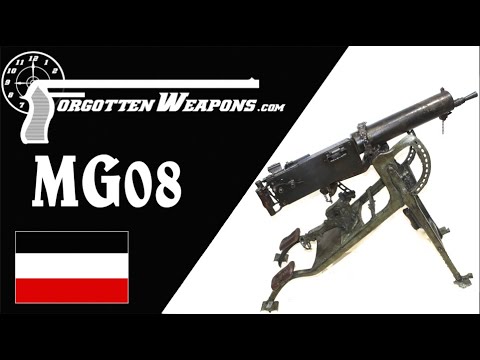
This guide details the assembly and operational use of the German MG08 machine gun with its distinctive Schlitten 08 sled mount. It covers the unique transport methods, operational controls, maintenance procedures, and accessory integration, drawing on expert insights from Forgotten Weapons. The MG08, a water-cooled, recoil-operated machine gun, was a pivotal weapon in WWI, and understanding its mount is crucial for appreciating its battlefield utility.
This video explores a hunt for lost WW2 artifacts and firearms in Idaho, featuring visits to 'The Gun Shop', 'Guns N Gear', and a large Army Surplus Warehouse. The host examines various historical rifles like the M1 Carbine, Lee Enfield, and Mosin Nagant, alongside replica firearms and military surplus gear. The content offers a glimpse into the world of military collectibles and historical weaponry, with a focus on discovery and appreciation.
This guide details the disassembly of the Argentine Brass Maxim machine gun, as demonstrated by Ian McCollum. It covers removing key components like the barrel, top cover, bolt, and toggle link assembly, with a focus on inspecting the internal mechanisms, the unique walnut feed roller, and the Fuzee spring system. The process highlights the intricate design and historical significance of this early automatic weapon.
The conflict in Ukraine showcases a diverse array of firearms, from modernized PKMs and AK-74s with improvised optics to converted PKT tank guns. Drone warfare has led to unique payloads like RPG-7s and FPV kamikaze drones, while vintage weapons like the Maxim machine gun and MP40 are seeing renewed use, often modified with modern accessories. The FN FAL and RPK-74 also provide heavy fire support.
This video from Brandon Herrera's 'Gun Meme Review' covers several current events and firearm-related topics. It discusses the Poland missile incident, the Griner-Bout prisoner swap, Post Malone's tactical outing, the controversy surrounding Established Titles, and Canadian gun control measures. Herrera also touches on the use of Maxim machine guns in Ukraine and the perceived irony of ATF initiatives.
This video explores ten of the most bizarre and unusual firearms and weapons developed throughout history, from World War II to more modern concepts. It highlights their unique designs, intended purposes, and often impractical applications, showcasing human ingenuity in warfare, even when it led to peculiar outcomes. The content delves into specific examples like the Sedgley OSS .38 glove pistol and the colossal M65 Atomic Cannon.
This entry details the use of various firearms in the Ukraine conflict, from historical Mosin Nagants and Maxim machine guns to modernized AK-74s with Zenitco accessories. It highlights field modifications, such as converting PKT tank machine guns for infantry use, and the appearance of WWII-era submachine guns. The analysis comes from Brandon Herrera, a recognized firearms manufacturer and expert.
Ian McCollum, a recognized firearms expert, advises against viewing firearms primarily as an investment, stating they typically only track inflation rather than generating real growth. He emphasizes that deep knowledge, focusing on high-quality, pristine examples, and understanding the difference between collecting and investing are crucial for maximizing value in the firearms market. Market volatility and external factors like ammunition costs can significantly impact firearm values.
This video features an interview with NFA expert Dolf Goldsmith, discussing the evolution of machine gun collecting over 70 years. Goldsmith shares insights into historical collecting prices, the stigma surrounding machine guns, and the shift towards semi-automatic variants. He highlights the PKM as a pinnacle of machine gun design due to its efficient use of recoil energy.
Gun Laws by State
Read firearms regulations for all 50 states + D.C.
Find Gun Dealers
Search licensed FFL dealers near you.